Building an annual calibration and maintenance protocol for TB laboratory equipment
Tuberculosis diagnostics in Australia span an unusually wide geography, from high-volume reference centres in Sydney and Melbourne to small sentinel laboratories in Darwin, Cairns, and remote Western Australia. Each site faces its own pressures — tropical humidity, summer heatwaves, cyclone-season power interruptions, and long supply lines for spare parts. A documented annual calibration and maintenance protocol gives every facility, regardless of size, a reliable rhythm for keeping instruments within specification and protecting the integrity of smear, culture, and molecular results.
The GLI Quality Tool frames equipment management as one of its twelve Quality Systems Essentials, linking it directly to biosafety, internal audit, and continual improvement. A well-written protocol transforms sporadic, ad-hoc servicing into a scheduled, traceable programme that satisfies accreditation bodies such as NATA and aligns with the expectations of the Royal College of Pathologists of Australasia. The result is fewer breakdowns, lower repair costs, and stronger confidence in every reported result.
This article walks through the practical elements of drafting such a protocol — from inventory mapping to record keeping, staff responsibilities, and ongoing review. It is written for laboratory managers, quality officers, and senior scientists who want a working document they can adapt to their own setting.
Defining the scope and purpose of the protocol
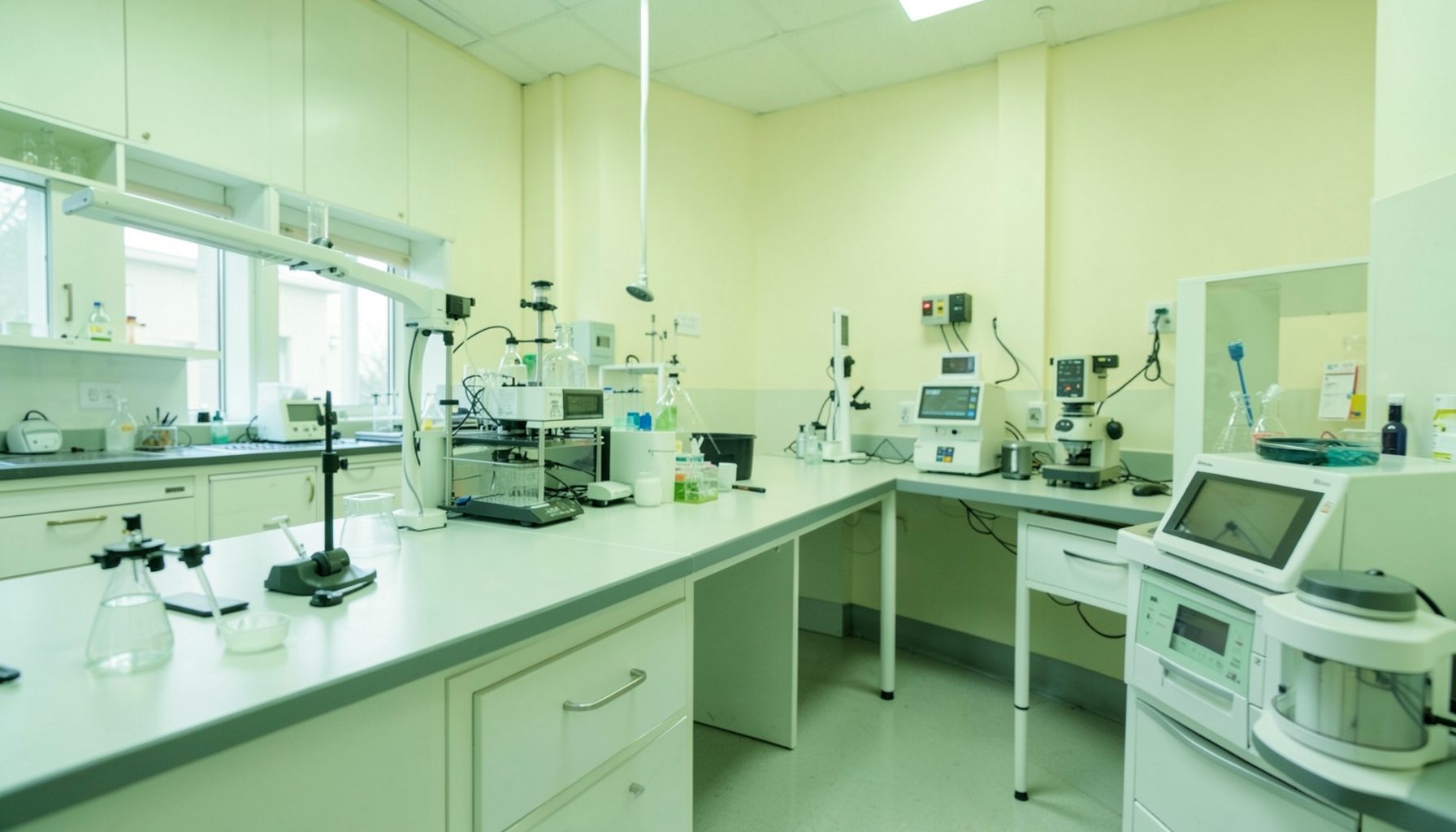
A useful protocol begins with a clear statement of what it covers and why it matters. The opening section should list the equipment types included — biosafety cabinets, autoclaves, incubators, refrigerators, freezers, centrifuges, microscopes, pipettes, pH meters, and molecular platforms such as GeneXpert or BACTEC MGIT systems. It should also name the tests affected, typically smear microscopy, mycobacterial culture, and nucleic acid amplification.
The purpose clause explains how scheduled calibration and maintenance protect patient safety, support accreditation under ISO 15189 as adopted by NATA, and reduce the risk of invalid results. In Australia, laboratories also reference the Therapeutic Goods Administration framework for in-vitro diagnostic medical devices, which influences how equipment is procured, validated, and serviced. A short paragraph on regulatory grounding gives auditors an immediate answer when they ask why the protocol exists.
The scope statement closes the introduction by identifying exclusions — building services, general office equipment, or instruments covered under a separate vendor contract — so that no one is left guessing about boundaries.
Mapping your equipment inventory
Before a single service interval can be scheduled, the laboratory needs a complete and accurate inventory. The inventory is the foundation of the annual plan, and it should record each item's unique identifier, location, model, serial number, date of acquisition, vendor, and current condition. Australian labs often add fields for warranty status, asset register number, and the NATA-accredited service provider responsible for external calibration, since this information is frequently requested during surveillance visits.
Inventory mapping also surfaces equipment that has drifted off register. A busy Brisbane lab might, for instance, discover a pH meter tucked inside a corner bench that has not been calibrated in eighteen months because no one was formally responsible for it. Linking pH meter care directly to media quality, the practical guide on calibrating pH meters provides the kind of step-by-step detail a protocol can reference as an attached procedure.
Once the inventory is complete, classify items by risk. High-impact instruments — MGIT systems, Class II biosafety cabinets, autoclaves used for waste decontamination — sit in tier one. Mid-tier items include centrifuges and microscopes. Lower-tier items such as timers and thermometers still require calibration but at longer intervals.
Setting calibration intervals for critical instruments
Calibration frequency should reflect both manufacturer recommendations and the risk each instrument carries. Annual third-party calibration is standard for pH meters, balances, pipettes, and thermocyclers, while quarterly or monthly verification checks sit alongside it for equipment used in culture work. Incubators and refrigerators need continuous temperature monitoring with calibrated probes, and Australian labs frequently use data loggers that meet AS/NZS accuracy requirements.
Verification checks between formal calibrations are the protocol's safety net. They include daily temperature reviews, weekly biological indicator tests for autoclaves, and monthly checks of microscope alignment using calibrated stage micrometers. Document the acceptance criteria for each check, the corrective action when a reading falls outside range, and the person authorised to release equipment back into service.
For molecular TB platforms, calibration takes the form of cartridge lot verification, software version control, and regular instrument self-check reviews. Establishing these intervals in the protocol — rather than leaving them to operator memory — prevents drift in practice and reassures auditors that preventive controls are active rather than aspirational.
Designing preventive maintenance routines
Preventive maintenance keeps instruments running and extends their service life. A solid routine lists daily, weekly, monthly, quarterly, and annual tasks for every equipment category. Daily tasks might include wiping down microscope stages and checking incubator water pans. Weekly tasks could involve defrosting freezers when frost builds up or running a vacuum test on an autoclave. Quarterly routines often cover HEPA filter inspections on biosafety cabinets and brush cleaning of centrifuge rotors.
Climate matters more in Australia than in many other regions. Labs in tropical north Queensland may schedule more frequent dehumidifier and air-conditioning filter changes, while facilities in southern Victoria prepare equipment for winter cold snaps that stress heating elements. The protocol should leave room for these site-specific adjustments without losing the standardised core.
Spare parts management is closely linked to maintenance outcomes. A small store of consumables — fuses, gaskets, O-rings, lamp bulbs, and validated temperature probes — prevents minor faults from cascading into extended downtime. The guidance on managing TB lab inventory reinforces how reagent freshness and instrument reliability depend on the same upstream planning.
Building documentation and record systems
Records are the proof that the protocol is being followed. Each calibration and maintenance event should generate an entry that captures the date, instrument ID, task performed, person responsible, results obtained, and any corrective action taken. Paper logbooks still work in many smaller Australian labs, but electronic systems — including laboratory information systems and shared spreadsheets on secure servers — make trend analysis easier.
Standardisation improves both audit readiness and staff confidence. Pre-printed forms or templated digital records ensure that no field is missed. Calibration certificates from external providers should be filed in a single location, ideally indexed by instrument ID, with a clear retention period aligned to local record-keeping obligations.
Standardised reading guides sit alongside equipment records when smear microscopy is in scope. Linking to a visual smear grading guide helps ensure that the microscopes being maintained serve a reading process that is itself standardised, strengthening the chain from sample to result.
Clarifying roles and training staff
A protocol without named owners tends to drift. The document should assign specific responsibilities to the laboratory manager, the quality officer, senior scientists, and bench-level technicians. The manager may approve service contracts, the quality officer may audit records quarterly, and bench staff may carry out the daily checks.
Training needs follow naturally from these assignments. New staff should be inducted on the equipment they will handle, including the protocol's procedures for each item. Refresher sessions, ideally documented and repeated annually, keep skills current after staff turnover. Competency assessments — such as observed microscope alignment, pH meter calibration, or autoclave loading — provide evidence of training effectiveness during accreditation visits.
Reviewing, auditing and improving the system
The annual review is where the protocol earns its keep. Once a year, the laboratory team should review every breakdown, every out-of-specification event, and every external service report, looking for patterns. Equipment that repeatedly fails may need replacement rather than continued repair. Records of training should be checked for completeness, and audit findings from internal reviews, NATA assessments, and external quality assurance schemes such as the RCPA QAP should feed directly into a list of actions for the next planning cycle.
Continual improvement also means keeping the protocol itself alive. Version control, dated review signatures, and a change log show auditors that the document is current. When the manufacturer issues a firmware update or a regulator revises a standard, the protocol should be revised promptly and staff briefed on the change.
The annual calibration and maintenance protocol is more than a compliance document. It is a working tool that protects the laboratory's analytical performance, safeguards staff, and supports the broader public health goal of reliable tuberculosis diagnosis across Australia. Start by mapping your equipment, define your calibration and maintenance cycles, build a record system you trust, and revisit the whole plan every twelve months. If your team would like a structured template and phase-specific checklists to support this work, explore the resources available through the GLI Quality Tool and adapt them to your own laboratory setting.