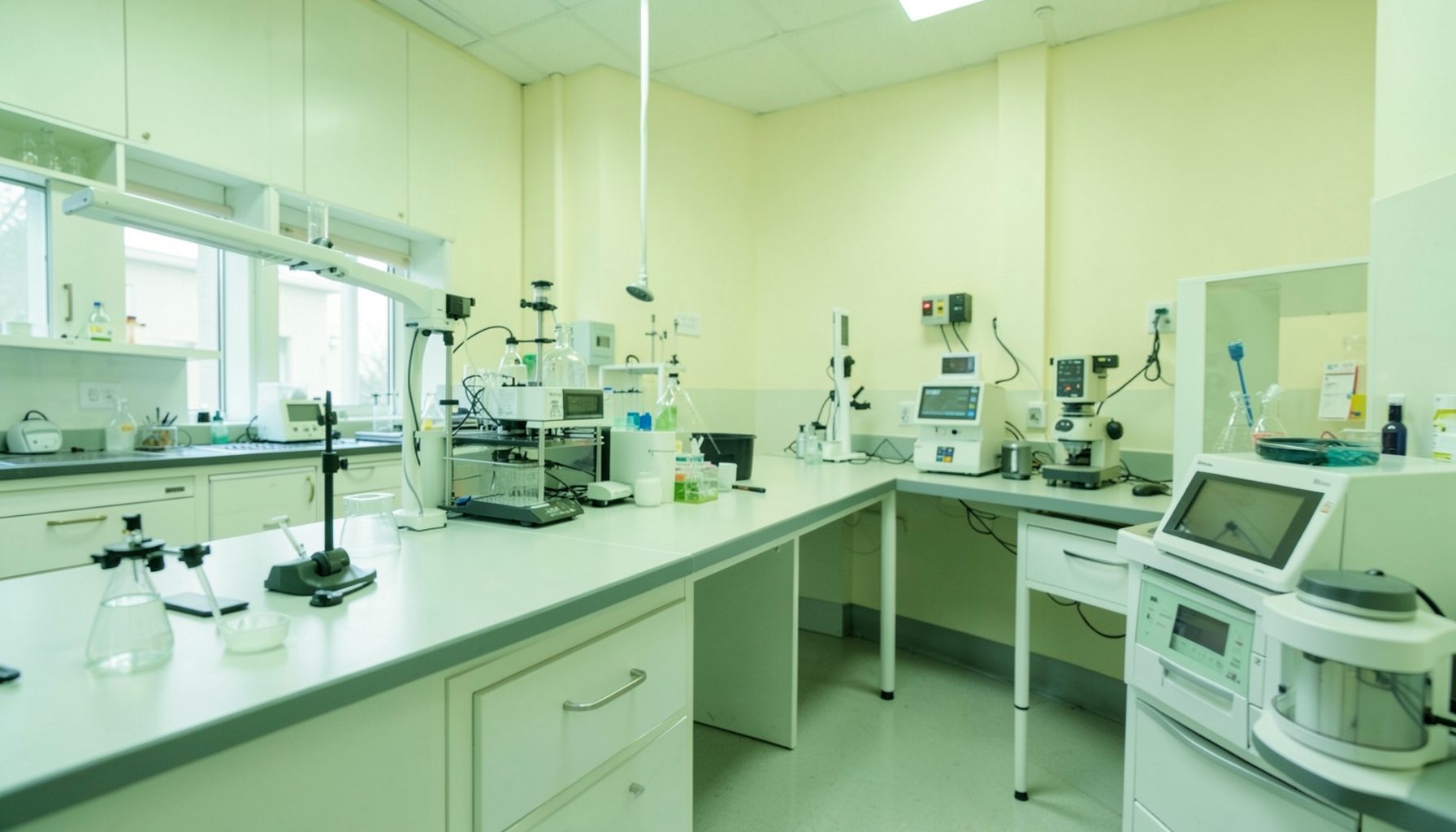
Designing a TB specimen storage guide for different sample types and conditions
Australia's network of public health and reference pathology laboratories handles tuberculosis specimens from cities like Sydney and Melbourne right through to remote communities in the Northern Territory and the Kimberley. With TB incidence higher among Aboriginal and Torres Strait Islander peoples and among migrants travelling from high-prevalence regions, reliable laboratory diagnostics are a national priority. A well-written specimen storage guide keeps pre-analytical integrity intact, supports accurate culture and molecular results, and aligns the lab with NATA accreditation expectations and ISO 15189 requirements under the RCPA framework.
Storage is often treated as the unglamorous cousin of testing, yet it is one of the most controllable sources of error in the TB diagnostic pathway. Specimens collected from patients in tropical Queensland, outback Western Australia, or coastal Tasmania all arrive at the bench with different transit times, temperatures, and contamination risks. Building a clear, condition-specific storage guide gives every scientist, technician, and courier the same playbook, whether they are working at Royal Darwin Hospital or a regional sputum collection point.
Why storage guidance belongs in the quality management system
Storage procedures are not just an operational footnote. They sit squarely inside the Quality Systems Essentials, alongside documentation, equipment, and internal audit. When the GLI Quality Tool is used to structure a laboratory quality system, specimen handling becomes a measurable process rather than a matter of habit or local custom. That shift in mindset is what separates labs that pass audits first time from those that scramble to find freezer charts during an assessment visit.
In Australia, laboratories seeking or maintaining NATA accreditation must demonstrate that pre-analytical conditions are controlled, traceable, and consistent with current standards. That means writing storage instructions that are specific about temperature ranges, time limits, container types, and the actions to take when something goes wrong. A storage guide that simply says "keep refrigerated" is not enough for an auditor, and it is not enough for the clinician waiting on a result from a remote patient in Cairns, Broome, or Thursday Island.
Mapping specimen types to their storage needs
Every sample type that enters the TB workflow has its own biology and its own risks. Sputum, the most common specimen, is rich in mycobacteria but also in contaminating flora, so refrigeration at 2–8°C is usually advised if culture cannot be inoculated within a few hours. Urine samples for TB PCR or LAM testing behave differently: they degrade faster at warm temperatures and benefit from same-day processing or, where transport is delayed, controlled refrigeration and protection from light.
Blood samples for interferon-gamma release assays and for culture need to be handled according to manufacturer instructions, generally arriving at the laboratory at room temperature and being processed within a defined window. For laboratories in northern Australia where ambient temperatures regularly climb above 30°C, this window is tight, and courier routes may be long. Respiratory samples collected by bronchoscopy, cerebrospinal fluid, and fine-needle aspirates each come with their own transport media, volume requirements, and stability profiles. The guide should list each sample type in a single table-like format, even if presented as bullet points, and pair it with the matching storage temperature, maximum holding time, and acceptable transport medium.
Temperature control, containers, and chain of custody
Temperature is the single biggest variable in specimen preservation. A reliable guide should distinguish between ambient storage (15–25°C), refrigerated storage (2–8°C), and frozen storage (–20°C or –80°C), and it should be honest about which conditions are actually available at the receiving site. In many Australian regional hospitals, –80°C freezers are scarce, and samples destined for long-term biobanking are often shipped on dry ice to a central reference laboratory in Brisbane, Perth, or Adelaide.
Container selection is the second pillar. Leak-proof, screw-capped containers rated for the relevant biosafety level reduce the risk of spills during storage and transport. Labels must survive freezer conditions, so cryovials with adhesive or laser-etched labels are preferable to paper stickers that fall off at –80°C. Each container should carry a minimum dataset: patient identifier, collection date and time, specimen type, and a barcode or accession number that links back to the laboratory information system.
Chain of custody is the third pillar. From the moment a sputum pot leaves a remote health clinic in the Top End to the moment an isolate is frozen for biobanking, every handover should be recorded. This is where guidance on visual management board setup becomes valuable: temperature logs, freezer maps, and out-of-specification events are all easier to track when they are visible at a glance.
Biosafety, documentation, and disposal
Mycobacterium tuberculosis sits at Biosafety Level 3, and storage arrangements must reflect that. Frozen stocks, cultured isolates, and positive slides all need to live in secure, access-controlled freezers, ideally within a containment laboratory or a lockable external bank. Australian laboratories following AS/NZS 2243.3 will recognise the same hierarchy used in the storage guide: secure, sign-controlled, and segregated from general clinical material that does not carry the same infection risk.
Documentation should not be left to memory. The guide should spell out how long each specimen type is retained, whether for diagnostic, legal, or research purposes, and where those records live. Retention rules in Australia often exceed the World Health Organization minimums because of medico-legal considerations and possible public health follow-up across state borders. Disposal pathways also need to be written down, including autoclave cycles for cultures, chemical disinfection for surfaces, and the paperwork required to release specimens for research under the relevant human research ethics framework.
Training, monitoring, and continuous improvement
A storage guide is only as strong as the people who follow it. New scientists arriving in the lab, locums covering the TB bench over a long weekend in Alice Springs, and couriers picking up specimens from a clinic in Kununurra all need to know what good practice looks like. Competency assessments should be practical, not just theoretical: can the staff member correctly pack a sample for dry-ice shipment, read a freezer temperature chart, and escalate a temperature excursion to the right person before the specimen is compromised?
Ongoing training keeps the system honest. Pairing storage competency with sessions such as fluorescent microscopy training helps staff understand why pre-analytical quality matters for the work they do at the bench. Quarterly audits of freezer temperatures, random container checks, and a simple non-conformance log all feed into the continual improvement loop that the Quality Systems Essentials expect.
Putting a storage guide together for your own laboratory starts with a simple step: list every specimen type you receive, then map each one to a temperature, a container, and a retention rule. From there, use the GLI Quality Tool to benchmark procedures against the four-phase roadmap, adapt the templates for local conditions, and share the finished guide with every clinic, courier, and reference laboratory in your network.