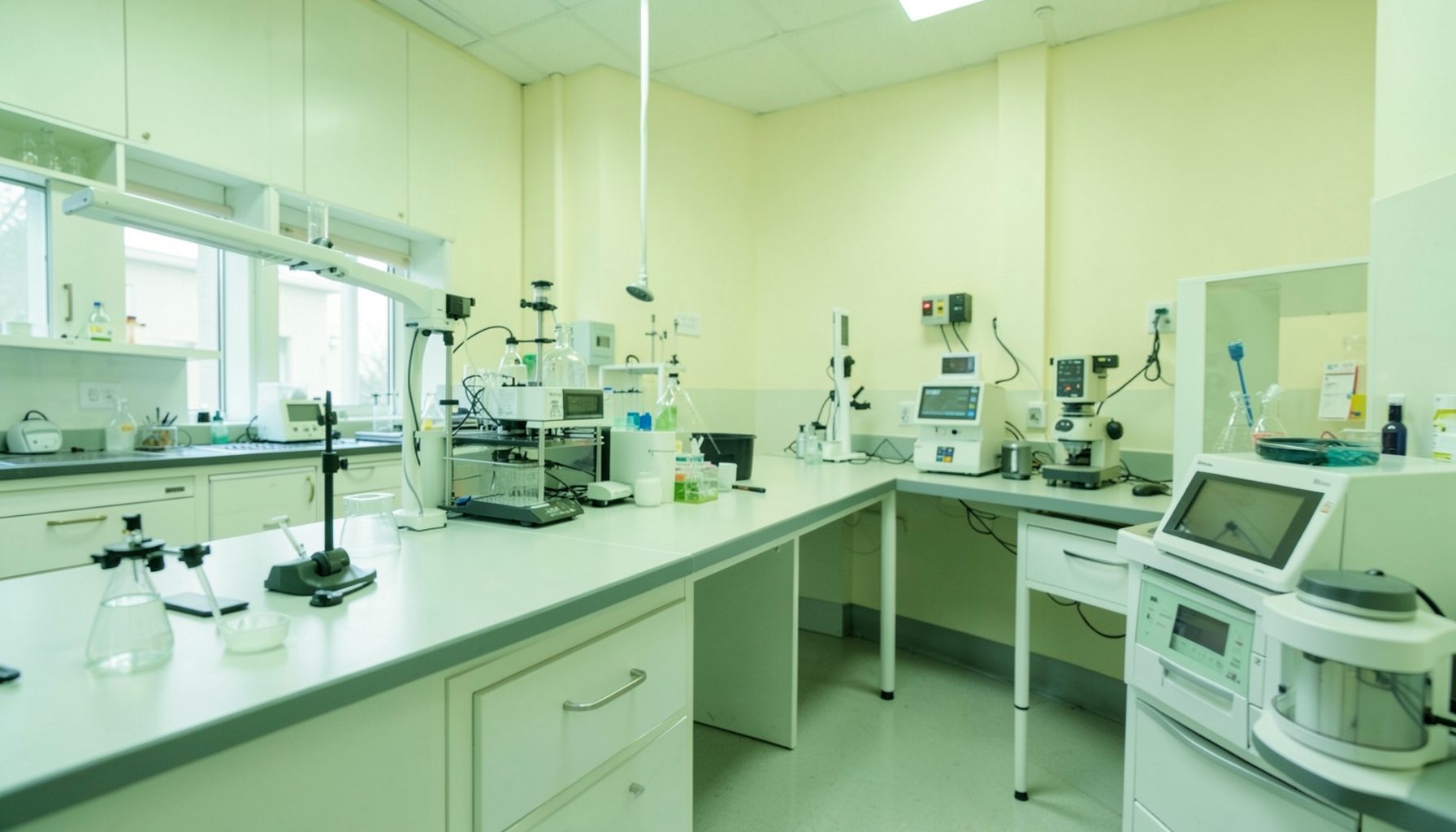
Writing a Culture Media SOP for Australian Tuberculosis Laboratories
Australia records one of the lowest tuberculosis incidence rates in the world, yet the disease remains a public health priority for Aboriginal and Torres Strait Islander communities, refugee arrivals, and travellers returning from high-burden regions. Laboratories in Sydney, Melbourne, Brisbane, Perth and Adelaide process specimens from these populations every week, often with the additional complexity of receiving samples transported across vast distances from remote Northern Territory clinics and Western Australian mining sites. Robust mycobacterial culture work depends entirely on the quality of the media used, which is why a well-designed standard operating procedure for preparation and storage is non-negotiable.
A practical SOP does more than list ingredients. It connects the laboratory's quality management system to the requirements set out by the National Pathology Accreditation Advisory Council, the Royal College of Pathologists of Australasia, and Australian/New Zealand Standard AS/NZS 2243.3 for microbiological safety. Drawing on the publicly available GLI Quality Tool helps laboratories anchor media-related procedures to the twelve Quality Systems Essentials, ensuring that the SOP is part of a broader roadmap rather than a standalone document.
Purpose and scope of the culture media SOP
The SOP should state plainly what it covers and what it does not. Scope typically includes receipt and storage of dehydrated media, preparation of working solutions, sterilisation, dispensing into tubes or bottles, inoculation quality control, and the shelf life of finished batches. Out-of-scope items—such as specimen processing or antimicrobial susceptibility procedures—are usually named explicitly to prevent confusion during audits conducted by NATA or by state health authorities.
Scope statements benefit from clear linkage to the laboratory's risk register. If a facility in Townsville processes large volumes of extrapulmonary specimens, the SOP should note which media formats are validated for those sample types. If a Perth laboratory supports paediatric services, the SOP should specify reduced-volume MGIT tubes or paediatric LJ slopes. This tailoring makes the document genuinely useful at the bench rather than a generic template filed away in a drawer.
Risk assessment and biosafety considerations
Culture media for Mycobacterium tuberculosis are handled under PC3 containment conditions in Australia. The SOP must describe the biosafety controls surrounding pouring, dispensing, and quality control inoculation, with reference to AS/NZS 2243.3 and the Department of Health guidance on tuberculosis. Open manipulation of live cultures is restricted to a Class II biological safety cabinet, and media bottles should be opened only within the cabinet.
Risk assessment should also address chemical hazards. Malachite green, used in Lowenstein-Jensen medium, is toxic and must be handled with gloves and eye protection in well-ventilated areas. Middlebrook 7H9 broth contains glycerol and fatty acids that support growth but can become contaminated if preparation areas are not cleaned between batches. The SOP should link these chemical risks to the laboratory's chemical inventory register and to incident reporting systems used by pathology services across New South Wales, Victoria and Queensland.
Media preparation, formulation and quality control
Preparation begins with validated reagents. Australian laboratories commonly purchase dehydrated media from suppliers with TGA-registered or equivalent quality certification, and each new lot number must be verified against the laboratory's acceptance criteria. Reverse-osmosis or Milli-Q grade water is generally required, especially for MGIT broth where ionic contamination can suppress growth. A small regional laboratory in Cairns may rely on shipments from Brisbane, which adds a documented step for verifying cold-chain integrity upon receipt.
In-process quality controls are critical. Each batch should be checked for pH, clarity, volume and, where applicable, slope consistency on LJ medium. A representative bottle from each MGIT lot is inoculated with an H37RV reference strain to confirm growth promotion, and another bottle is incubated un-inoculated to confirm sterility. Documentation of these checks feeds directly into the laboratory's internal audit programme, and the SOP should specify retention periods consistent with NPAAC requirements.
Sterility testing and storage conditions
Storage conditions differ significantly between media types. LJ slopes are typically stored at 2–8 °C in the dark and remain usable for up to six months when sealed properly. MGIT tubes and Middlebrook 7H11 plates have shorter shelf lives and must be used within their validated expiry, with continuous monitoring of incubator and refrigerator temperatures. The SOP should specify the calibration frequency of these instruments, including the data loggers that capture continuous temperature traces.
Australia's geography means storage and transport require extra thought. A laboratory in Alice Springs that prepares media locally but ships prepared bottles to remote clinics must document the transit conditions, including insulated packaging, coolant packs, and time-out-of-refrigeration limits. Standardised courier processes aligned with IATA packing instruction PI 650 apply when cultures or inoculated media leave the originating site, and these transport rules need a separate annexure within the quality manual.
Documentation, training and competency
Every step in the SOP needs a record. Batch preparation logs should capture lot numbers of dehydrated media, water source identity, sterilisation cycle parameters, pH readings, dispensing volumes, QC results, and the signature of the preparing scientist. These records support traceability when investigating unexpected contamination or poor growth, and they form the evidence base used during external quality assessment schemes coordinated by RCPA Quality Assurance Programs.
Training plans should describe how new staff are introduced to media preparation, how their competency is assessed against documented criteria, and how often re-assessment occurs. In laboratories with high staff turnover—such as fly-in-fly-out operations servicing mining towns in the Pilbara—frequency of re-assessment may need to be greater to maintain consistency. Reference to a daily equipment checklist can be embedded as an annexure so that scientists and assistants follow the same workflow each morning.
Monitoring, deviations and continual improvement
An SOP is only valuable when deviations are captured and acted upon. The procedure should define how contamination rates are tracked, how temperature excursions are reported, and how corrective actions are documented. Regular review of QC trends often reveals subtle issues such as a slowly rising contamination rate linked to a specific batch of supplements, which is far easier to address when caught early through structured monitoring.
When contamination events occur, structured root cause analysis is essential. Resources for investigating contamination outbreaks walk laboratories through the five-why technique, fishbone diagramming, and corrective action planning in a way that suits both metropolitan and regional teams. Linking this analysis back to the media preparation SOP closes the loop and demonstrates continual improvement to accreditation assessors.
| Medium type | Preparation complexity | Typical shelf life | Primary quality control |
|---|---|---|---|
| Lowenstein-Jensen slopes | Moderate (coagulation, inspissation) | 4–6 months at 2–8 °C | Growth promotion with H37RV, slope inspection |
| MGIT broth | Low to moderate | 2–4 weeks at 2–8 °C | Growth promotion, fluorescence check, sterility |
| Middlebrook 7H11 plates | Moderate | 2–4 weeks at 2–8 °C | Sterility, growth promotion, plate integrity |
| Selective 7H11 (with antibiotics) | High (antibiotic addition timing) | 2–4 weeks at 2–8 °C | Inhibitor testing, contamination monitoring |
Essential records for media batch preparation
- Dehydrated medium lot number, supplier, expiry date and date received
- Sterilisation cycle parameters and operator signature
- QC results including pH, sterility and growth promotion testing
- Final storage location and batch release authorisation
Storage monitoring checkpoints to include in routine review
- Continuous temperature logger review for refrigerators and incubators
- Visual inspection of slopes and plates for desiccation or contamination
- Documentation of any transport deviations for media shipped to satellite sites
- Reconciliation of prepared versus used batch volumes to detect anomalies
Bringing these elements together creates an SOP that genuinely protects laboratory workers, produces reliable culture results, and satisfies Australian accreditation requirements. The full four-phase roadmap, downloadable checklists, and printable SOP templates available through the GLI Quality Tool support laboratories whether they are setting up a new TB culture service in Hobart or refining an established programme in western Sydney. Open the resource, adapt the templates to local conditions, and integrate the document into the laboratory's quality management system before the next external audit visit.