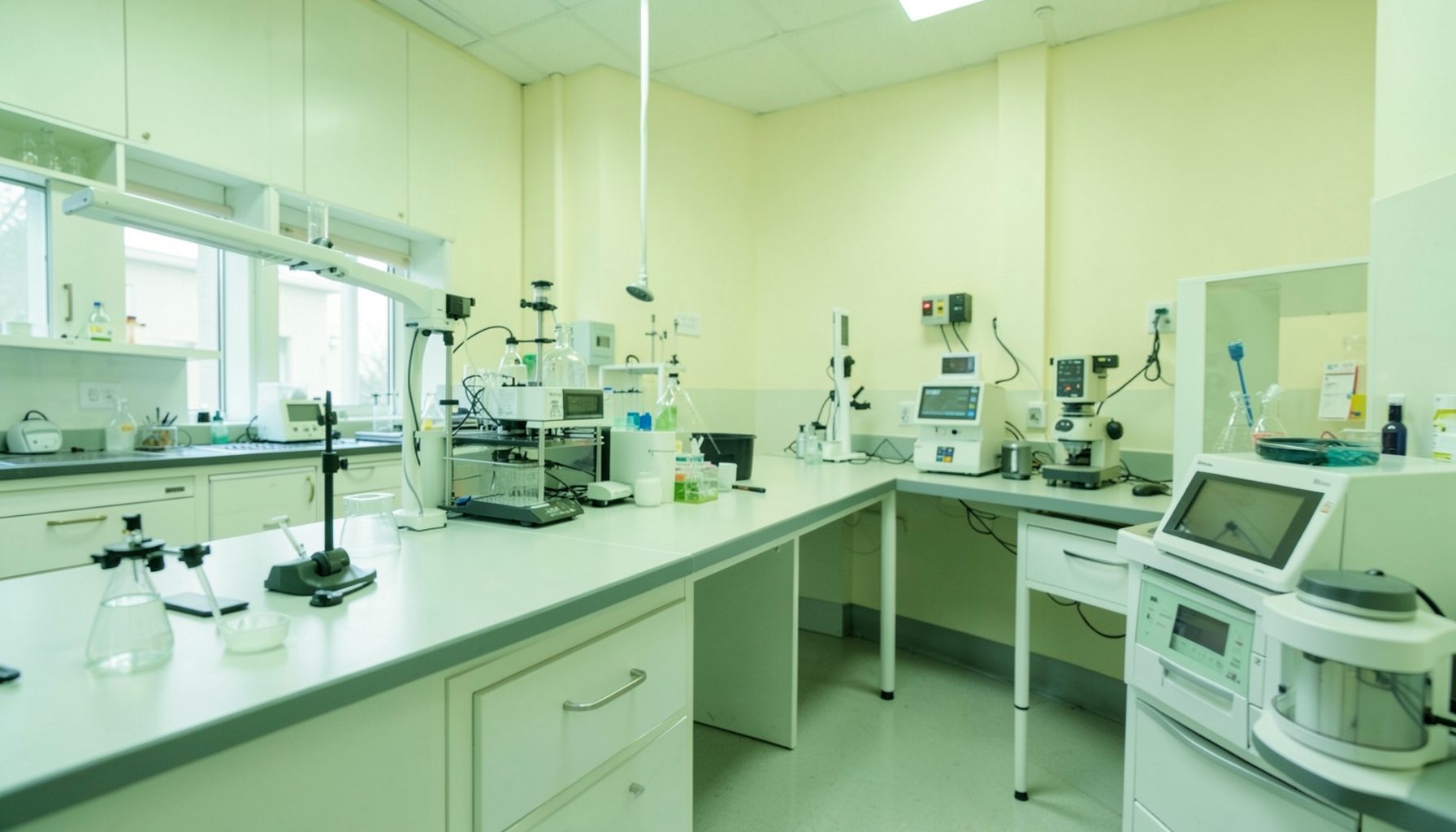
Ergonomic Safety For TB Microscopy Workstations
Microscopy remains an important part of tuberculosis laboratory practice, particularly where rapid molecular testing is unavailable, limited, or used alongside smear examination. The work demands sustained visual concentration, fine motor control, careful slide handling, and accurate recording. These requirements make workstation design a quality and safety issue rather than a matter of personal comfort.
A poorly arranged bench can contribute to neck flexion, raised shoulders, wrist strain, visual fatigue, and errors during staining or examination. Repetitive pipetting, slide preparation, cleaning, and data entry may add further load across a shift. A practical ergonomic checklist helps laboratories identify these risks before they become injuries, absenteeism, or preventable variation in test performance.
Australian laboratories operate under state and territory Work Health and Safety requirements, with local procedures often shaped by accreditation expectations and organisational risk systems. A laboratory in Sydney may have different facilities from a regional service in Darwin or a public health laboratory in Perth, yet the core ergonomic principles remain consistent. The checklist should be adaptable to available space, staffing, equipment, and purchasing arrangements.
The GLI Quality Tool’s quality management approach is useful because ergonomics can be connected with safety, personnel, equipment, facilities, assessment, and continual improvement. The aim is a simple document that staff can use during workstation setup, induction, routine observation, and internal review—not a form that is completed once and then stored without action.
Why Ergonomics Belongs In TB Quality Management
Ergonomic hazards can affect both worker health and the reliability of microscopy. When an analyst leans forward for long periods to focus through eyepieces, discomfort can reduce concentration and encourage rushed movements. Reaching across a crowded bench may lead to dropped slides, incorrect reagent placement, or contact with contaminated surfaces. A safer arrangement supports consistent technique throughout the working day.
The checklist should therefore sit alongside laboratory safety and quality procedures. It can record hazards, controls, responsible staff, review dates, and outstanding actions. A laboratory quality group can use the quality improvement team guide to assign ownership and track changes, such as replacing a fixed stool or relocating a frequently used stain rack.
A risk-based approach is especially important in services with limited budgets. Ergonomic improvement does not always require a new microscope bench. Adjusting chair height, raising a monitor, changing the position of slide trays, improving task lighting, or introducing short recovery pauses may produce meaningful benefits. Controls should be documented and tested with the people who perform the work.
Map Hazards Around The Microscope
Begin by observing the complete workflow rather than assessing the microscope in isolation. Include specimen receipt, slide preparation, staining, drying, microscopic examination, result entry, cleaning, waste disposal, and restocking. Note how often staff twist, reach, bend, grip, or hold a fixed posture. Record whether the same person performs several tasks for hours or rotates between activities.
The physical layout should allow the worker to sit or stand with the torso upright, shoulders relaxed, and elbows close to the body. Frequently handled items should be within easy reach. Heavy containers should not be stored overhead, and cords should be secured so they do not create trip hazards or pull equipment out of position. If a biosafety cabinet or other containment equipment is used for a step, ergonomic adjustments must never compromise airflow or containment.
Visual conditions deserve separate attention. Glare from windows or overhead lights can encourage awkward head positioning, while insufficient illumination can increase eye strain during slide preparation and cleaning. A microscope should be placed where reflected light is controlled, with task lighting available for activities that do not require the illumination system. Staff should be able to adjust the chair, eyepiece position, and focus without forcing the neck or wrists.
Set Up Seating, Benches, And Equipment
A suitable chair should provide stable support, an adjustable seat height, and a backrest that allows the worker to remain close to the bench. Feet should rest securely on the floor or on a footrest. If several people share one microscope, the workstation needs enough adjustment range for different body sizes. A small footrest can be a low-cost solution when the bench height cannot be changed.
The bench should provide adequate knee clearance and enough space for the microscope, slides, notes, disinfectant, and computer equipment without crowding. The primary viewing area should be centred in front of the worker. If the monitor is used for result entry, it should be positioned so that the head does not repeatedly turn between the screen and eyepieces. A document holder can reduce repeated downward bending when transcribing information.
Equipment procurement should include ergonomic specifications, not just optical performance and price. Australian laboratories may source microscopes, adjustable stools, anti-fatigue mats, keyboard supports, and task lights through different state health contracts or local scientific suppliers. A product that is readily available in Melbourne may have longer lead times for a rural Queensland service, so equivalent options and maintenance support should be recorded in the purchasing process.
Build The Checklist Around Work Tasks
Each checklist item should be observable and answerable. Useful prompts include: “Can the worker adjust the chair without assistance?”, “Are eyepieces positioned without sustained neck bending?”, and “Are slides and frequently used materials within the primary reach zone?” Avoid vague wording such as “workstation is comfortable,” because it makes follow-up difficult and produces inconsistent assessments.
Include a section for task duration and rotation. A workstation may appear acceptable during a ten-minute demonstration but become unsuitable during a full morning of smear reading. Supervisors should review how often staff change posture, alternate visual and non-visual duties, and take brief recovery pauses. These pauses should be planned within workflow and should not be treated as a substitute for correcting an unsuitable chair or bench.
The checklist should also cover cleaning and decontamination. Surfaces must be arranged so staff can disinfect them without excessive reaching or contact with unnecessary objects. Reusable accessories, immersion oil, wipes, and waste containers need defined locations. Any adjustment must remain compatible with the laboratory’s infection prevention procedures, chemical safety requirements, and manufacturer instructions for microscope care.
Verify Controls And Staff Practice
A written checklist is effective only when observations lead to action. Assign a person to address each finding and set a realistic completion date. Minor changes can be made immediately, while capital purchases may require a business case. Record interim controls, such as rotating staff or limiting extended microscopy sessions, until a permanent solution is available.
Training should explain why the setup matters and demonstrate how to adjust the chair, eyepieces, lighting, and monitor. New staff should complete a workstation check during induction, while experienced staff should be encouraged to report discomfort early. Pain, numbness, headaches, or persistent visual fatigue should be managed through the organisation’s workplace health process rather than ignored as an ordinary part of laboratory work.
Peer observation can identify habits that workers may not notice themselves. A colleague can watch a short microscopy session and assess posture, reach, visual angle, and handling of slides without turning the exercise into personal criticism. For broader procedural consistency, laboratories can use a peer review of SOPs alongside the ergonomic review, checking that written instructions reflect the actual sequence performed at the bench.
Practical Checklist Actions
A useful checklist should fit on a manageable number of pages and be easy to use at the workstation. It can include a risk rating, corrective action field, and space for photographs or a simple layout sketch. Review it after new equipment arrives, after a room alteration, following an incident, or when staff report recurring discomfort.
The following actions provide a practical starting point for Australian TB microscopy services:
- Check chair height, back support, foot position, and adjustability for every regular user.
- Position microscope eyepieces, controls, slides, and immersion oil within a comfortable reach.
- Control glare and provide suitable task lighting without interfering with microscope illumination.
- Keep cables, disinfectants, waste containers, and specimen materials organised and safely accessible.
- Alternate prolonged microscopy with preparation, recording, cleaning, or other suitable duties.
- Document reported discomfort, assigned corrective actions, review dates, and unresolved risks.
- Reassess the setup after equipment changes, staff feedback, incidents, or room renovations.
The GLI checklist library can help laboratories connect this local ergonomic assessment with wider quality system activities. Adapt any relevant material to the laboratory’s terminology, scope, equipment, and reporting arrangements. A short checklist used consistently is more valuable than a comprehensive document that staff cannot complete during normal operations.
Ergonomic controls should be reviewed as part of management meetings or internal audits. Trends can reveal that several staff need the same adjustment, that a particular microscope is unsuitable for extended use, or that workload patterns are creating excessive visual demand. Use these findings to support procurement, roster changes, facilities requests, and staff wellbeing planning.
A well-designed ergonomic safety checklist turns everyday observations into measurable quality improvement. Start by observing one microscopy workstation, involve the staff who use it, record practical controls, and review whether those controls work during a full shift. Then extend the process across the laboratory so safer posture, clearer layout, and sustainable microscopy become routine parts of TB testing practice.