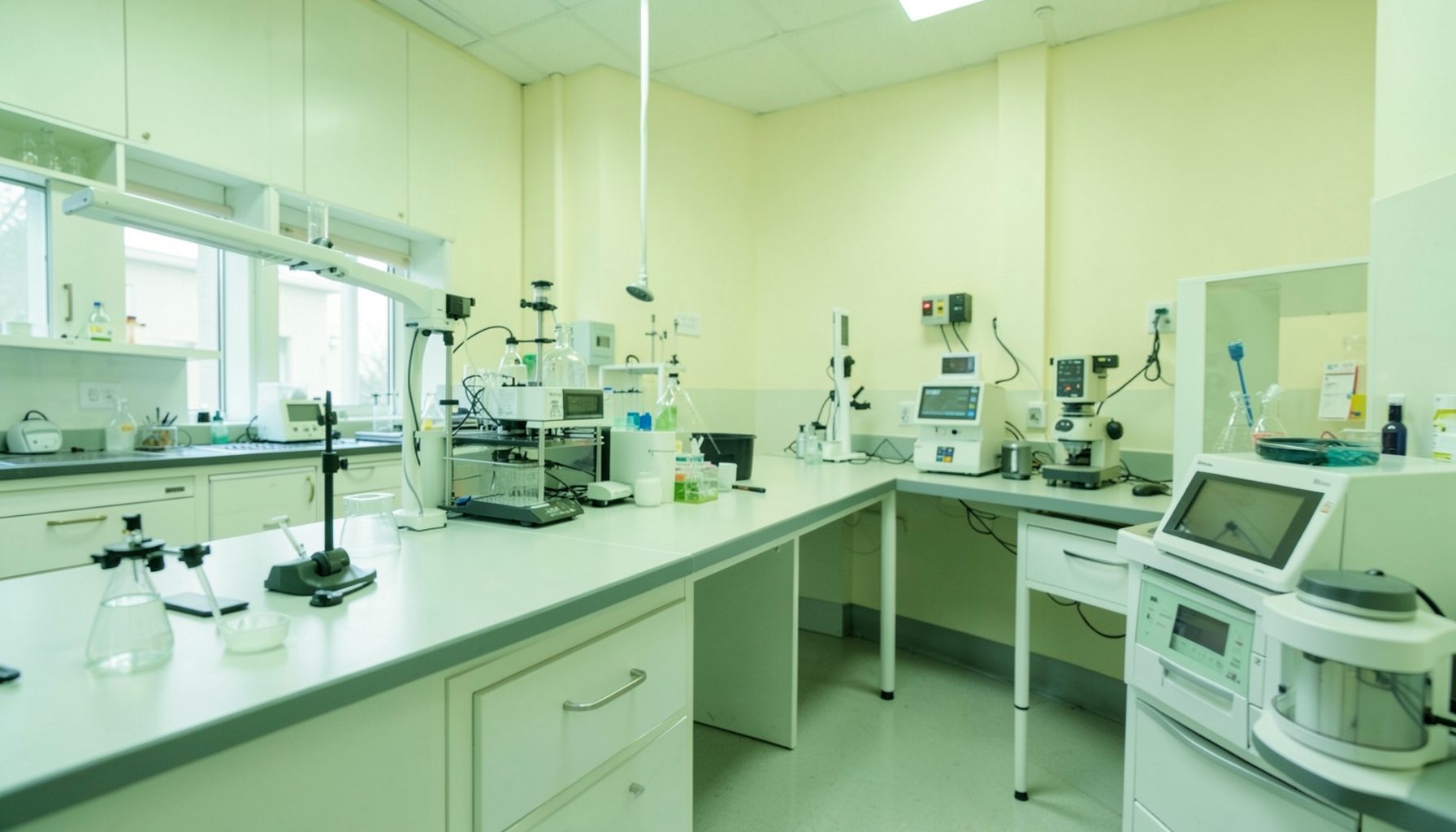
Daily Equipment Status Checks for TB Laboratories: A Practical Guide
In high-income settings such as Australia, tuberculosis case numbers are comparatively low, yet the laboratories that culture Mycobacterium tuberculosis must meet the same rigorous quality expectations as those operating in high-burden regions. Daily verification of equipment performance sits at the heart of that consistency, ensuring that every result issued reflects the true biological content of a specimen rather than an artefact of a drifting incubator or an uncalibrated pipette. For laboratories following the GLI Quality Tool framework, these checks are woven directly into the twelve Quality Systems Essentials, linking everyday bench routines to broader quality management goals.
This guide outlines how TB laboratory staff in cities such as Sydney, Melbourne, Brisbane, Perth, and Adelaide can structure daily equipment status checks, record them reliably, and integrate them into a wider quality system. It draws on practical recommendations suitable for facilities operating under Australian Standard AS/NZS 2243.3 for microbiological safety and the National Tuberculosis Program expectations, while remaining grounded in the accessible, checklist-driven approach championed by public health resources for tuberculosis laboratories.
The role of daily checks in TB laboratory quality systems
Daily equipment status checks are not administrative overhead; they are the operational expression of a laboratory's commitment to patient safety. In TB work, where cultures may incubate for weeks before yielding a positive result, a single undetected equipment failure can compromise an entire batch of samples. A biosafety cabinet with a failing airflow can expose staff to infectious aerosols, while an incubator drifting outside its target temperature of 35–37°C can silently suppress or distort mycobacterial growth.
Within Australian facilities, where turnaround times are often scrutinised against the Royal College of Pathologists of Australasia expectations, documented daily checks also provide the audit trail needed during accreditation reviews. They transform invisible routine into evidence, showing assessors that critical equipment is monitored continuously rather than only when something goes wrong.
Equipment categories requiring daily verification
Not every piece of equipment demands a daily check, but several categories are non-negotiable in a TB laboratory. These include biosafety cabinets, incubators, refrigerators and freezers storing reagents or cultures, autoclaves used for decontamination, and calibrated thermometers used across all temperature-controlled devices. Centrifuges with aerosol-containment rotors and heat blocks used during staining procedures also warrant brief functional confirmation at the start of each shift.
The objective is not exhaustive testing but a rapid, structured confirmation that each item is fit for purpose. A few seconds spent observing a digital display, listening for unusual sounds, or verifying a pressure gauge can prevent hours of rework later.
Building a practical daily checklist
A useful daily checklist is short enough to complete in ten to fifteen minutes and specific enough to leave no room for interpretation. It should be printed, laminated, and positioned next to each piece of equipment, with separate sheets for biosafety cabinets, incubators, and cold storage units. Each item should include the parameter being checked, the acceptable range, the actual reading, the operator's initials, and a column for comments.
Some Australian laboratories adapt checklists to align with internal quality frameworks required by the National Association of Testing Authorities, while others cross-reference them with state health department templates. The format may vary, but the underlying principle remains the same: what is not written down did not happen. For those looking to develop or refine their approach, GLI Quality Tool offers downloadable checklists and phase-specific guidance that can be tailored to local contexts.
Executing routine checks on biosafety cabinets
Before any work with TB cultures begins, the biosafety cabinet must be inspected. Staff should verify that the cabinet has been operating for at least the manufacturer-recommended warm-up period, usually fifteen to twenty minutes, and that the magnehelic gauge reads within the specified range, typically 0.40–0.50 m/s for face velocity in Class II cabinets. The grilles should be free of obstruction, and the cabinet interior wiped with appropriate disinfectant at the start and end of each session.
A useful prompt is to ask whether the cabinet has been certified within the last twelve months, as required under AS/NZS 2243.3 and most laboratory accreditation schemes. If the answer is no, daily checks should continue, but a recurring comment on the sheet will highlight the gap until certification is completed.
Monitoring temperatures and incubator performance
Temperature-controlled equipment represents the largest category of items requiring daily attention. Incubators set at 35–37°C for solid media and at 35°C for liquid culture systems should be read twice daily where possible, with morning and afternoon entries. Built-in thermometers should be cross-checked against a calibrated reference thermometer kept in the laboratory, and any deviation of more than one degree Celsius flagged immediately.
Refrigerators storing prepared media or specimens should sit between 2 and 8°C, while freezers for long-term culture storage typically operate at –20°C or –80°C. In regional centres such as Darwin, where ambient temperatures and humidity can place additional strain on cooling equipment, brief visual checks of door seals and condenser coils are equally valuable. Laboratories that also perform culture work may benefit from reviewing the guidance on streak plate quality controls to align their temperature data with downstream culture quality indicators.
Documenting results and managing deviations
Recording the result is only half the task; responding to out-of-range readings is the other. A clear deviation procedure should accompany every checklist, specifying who is notified, within what timeframe, and what corrective actions are taken. An incubator reading 38.5°C, for example, requires immediate relocation of cultures to a backup unit, a service request, and an incident note in the quality records.
These records should be reviewed weekly by a senior scientist or quality officer and summarised in monthly reports to laboratory directors. Australian laboratories operating under the National Tuberculosis Program are expected to maintain such records for several years, and they often form part of the evidence base during external audits conducted by bodies such as the RCPA.
Training teams and sustaining the routine
A checklist is only as reliable as the people using it. New staff should be trained on daily equipment checks during their initial induction and reassessed at least annually. Competency can be demonstrated through direct observation, review of completed sheets, and occasional shadow audits where a senior staff member performs the checks alongside the trainee.
For laboratories seeking structured training resources, the staff training on Löwenstein–Jensen guide illustrates the kind of stepwise approach that can be adapted for equipment-related procedures. Pairing new equipment training with refresher sessions on culture methods helps staff see the full workflow, from sample receipt through to final reporting, and reinforces why each daily check matters.
Practical reminders for daily equipment checks
- Verify biosafety cabinet airflow and surface disinfection before use.
- Record incubator and refrigerator temperatures against calibrated references.
- Confirm autoclave cycle completion and chart traces are filed correctly.
- Listen for unusual sounds from centrifuges, heat blocks, and water baths.
Parameters to record on daily sheets
- Acceptable temperature ranges for each unit.
- Calibration due dates and last certification date.
- Operator initials, time of reading, and space for corrective notes.
- Cross-reference to backup equipment in case of failure.
Taking the next step
Daily equipment status checks are a small investment of time that yields substantial returns in reliability, staff safety, and accreditation confidence. Australian TB laboratories that embed these routines into their quality management systems find that audit days become less stressful, equipment downtime shortens, and the reliability of culture-based and molecular results improves noticeably. Visit the GLI Quality Tool website to download phase-specific checklists and begin tailoring a daily verification routine to your own laboratory's needs.