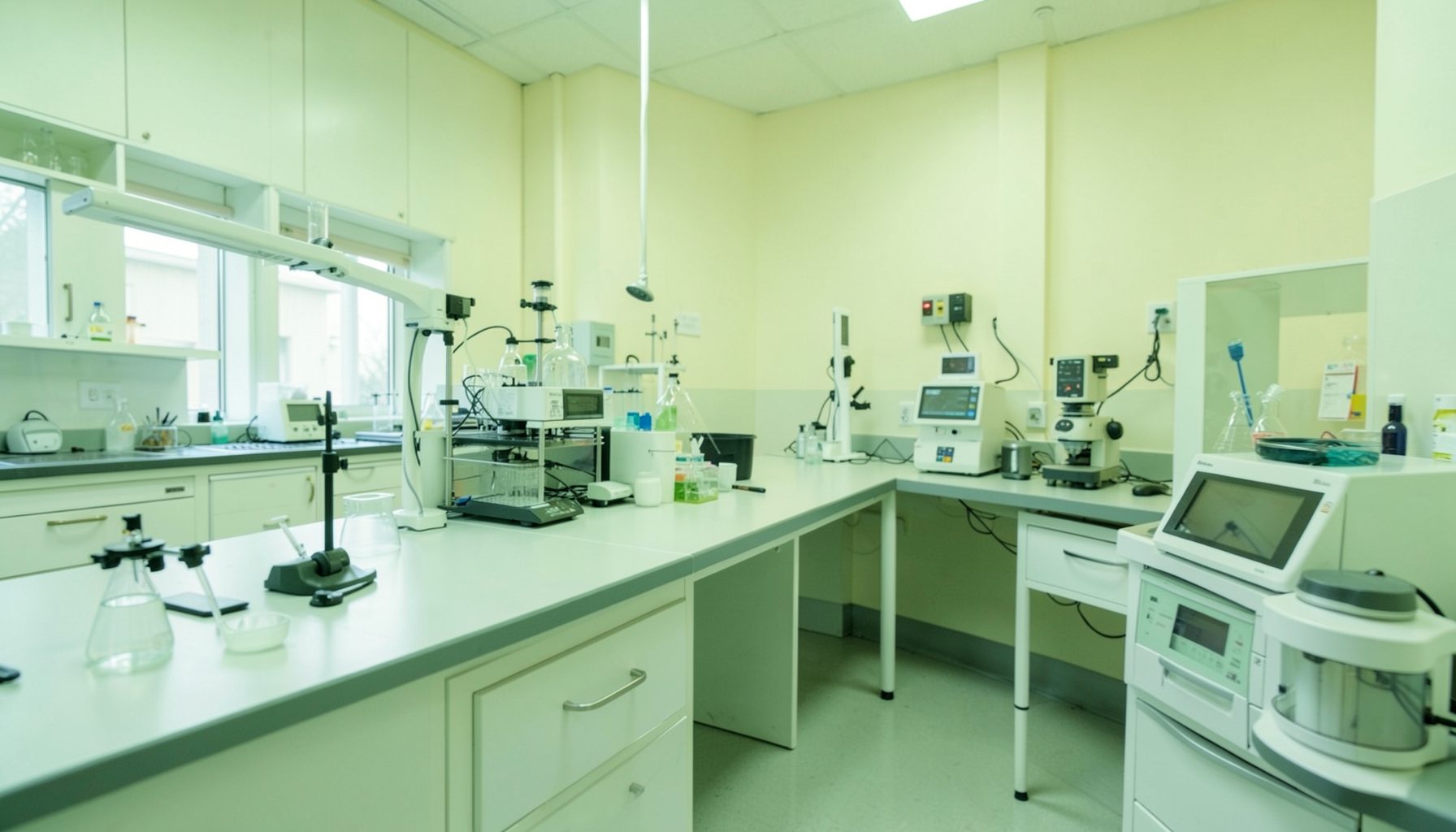
Building staff competence in TB liquid culture systems
Reliable liquid culture testing depends on people who can perform each step consistently, recognize hazards early, and respond correctly when results or instrument signals are unexpected. Systems such as Mycobacteria Growth Indicator Tube (MGIT) use sensitive technology, but automation does not remove the need for skilled laboratory staff. A poorly prepared specimen, incorrect tube handling, delayed processing, or incomplete documentation can affect the entire testing pathway.
Training should therefore be treated as a structured quality activity rather than a single demonstration. Staff need knowledge of tuberculosis biology, practical skills at the bench, familiarity with the instrument, and clear evidence that they can work safely and independently. The training approach should also suit the laboratory’s workload, staffing pattern, infrastructure, and available maintenance support.
A strong program connects instruction with standard operating procedures, internal quality control, external assessment, equipment management, and continual improvement. This gives supervisors a practical way to identify gaps and helps new staff understand how their actions influence patient diagnosis, drug-resistance detection, and public health reporting.
Define the required competence
Before training begins, the laboratory should describe the tasks that each staff member is expected to perform. These may include receiving and assessing specimens, preparing samples for decontamination, inoculating MGIT tubes, loading and unloading the instrument, managing positive and negative results, performing follow-up identification, and recording or reporting findings. Competence requirements should distinguish between routine testing and higher-risk activities such as spill response or troubleshooting contamination.
A role-based matrix can show which employees are learning, supervised, competent, or authorized to work independently. It should include technical skills, biosafety practices, documentation, equipment use, communication, and result interpretation. Staff who only receive specimens or enter data require different training from those who process specimens and investigate positive cultures.
Training objectives should be measurable. “Understands MGIT testing” is too broad to assess effectively. Objectives such as “prepares a tube according to the approved procedure,” “explains the action required for an instrument-positive tube,” or “documents a corrective action completely” provide a clearer basis for observation and sign-off.
Teach the workflow from specimen to report
Instruction is most effective when it follows the complete testing pathway. Begin with specimen acceptance criteria, labeling, transport conditions, rejection reasons, and the importance of matching the request form with the container. Staff should understand how poor collection, leakage, inadequate volume, or delays can compromise culture recovery and create avoidable exposure risks.
Practical demonstrations should cover specimen processing, preparation of growth supplement and antimicrobial mixture according to the manufacturer’s instructions, tube labeling, inoculation, and loading. The laboratory’s approved procedure must take precedence over generic teaching materials because reagent brands, instrument models, national algorithms, and biosafety arrangements can differ. Trainers should emphasize critical control points where a small error can produce contamination, false-negative findings, or an untraceable result.
Staff also need to understand what happens after a tube is flagged positive or reaches the end of the incubation period. They should know how to handle the tube safely, perform the required smear or confirmation work, refer material for identification or drug susceptibility testing when applicable, and record the final interpretation. A positive instrument signal is an alert requiring the defined confirmation pathway; it is not automatically a confirmed diagnosis of tuberculosis.
Make safety visible at every step
TB liquid culture work can generate aerosols during opening, pipetting, vortexing, centrifugation, and spill management. Training must connect each activity with the appropriate engineering controls, personal protective equipment, work practices, and waste procedures. Staff should demonstrate correct use of the biological safety cabinet, safe loading of centrifuge buckets, decontamination of work surfaces, and management of broken or leaking tubes.
New personnel should receive supervised practice before handling clinical material. They should know the laboratory’s exposure response process, including immediate actions after a splash, sharps injury, tube breakage, or suspected aerosol release. Drills and short scenario exercises are useful because an emergency is not the right time to search for instructions.
Safety training also includes instrument and chemical hazards. Staff must understand electrical precautions, tube and rotor limitations, disinfectant contact times, storage requirements, and the consequences of using expired or incorrectly stored reagents. Supervisors should observe technique at the workstation instead of relying solely on written or verbal explanations.
| Training area | Observable evidence of competence | Records to retain |
|---|---|---|
| Specimen reception | Correctly verifies identity, condition, volume, and request information | Reception checklist and observed assessment |
| Specimen processing | Performs steps in the approved order while controlling exposure risks | Practical observation form |
| MGIT tube preparation | Uses correct labels, supplements, volumes, and expiry checks | Worksheet or batch record |
| Instrument operation | Loads, monitors, and unloads the system without bypassing controls | Instrument log and authorization record |
| Positive culture response | Applies the defined confirmation, referral, and reporting pathway | Result review and case exercise |
| Quality and safety | Recognizes deviations, documents incidents, and initiates corrective action | Incident, QC, or corrective-action record |
Use controlled procedures and records
Training is much stronger when staff learn from the same controlled documents they will use during routine work. Procedures should state the purpose, responsibilities, required materials, safety precautions, step-by-step method, quality checks, result interpretation, limitations, and records to complete. A practical resource on SOP writing guidance can help laboratories apply the same disciplined approach to procedures supporting liquid culture.
Copies at the bench must be current and identifiable. Trainers should explain how to recognize a document revision, where to find approved forms, and what to do if an instruction appears unclear or conflicts with practice. Staff should never copy informal notes or rely on memory when a controlled SOP is available.
Records provide evidence that training occurred and that competence was evaluated. Keep attendance, learning objectives, assessment results, authorization dates, retraining records, and supervisor observations. Equipment logs, temperature records, maintenance records, quality control results, contamination investigations, and corrective actions should be linked to the relevant staff activity when possible. Complete records make it easier to distinguish a staff error from a reagent, specimen, instrument, or process problem.
Assess competence and maintain it
A written quiz can check terminology and basic principles, but it cannot establish practical competence by itself. A balanced assessment includes direct observation, oral explanation, review of completed records, simulated scenarios, and supervised testing with appropriate materials. The assessor should use a checklist that identifies critical errors, such as incorrect specimen identification, unsafe cabinet practice, missing tube labels, or failure to act on an instrument alarm.
Competence should be assessed before independent work and reassessed after a defined interval or when circumstances change. Triggers for reassessment may include a new instrument model, revised national guidance, extended absence, repeated documentation errors, unusual contamination, a major corrective action, or introduction of a new culture or drug susceptibility workflow.
Refresher training should be targeted rather than automatic. For example, a staff member with accurate technical work but incomplete records may need coaching on documentation and review. A rise in contamination may require team retraining on specimen processing, centrifugation, cleaning, or aseptic technique. Supervisors should use quality indicators to identify these patterns early.
Useful indicators include contamination rate, proportion of rejected specimens, invalid or repeated tests, instrument downtime, overdue maintenance, frequency of transcription errors, turnaround time, and performance in proficiency testing. Results should be discussed in a constructive way that focuses on process reliability and patient safety rather than blame.
Align learning with laboratory priorities
Training resources should reflect the laboratory’s service commitments. A facility supporting a national tuberculosis program may prioritize rapid detection, uninterrupted culture capacity, accurate drug-resistance referral, and timely reporting. Connecting staff objectives with those priorities helps employees see why tube preparation, equipment checks, and complete records matter beyond their individual bench activity. The guidance on aligning quality goals offers a useful framework for making this connection explicit.
The quality manager, technical supervisor, biosafety officer, and instrument users should contribute to the training plan. Trainers should review trends from audits, nonconformities, external quality assessment, user feedback, and maintenance reports. This turns training into part of the laboratory’s improvement cycle instead of an isolated human-resources exercise.
A phased quality roadmap can help laboratories organize this work according to their current capacity. The GLI Quality Tool provides checklists and practical materials covering personnel, equipment, documents, safety, assessment, and continual improvement. These elements can support a realistic training plan even where staffing, space, or access to specialist instructors is limited.
Practical actions for supervisors
- Create a task-based competency matrix for every MGIT role.
- Train with the current SOP, manufacturer instructions, and national algorithm together.
- Require supervised observation and documented authorization before independent testing.
- Review contamination, rejected specimens, delays, and documentation errors for retraining needs.
- Schedule reassessment after procedure changes, extended absence, incidents, or new equipment.
A well-trained team should be able to explain each critical step, perform it safely, recognize when a result requires confirmation, and document the work so another person can reconstruct what happened. Laboratory leaders can begin by reviewing current competency records, observing one complete workflow, and closing the most important gaps through focused coaching. Build the process into routine quality meetings and keep the evidence of competence current.