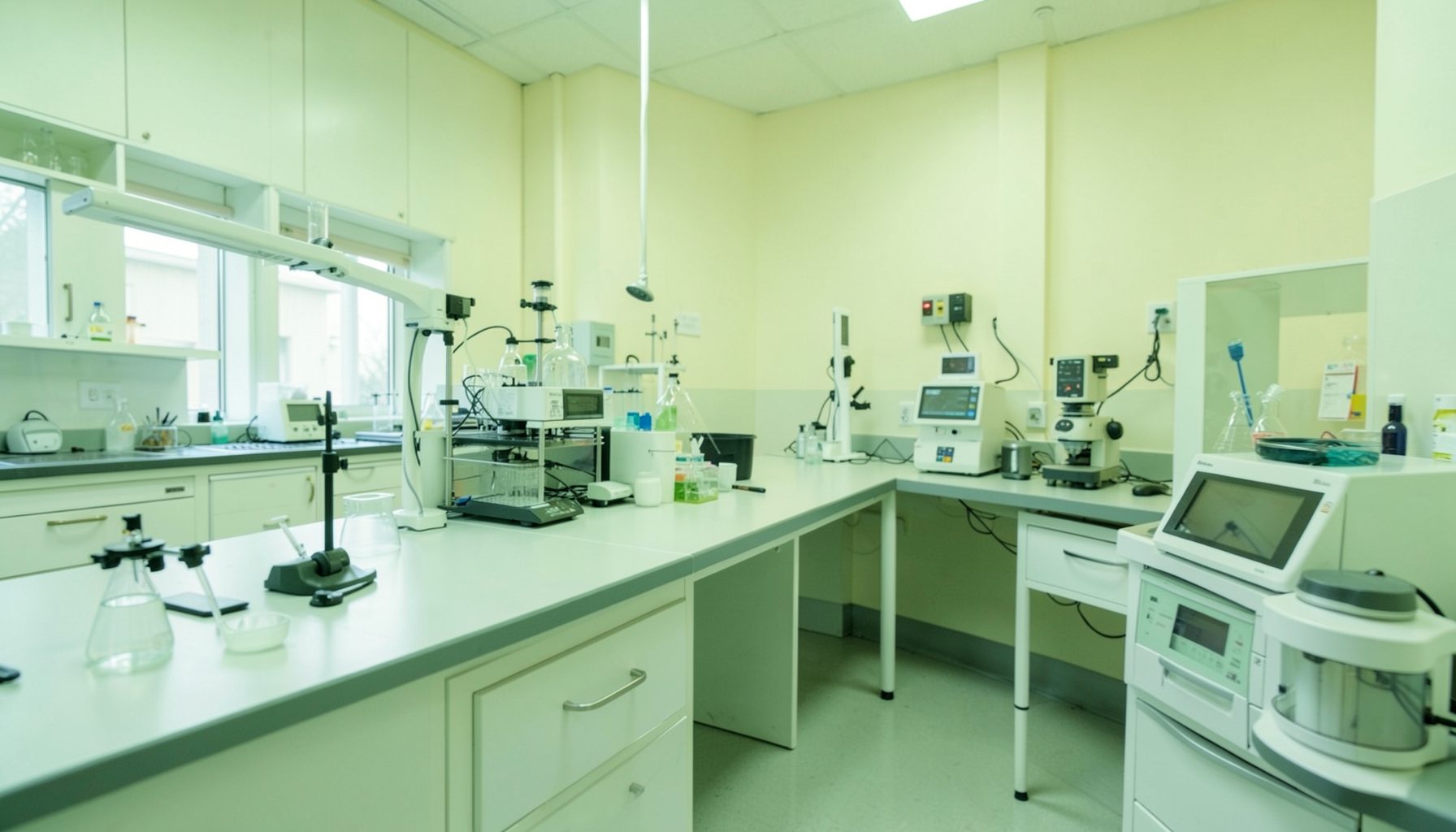
Building reliable skills for TB molecular testing platforms
Molecular testing has transformed tuberculosis diagnosis by shortening the time between specimen collection and detection of Mycobacterium tuberculosis complex, including important drug-resistance markers. Yet a cartridge-based or automated platform does not remove the need for skilled laboratory personnel. Reliable results depend on correct specimen handling, instrument operation, contamination control, result review, documentation, and timely response to errors.
Training should therefore be designed as a quality management activity rather than a single equipment demonstration. Staff need to understand the complete testing pathway and how their decisions affect patients, clinicians, surveillance programs, and laboratory performance. A structured approach also helps laboratories maintain competence when personnel change or testing volumes increase.
The GLI Quality Tool offers a practical framework for organizing this work across quality systems essentials such as personnel, equipment, process management, documentation, assessment, and continual improvement. Laboratories can use its phased approach to connect platform-specific instruction with broader quality objectives.
Define competence before teaching procedures
Begin by describing what each staff member must be able to do independently. A sample receptionist may need to verify identifiers, assess specimen acceptability, and record collection details. A testing technologist may need to prepare the work area, load samples, operate the instrument, validate results, manage invalid runs, and complete records. A supervisor may also review quality indicators, authorize corrective actions, and communicate with clinicians.
These responsibilities should be translated into observable competencies. “Understands the analyzer” is too vague to assess. A stronger statement is: “Correctly performs startup, checks environmental conditions, runs controls, identifies an error code, and records the action taken.” Competency statements should cover knowledge, practical skills, judgment, and professional behavior.
Training materials should reflect the exact platform in use, whether it is a cartridge-based real-time PCR system, a near-point-of-care molecular assay, or another nucleic acid amplification technology. Manufacturer instructions remain essential, but staff also need local standard operating procedures that explain referral pathways, result reporting, waste management, and escalation contacts.
Build a role-based learning pathway
Effective instruction usually combines short theory sessions, demonstrations, supervised practice, and formal assessment. Start with the purpose and limitations of the assay: what the test detects, which specimens are validated, how internal controls work, and what a positive, negative, invalid, or error result means. Staff should know that a molecular result is interpreted within clinical and epidemiological context and does not replace every other diagnostic or susceptibility method.
The practical component should follow the real workflow. Demonstrate receipt and registration, preparation of the sample, reagent or cartridge checks, pipetting where applicable, loading, run initiation, result verification, and reporting. Trainers should deliberately model good habits, including checking lot numbers, expiry dates, storage conditions, instrument status, and work-surface cleanliness.
Use a staged authorization process. A new operator can first observe, then perform tasks under close supervision, and finally complete runs independently after meeting defined criteria. Training records should include the platform, assay, trainer, dates, observed procedures, assessment results, and authorization status. Refresher training is appropriate after prolonged absence, a major procedure change, repeated errors, or introduction of a new assay.
Make biosafety and contamination control routine
TB molecular testing requires attention to biosafety even when the platform is enclosed. Staff must understand the hazards associated with potentially infectious respiratory specimens and follow local risk assessments. Training should cover personal protective equipment, hand hygiene, safe specimen transport, spill response, sharps management, waste treatment, and actions after exposure.
Workflow separation is equally important. Laboratories should define clean and potentially contaminated areas, control movement of people and materials, and use dedicated equipment where required. Aerosol-generating steps deserve special emphasis. Staff should be able to explain why opening specimen containers, transferring material, or handling waste can create risks for both infection and false-positive contamination.
Contamination prevention should be taught through realistic scenarios. For example, trainees can identify which actions could lead to carryover between specimens, then practice cleaning and decontamination according to the local procedure. If a platform uses single-use cartridges, that reduces some risks but does not eliminate errors during specimen preparation, storage, disposal, or result entry.
Protect specimens, reagents, and equipment
A correct test begins with an acceptable specimen. Training should teach staff to verify patient identifiers, collection date, specimen type, volume, container integrity, and transport conditions. They should know when to reject a specimen, when to request recollection, and how to document exceptions. Clear acceptance criteria prevent inconsistent decisions between shifts.
Reagent management deserves its own practical exercise. Staff should inspect packaging, expiry dates, lot numbers, and signs of damage before use. They should understand the difference between refrigerated, frozen, and room-temperature storage requirements, as well as the consequences of temperature excursions. Laboratories establishing or strengthening freezer oversight can use this temperature monitoring guidance to support a documented system for alarms, records, and corrective action.
Equipment training should include daily checks, maintenance schedules, calibration or verification requirements, power protection, and procedures for downtime. Operators need to recognize when an instrument is unavailable for testing and know how specimens should be referred to another service. A platform logbook should capture maintenance, faults, service visits, software updates, and actions taken.
Assess performance and manage errors
Competency assessment should test actual performance, not attendance. A written quiz can confirm basic knowledge, but direct observation is needed for critical steps. Trainers may use known samples, simulated errors, or previously characterized materials when appropriate and safe. Assessment criteria should distinguish minor omissions from failures that could affect patient results.
A useful assessment combines several methods:
| Competency area | Evidence of competence | Follow-up when performance is weak |
|---|---|---|
| Specimen acceptance | Correctly verifies identifiers and suitability | Review criteria and observe additional cases |
| Test preparation | Completes preparation without contamination or omissions | Repeat demonstration and supervised practice |
| Platform operation | Runs controls and samples according to procedure | Retrain on the affected step and reassess |
| Result interpretation | Correctly handles positive, negative, invalid, and error outputs | Use case-based exercises and supervisor review |
| Documentation | Completes worksheets, logs, and reports accurately | Audit records and provide targeted coaching |
| Incident response | Escalates faults, spills, or temperature excursions | Conduct a scenario drill and document corrective action |
Quality indicators can show whether training is working. Track invalid and error rates, rejected specimens, amended reports, equipment downtime, external quality assessment results, and turnaround time. Trends are more informative than a single result. A sudden increase in errors after staff rotation may indicate a training gap, while repeated invalid results may point to specimen quality, environmental conditions, reagent storage, or instrument maintenance.
When a problem occurs, avoid treating retraining as the automatic answer. Investigate the underlying cause using records, interviews, observation, and quality control data. The corrective action might involve rewriting a confusing procedure, improving workspace layout, repairing equipment, changing stock control, or clarifying supervisory review.
Keep learning materials accessible
Staff should be able to consult current procedures at the point of work. Controlled copies of standard operating procedures, quick-reference instructions, maintenance schedules, troubleshooting guides, and reporting algorithms should be available in a language and format that users can apply easily. Obsolete versions must be removed or clearly marked to prevent accidental use.
Short job aids can reinforce high-risk steps without replacing full procedures. Examples include a specimen acceptance checklist, an instrument startup card, an invalid-result pathway, and a temperature excursion form. Visual aids are especially useful in busy laboratories, provided they are reviewed and controlled through the document management system.
Training resources should also support continuity. Store attendance records, competency assessments, corrective actions, and refresher dates in a system that supervisors can review. The downloadable materials from the GLI Quality Tool can help laboratories adapt checklists and quality management resources to their local training program.
Recommendations for sustained operator competence
- Map each platform task to a named role, required competency, trainer, and assessment method.
- Use supervised practice with realistic specimens, controls, result patterns, and instrument errors.
- Reassess staff after extended absence, major procedure changes, repeated mistakes, or poor quality indicators.
- Review invalid results, rejected specimens, downtime, and external assessment findings during routine quality meetings.
- Keep procedures, job aids, training records, and authorization lists current and accessible.
Supervisors should schedule training as part of normal laboratory operations rather than waiting for a failure. A brief monthly review of quality data can identify topics for coaching, while a more formal annual competency assessment can verify continued authorization. Peer observation is also valuable because experienced operators may notice workflow shortcuts that routine record review misses.
Training should be inclusive of all shifts and relevant support roles. Reception staff, couriers, cleaners, maintenance personnel, and clinicians may each influence specimen integrity or biosafety. Shared understanding reduces handoff errors and makes the molecular testing service more dependable.
Turn training into a quality system
Proper use of a TB molecular platform is demonstrated through consistent results, safe behavior, complete records, and sound responses to unexpected events. When these elements are built into role descriptions, procedures, assessments, and quality reviews, training becomes part of the laboratory’s operating system rather than a one-time event.
Laboratory managers can begin by reviewing current authorization records, observing a complete testing workflow, and comparing actual practice with the platform procedure. Use the findings to create a focused training calendar, assign accountable trainers, and document measurable improvement. Regularly revisit the process as assays, instruments, staffing, and service demands change.
Put the framework into daily practice by linking every training activity to patient safety and laboratory quality. A well-prepared team can operate molecular testing platforms confidently, recognize limitations early, protect specimens and staff, and produce results that clinicians can trust.