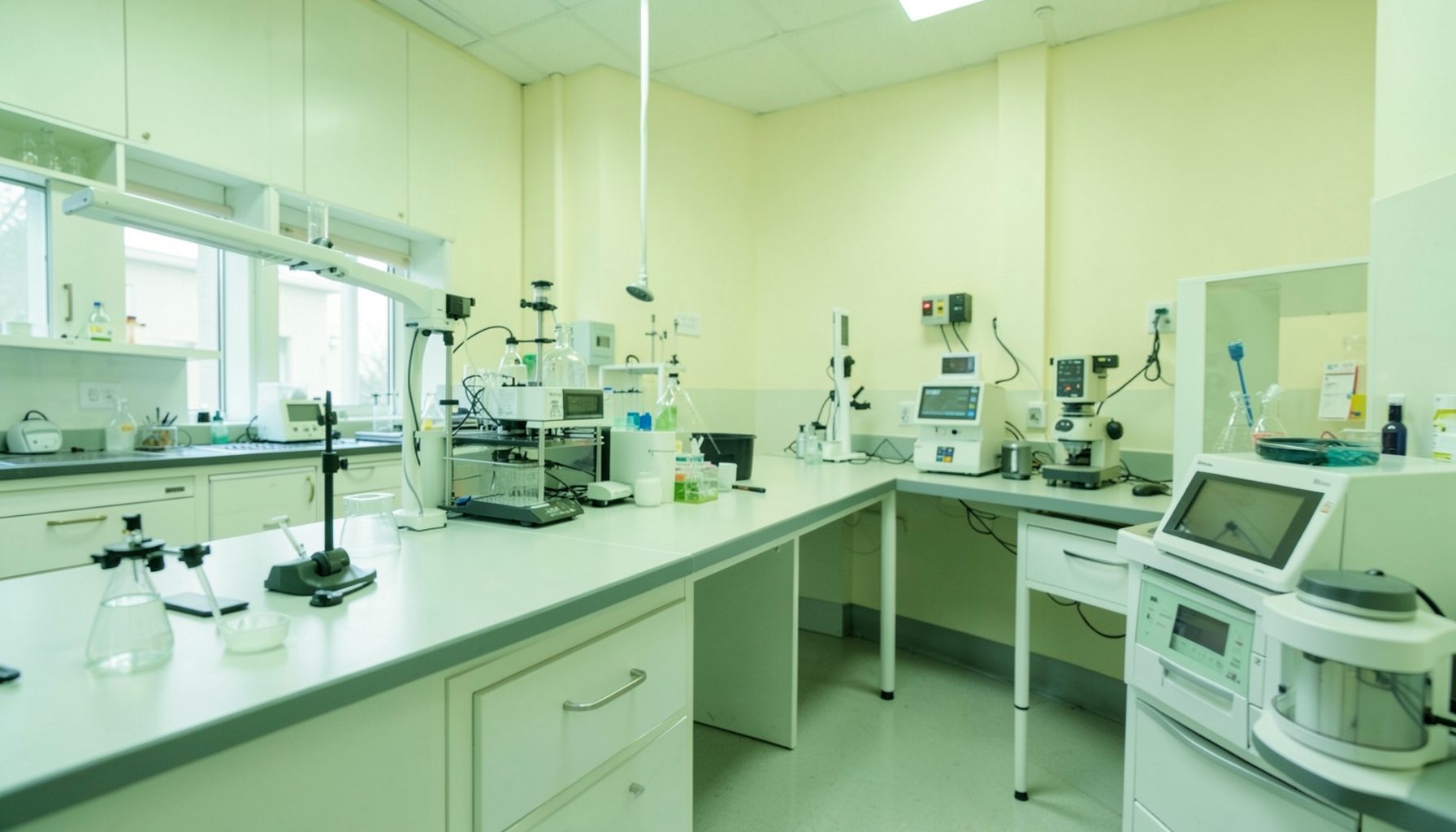
Training laboratory staff for reliable GeneXpert TB testing
GeneXpert testing has made rapid tuberculosis detection more accessible in laboratories that previously depended on slower smear microscopy and culture workflows. The system can detect Mycobacterium tuberculosis complex and, depending on the cartridge used, identify genetic markers associated with rifampicin resistance. Its speed is valuable, but reliable results depend on much more than loading a cartridge and pressing a button.
Effective staff preparation combines technical instruction, biosafety, quality management, result interpretation, equipment care, and supervised practice. Every operator should understand how the test fits into the diagnostic pathway, what can invalidate a result, and when a finding requires referral or additional testing.
A laboratory can use the GLI Quality Tool’s quality systems approach to organize training within its broader management system. Personnel competence should connect with documented procedures, controlled equipment, internal quality control, assessment activities, and continual improvement rather than being treated as a one-time orientation.
Define the competency standard
Begin by identifying the duties each staff member must perform. An operator may need to receive and assess specimens, register patients, prepare samples, operate the GeneXpert instrument, review system messages, record results, manage waste, and communicate urgent findings. Supervisors may also need to authorize results, monitor quality indicators, investigate errors, and arrange maintenance.
Create a competency profile for each role before training starts. The profile should distinguish knowledge from practical ability. For example, a trainee may explain the purpose of an Xpert MTB/RIF or Xpert MTB/RIF Ultra assay but still need supervision while pipetting, handling potentially infectious material, or responding to an error code.
Use written standard operating procedures that match the exact instrument model, assay version, local algorithm, and manufacturer instructions. Training materials should reflect the laboratory’s actual workflow, including specimen acceptance criteria, labeling conventions, referral arrangements, reporting language, and escalation pathways for rifampicin resistance or invalid results.
Prepare a safe and workable environment
GeneXpert testing begins with appropriate specimen handling. Staff should recognize acceptable sputum and other locally approved specimen types, confirm identifiers, check volume and condition, and follow procedures for leaking, unlabeled, or unsuitable containers. A clear rejection and recollection process prevents questionable material from entering the testing stream.
Biosafety instruction must be practical. Operators should demonstrate correct use of laboratory coats, gloves, respiratory protection where required by the risk assessment, and eye or face protection during activities that may generate splashes. They should also know how to disinfect work surfaces, manage spills, separate clean and dirty areas, and dispose of used cartridges and consumables safely.
The room and instrument setup deserve attention during training. Staff should understand ventilation requirements, stable electricity, temperature limits, connectivity, dust control, and access restrictions. A backup plan for power interruptions, network failure, cartridge shortages, or instrument downtime helps prevent rushed decisions and unreported delays.
Teach the complete testing workflow
Demonstration should follow the full sequence from specimen receipt to result communication. The trainer can first explain the purpose of each step, then perform the procedure slowly while naming critical control points. Trainees should subsequently perform the workflow under direct observation until they can complete it consistently without prompting.
Particular emphasis belongs on sample preparation, reagent handling, cartridge identification, transfer of the processed sample, and correct placement in the module. Small deviations can produce contamination, unsuccessful runs, false confidence, or avoidable cartridge loss. Staff should never bypass instrument prompts or improvise when a procedure is unclear.
Training must include instrument software and result categories. Operators should be able to distinguish detected, not detected, trace, invalid, error, and no-result outcomes according to the assay in use and current national guidance. They should know that a result requiring repeat testing is different from a definitive negative result, and that resistance-related findings may require immediate action under the national tuberculosis program.
| Training area | Demonstrated competence | Evidence to retain |
|---|---|---|
| Specimen reception | Verifies identifiers, suitability, volume, and acceptance status | Reception record and observed checklist |
| Biosafety | Uses protective equipment, controls spills, and disposes of waste correctly | Practical observation record |
| Sample processing | Follows the approved ratio, timing, mixing, and transfer steps | Direct observation and quiz |
| Instrument operation | Loads cartridges, starts runs, monitors status, and responds to prompts | Run records and supervisor sign-off |
| Result interpretation | Correctly classifies assay outputs and applies escalation rules | Case-based assessment |
| Quality control | Reviews controls, investigates failures, and documents corrective action | Quality log and incident review |
| Equipment care | Performs cleaning, inspection, and basic troubleshooting | Maintenance checklist |
Verify competence before independent work
Attendance at a classroom session does not prove that an operator can produce dependable results. Competency assessment should combine observation, written or oral questions, review of completed records, and interpretation of realistic result scenarios. A trainee should demonstrate the procedure using the same instrument, supplies, forms, and workspace used in routine testing.
Supervisors can use a structured checklist with critical errors clearly identified. Unsafe specimen handling, incorrect patient identification, skipped decontamination, improper cartridge loading, or misinterpretation of rifampicin resistance should require remediation before authorization. Minor inefficiencies may be coached during practice, but they should still be documented and reviewed.
The personnel training guide provides a useful framework for linking job descriptions, training records, competency assessment, and ongoing development in a tuberculosis laboratory. This approach supports traceability: the laboratory can show who was trained, on which procedure, when competence was assessed, and whether authorization remains current.
Build quality checks into daily practice
Quality management should be visible in the routine GeneXpert workflow. Operators need to review instrument status, environmental conditions, control information, error logs, and run records at defined intervals. Internal quality control findings should be recorded rather than handled informally, especially when repeated failures indicate a problem with reagents, technique, power supply, or the instrument itself.
A laboratory should define actions for invalid, error, and no-result outcomes. The procedure may include checking specimen quality, reviewing preparation steps, repeating the test when appropriate, inspecting the module, and notifying a supervisor. Repeated or unusual failures should trigger documented investigation instead of repeated testing without analysis.
External quality assessment can provide an independent check of staff performance and the laboratory’s testing system. Participation should be planned, results reviewed with operators, and corrective actions followed to completion. Guidance on the role of external assessment can help laboratories use proficiency testing and other assessment activities as learning opportunities rather than as isolated pass-or-fail events.
Maintain competence over time
GeneXpert training should continue after initial authorization. Refresher sessions are appropriate when assay instructions change, a new cartridge type is introduced, an instrument is relocated, a staff member returns after a long absence, or quality indicators show a decline. Short, focused coaching based on actual errors is often more effective than repeating an entire course.
Supervisors should monitor workload and test volume because infrequent operators may lose practical fluency. Peer review, periodic observation, and review of selected worksheets can identify weak points before they affect patient care. Training records should include dates, trainer names, assessment results, authorization status, and any remediation completed.
Practical actions for laboratory supervisors
- Map every GeneXpert task to a named role and documented procedure.
- Use supervised practice with real or approved simulated specimens before independent testing.
- Assess specimen handling, biosafety, operation, interpretation, documentation, and troubleshooting separately.
- Review error, invalid, and no-result trends during routine quality meetings.
- Schedule refresher training and reassessment whenever procedures, equipment, or performance indicators change.
Turn results into service improvement
Training data should be connected to laboratory performance data. Useful indicators include the proportion of tests producing valid results, frequency of errors and no-results, turnaround time, rejected specimens, repeat testing, stock interruptions, and the percentage of authorized staff who remain active. Trends can reveal whether the problem is individual technique, procurement, infrastructure, workflow design, or supervision.
When a failure occurs, avoid assigning blame before identifying the contributing factors. A corrective action may involve retraining, revising a form, changing specimen transport, repairing the instrument, improving power protection, or clarifying communication with clinicians. The action should have an owner, a due date, and a follow-up check showing whether the problem was resolved.
A strong GeneXpert program makes competence part of everyday laboratory practice. Staff understand why each step matters, supervisors verify performance fairly, and managers use evidence to improve the system. With documented training, safe workflows, dependable quality checks, and regular reassessment, rapid molecular testing can support timely and trustworthy tuberculosis diagnosis.
Use the GLI Quality Tool to align GeneXpert staff development with the laboratory’s broader quality management system. Adapt the competency checklist to local procedures, authorize only staff who demonstrate safe and accurate performance, and review quality indicators regularly so training leads to measurable improvements in patient services.