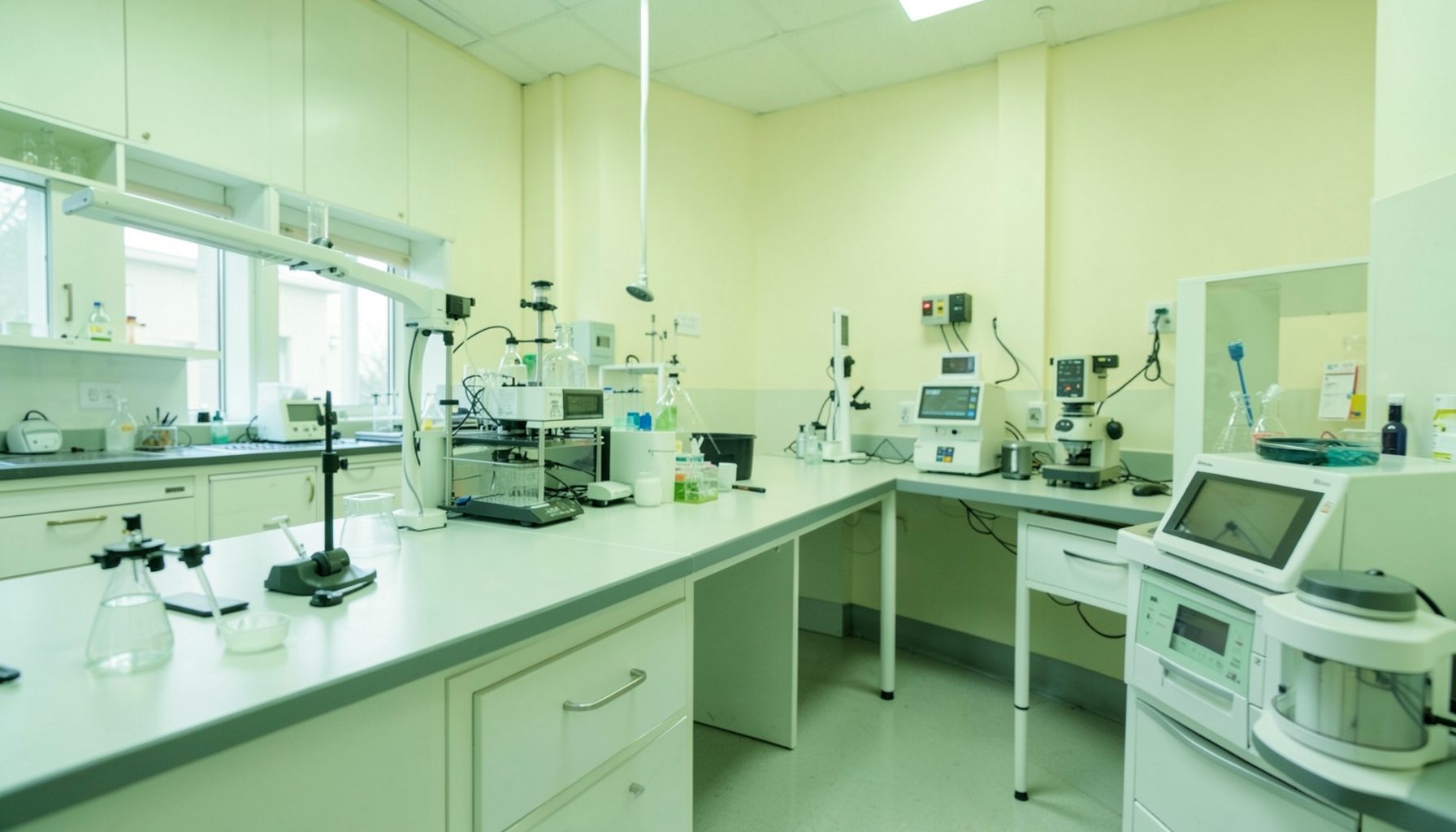
Managing TB Laboratory Equipment When Budgets Are Tight
Reliable equipment is essential to tuberculosis laboratory work, from specimen processing and microscopy to culture, drug-susceptibility testing, and molecular detection. When funding is limited, however, laboratories may postpone servicing, operate aging instruments, or depend on improvised repairs. These choices can create interruptions, inaccurate results, biosafety risks, and higher costs later.
A practical maintenance system does not require every instrument to be new or every service contract to be comprehensive. It requires clear priorities, regular observation, usable records, and decisions based on risk. A small laboratory can often protect its most important functions by separating essential maintenance from desirable upgrades.
The goal is continuity and confidence. Equipment should be safe to use, suitable for its intended purpose, and available when needed. A documented approach also helps laboratory managers explain funding needs to hospital leaders, national programs, donors, and procurement teams.
Start With A Risk-Based Inventory
Begin with a complete equipment inventory rather than a list of items that currently appear broken. Record the instrument name, manufacturer, model, serial number, location, responsible user, installation date, and current condition. Include supporting items such as refrigerators, freezers, centrifuges, autoclaves, biosafety cabinets, microscopes, pipettes, thermometers, and uninterruptible power supplies.
The inventory should show how each item affects testing and safety. A failed microscope may slow smear examination, while a malfunctioning temperature monitor can compromise stored reagents or cultures. A biosafety cabinet with poor airflow presents a different level of risk from a cracked bench stool. This distinction allows scarce funds to follow the consequences of failure, rather than the replacement price alone.
Assign each item a simple priority, such as critical, important, or noncritical. Critical equipment supports a core test, containment, specimen integrity, or a time-sensitive process. Important equipment affects efficiency or quality but has a temporary backup. Noncritical items can be repaired or replaced when resources become available. Review the categories whenever testing volumes, methods, or referral arrangements change.
Build A Maintenance Calendar That Staff Can Use
Preventive maintenance is usually less expensive than emergency repair, but only when the schedule is realistic. Create daily, weekly, monthly, and annual tasks for each priority item. Daily work may include cleaning, visual inspection, checking temperatures, reviewing error messages, and confirming that doors, seals, cables, and alarms function correctly. More specialized tasks may require a trained technician.
Assign each task to a named role, not simply to “laboratory staff.” The person responsible should know what to inspect, what acceptable performance looks like, and when to stop using the equipment. A short checklist near the instrument can be more effective than a lengthy procedure kept in a distant folder. Completed forms should include the date, findings, initials, and action taken.
Use manufacturer instructions where available, but adapt them to local conditions. Dust, unstable electricity, high humidity, heavy workloads, and limited water supplies can alter maintenance needs. The Phase 1 guidance can help laboratories establish foundational practices for equipment, documentation, safety, and responsibilities before expanding the system.
Calibration and verification deserve special attention. A laboratory may not be able to calibrate every device annually through an external provider, but it can identify which measurements directly influence results. Temperature devices, pipettes, balances, timers, and centrifuges should have defined verification intervals, acceptance limits, and documented action when performance falls outside those limits.
Spend First On Controls That Prevent Loss
Some low-cost controls protect equipment and testing continuity immediately. Surge protection, voltage stabilizers, temperature alarms, dust covers, routine cleaning, and appropriate placement can reduce avoidable failures. Refrigerators and freezers should have enough clearance for ventilation, and equipment should not be placed where leaks, direct sunlight, or excessive heat can affect operation.
Power interruptions require a written response. Decide which instruments need an uninterruptible power supply, generator connection, or manual temperature checks. Keep a record of outage duration and equipment behavior afterward. If the laboratory cannot protect every device, prioritize items holding patient specimens, cultures, reagents, or critical reference materials.
Consumables are part of maintenance planning. Incorrect filters, incompatible tubing, low-quality batteries, and delayed replacement of seals can shorten equipment life. Keep a small stock of inexpensive, high-use parts when local supply is unreliable. At the same time, avoid buying large quantities of specialized parts that may expire, become obsolete, or fit only one discontinued model.
A maintenance budget should include labor, transport, calibration, spare parts, software updates, and disposal. A service visit that looks affordable may become costly when travel, customs, or emergency shipping is added. Grouping service visits across several instruments or coordinating with neighboring laboratories can reduce travel costs and improve access to qualified technicians.
Compare Maintenance Choices By Risk And Cost
When money is limited, managers need a consistent way to decide whether to repair, replace, borrow, or refer testing. The following framework can support a documented decision and make budget discussions more transparent.
| Decision factor | Repair is usually appropriate when | Replacement or referral may be safer when |
|---|---|---|
| Effect on testing | The equipment supports an essential process and can return to specification | Failure repeatedly interrupts testing or results cannot be verified |
| Parts and expertise | Parts are available and a competent technician can document the work | Parts are obsolete, counterfeit, unavailable, or require unsupported expertise |
| Total cost | Repair, transport, and downtime remain below the cost of a suitable alternative | Repeated repairs approach the price of replacement or create long delays |
| Safety | The fault is isolated and safety checks can be completed before use | Electrical, containment, pressure, or temperature safety cannot be confirmed |
| Quality evidence | Calibration or performance verification can demonstrate acceptable operation | The laboratory cannot show that the instrument performs within limits |
| Continuity | A backup process or temporary instrument is available during servicing | Referral arrangements are more reliable than continued local operation |
A repair should never be accepted solely because it is cheaper today. After repair, document the fault, parts used, technician, date, tests performed, and release decision. Equipment that continues to fail may consume funds while weakening confidence in results. A life-cycle view is more useful than comparing only the immediate invoice.
Referral testing can be a responsible part of equipment management, especially during planned servicing or major breakdowns. The receiving laboratory, transport conditions, turnaround time, result reporting, and specimen acceptance criteria should be defined in advance. Referral is not a substitute for local capacity, but it can protect patients while a high-risk problem is resolved.
Make Records Support Daily Decisions
Maintenance records should be easy to find and easy to interpret. A basic file for each instrument can contain the inventory entry, user instructions, cleaning schedule, service reports, calibration certificates, breakdown history, verification results, and decommissioning decision. Paper records may be sufficient if they are legible, protected from damage, and reviewed regularly.
Track downtime and recurring faults, not just completed tasks. Useful indicators include the number of missed preventive tasks, hours out of service, repeat failures, delayed tests, failed temperature checks, and maintenance costs by instrument. These measures show whether a problem is isolated or becoming a system-wide risk.
Nonconforming equipment should be clearly identified and removed from routine use when necessary. A label such as “out of service” should be paired with a documented decision about specimens, reagents, or results affected by the fault. After corrective action, an authorized person should verify performance before the instrument returns to service.
Periodic review can reveal opportunities to simplify. If a task is never completed because it requires unavailable tools, revise the process or obtain the tools. If two instruments perform overlapping functions but one is rarely used, consolidate supplies and service arrangements. Laboratories can also share lessons and practical barriers through the feedback channel, helping quality resources reflect real operating conditions.
Strengthen Skills And Local Support
A maintenance program depends on people who can recognize early warning signs. Train users to identify unusual noise, vibration, smell, heat, leakage, display errors, unstable readings, and changes in cycle time. Training should also cover safe shutdown, cleaning limits, infection prevention, electrical precautions, and escalation procedures.
Do not ask users to perform repairs beyond their competence. In-house staff can often manage cleaning, basic inspection, temperature review, and simple checks, while electrical, mechanical, calibration, and biosafety work may require a qualified technician. Keep evidence of training and assess whether staff can perform the assigned task correctly.
Develop local support wherever possible. Identify approved technicians, nearby reference laboratories, biomedical engineering departments, suppliers, and institutions with compatible equipment. Establish contact details, response expectations, and the information needed when reporting a fault. Photographs, error codes, serial numbers, and recent maintenance records can reduce delays.
When purchasing equipment, consider serviceability before accepting the lowest price. Ask about local technical support, spare-part availability, warranty terms, training, power requirements, environmental tolerances, and expected operating costs. A modestly priced instrument with no support may create a larger financial burden than a more durable model with accessible servicing.
Link Equipment Work To Continual Improvement
Equipment maintenance should be reviewed alongside safety, personnel, purchasing, document control, assessment, and testing quality. A recurring temperature excursion may indicate a power problem, an overloaded refrigerator, inadequate staff coverage, or an unsuitable monitoring device. Treating each event as an isolated repair can conceal the underlying cause.
Use internal audits, incident reviews, management meetings, and quality indicators to identify patterns. Select a small improvement objective, such as reducing freezer temperature excursions or completing all critical preventive checks for three consecutive months. Define the responsible person, resources, deadline, and evidence that will demonstrate improvement.
The final phase of a quality journey emphasizes sustaining and improving established practices; the Phase 4 resources can support reviews, corrective action, and ongoing system development. The same principle applies to equipment: maintenance is successful when the laboratory learns from failures and adjusts before they recur.
Managers should present equipment needs in terms of service continuity, patient risk, regulatory expectations, and total cost of ownership. A clear inventory, trend report, and prioritized budget request is more persuasive than a general request for “new equipment.” It also helps decision-makers fund the controls, training, and technical support that keep existing assets useful.
Practical priorities for a constrained budget include:
- Protect critical equipment with preventive checks, safe placement, power controls, and temperature monitoring.
- Keep a current inventory with risk ratings, responsible users, service history, and replacement needs.
- Train staff to detect faults early and define clear limits for user-level maintenance.
- Budget for spare parts, calibration, technician travel, downtime, and referral testing rather than purchase price alone.
- Review breakdown trends and corrective actions at management meetings, then revise the maintenance plan.
A laboratory does not need unlimited funding to manage equipment responsibly. It needs a visible set of priorities, dependable records, and disciplined decisions about risk. Start by reviewing the inventory, mark the instruments that protect testing and safety, and schedule the next maintenance actions. Each completed check and documented repair strengthens the laboratory’s ability to deliver reliable TB results when they are needed.