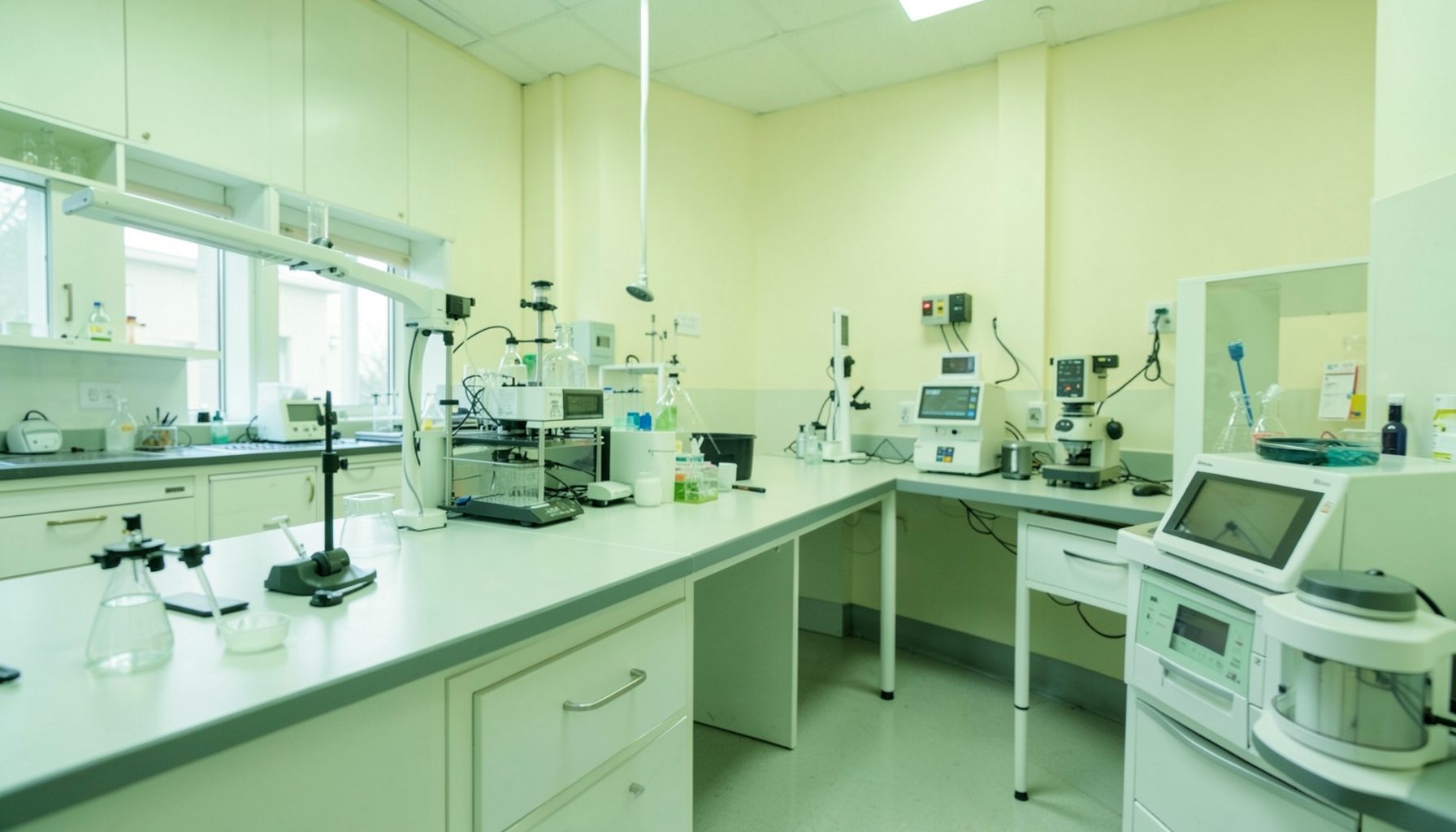
Training Lab Staff In TB Biosafety Level 3 Practices
Training laboratory staff for TB biosafety level 3 work requires more than explaining rules during orientation. Personnel must understand why each control exists, demonstrate the associated technique, and repeat critical tasks until safe performance becomes routine. This is especially important when laboratories handle cultures or procedures that may generate infectious aerosols.
A strong program combines technical instruction, supervised practice, competency assessment, and continual improvement. It should address the facility, equipment, workflow, documentation, emergency response, and human factors that influence day-to-day behavior. Training must also reflect the laboratory’s actual risk assessment, available resources, and approved operating procedures.
The GLI Quality Tool provides a useful structure for this work through its phased roadmap and Quality Systems Essentials. Laboratories can use the framework to connect biosafety training with personnel management, equipment, documents, assessment, occurrence management, and continual improvement rather than treating biosafety as an isolated activity.
Define The Risks Before Training Begins
Start with a documented risk assessment for every activity performed in the TB laboratory. Identify procedures that may release aerosols, including specimen manipulation, culture handling, vortexing, centrifugation, aliquoting, spills, and equipment maintenance. Consider the organism, volume, concentration, procedure, equipment, room design, staff experience, and possible failure points.
The assessment should determine which controls are required and which tasks must be restricted to trained, authorized personnel. It should also clarify whether work is conducted inside a certified biological safety cabinet, what respiratory protection is needed, how infectious waste is managed, and when work must stop. Staff are more likely to follow controls when they understand the specific hazard each measure addresses.
Explain the hierarchy of controls in practical terms. Facility design and engineering controls reduce exposure at the source, administrative controls organize safe work, and personal protective equipment provides an additional barrier. PPE should never be presented as a substitute for a functioning cabinet, effective ventilation, access control, or validated decontamination procedures.
Build A Competency-Based Learning Path
Training should progress from knowledge to observed performance. Begin with classroom or small-group instruction covering TB transmission, aerosol hazards, access restrictions, hand hygiene, respiratory protection, cabinet use, centrifuge safety, disinfection, waste handling, and incident reporting. Use local photographs, floor plans, equipment, and SOPs instead of relying only on generic slides.
Next, demonstrate each critical procedure slowly and explain the points at which contamination or exposure could occur. Staff should then perform the task under direct observation. A trainer can assess whether the employee prepares the workspace correctly, uses appropriate PPE, maintains clean-to-dirty workflow, secures containers, responds to alarms, and completes required records.
Competency should be role-specific. A technician who processes specimens may need a different assessment from a maintenance worker, cleaner, supervisor, or courier. Initial training should be completed before independent work, followed by periodic reassessment and additional evaluation after a change in method, equipment, facility, responsibility, or an incident.
Practice The Controls That Matter Most
Biological safety cabinet training should include preparation, startup checks, material placement, airflow awareness, work technique, spill response, shutdown, and cleaning. Staff should understand why overcrowding the cabinet, blocking grilles, creating rapid movements, or using unsuitable materials can compromise containment. Demonstrations should use the exact cabinet model and workflow found in the laboratory.
Respiratory protection training may include selection, medical evaluation, fit testing, user seal checks, donning and removal, storage, cleaning, and replacement. A fit-tested respirator cannot protect the wearer if it is worn incorrectly or removed in a contaminated area. Personnel must know the limitations of the program and the procedure for reporting difficulty breathing, poor fit, damaged equipment, or other concerns.
Centrifuge safety deserves special attention because tube breakage can create an aerosol inside a closed rotor or bucket. Staff should be trained to balance loads, inspect tubes and seals, secure rotors, follow manufacturer instructions, and wait for aerosols to settle when a breakage is suspected. The response to a suspected internal spill should be rehearsed rather than improvised.
| Training area | Demonstrated behavior | Evidence of competence |
|---|---|---|
| Access and preparation | Enters only when authorized and prepares PPE, materials, and disinfectant before work | Direct observation checklist |
| Cabinet operation | Places materials correctly and works without blocking airflow grilles | Practical demonstration |
| Respiratory protection | Performs a seal check and follows donning and removal sequence | Fit-test and observation records |
| Centrifuge use | Balances loads, secures components, and responds safely to suspected breakage | Scenario-based assessment |
| Spill and exposure response | Stops work, restricts access, reports the event, and follows the approved cleanup procedure | Drill record and supervisor review |
| Waste and decontamination | Segregates, packages, disinfects, and transfers waste according to SOPs | Observation and completed records |
Make Procedures Easy To Find And Follow
Written procedures should translate biosafety principles into clear actions. Each SOP needs a defined purpose, scope, responsibilities, materials, step-by-step method, precautions, waste requirements, incident response, and related records. Keep instructions available at the point of use, while controlling versions so staff do not rely on outdated copies.
Documentation supports memory, accountability, and learning. The guidance on quality documentation practices can help laboratories connect SOP control, training records, equipment logs, corrective actions, and review activities. A signed attendance sheet alone does not prove competence; the record should identify what was taught, who assessed the employee, which method was used, and whether follow-up is required.
Use visual prompts where appropriate, such as cabinet diagrams, PPE sequences, spill response cards, and waste segregation signs. These aids should reinforce, not replace, full SOPs. Supervisors should periodically check whether posted instructions remain accurate, readable, and consistent with current equipment and practices.
Rehearse Emergencies And Report Near Misses
Staff need repeated practice for spills, splashes, sharps injuries, respirator problems, power failure, cabinet alarms, loss of directional airflow, and suspected exposure. A drill should have a clear scenario, assigned roles, an observer, and a structured debrief. The objective is to test decisions and coordination, not to embarrass individuals.
During a drill or real event, personnel should know how to stop work, secure the area, notify the responsible supervisor, obtain medical evaluation when indicated, and complete the required report. The laboratory should define who contacts occupational health, biosafety leadership, facility management, and public health authorities. Emergency contact information must remain current and accessible.
Near misses deserve the same attention as exposures. An unsecured rotor, incorrect disinfectant concentration, or cabinet clutter may reveal a system weakness before anyone is harmed. Review the event for contributing factors such as unclear instructions, rushed workflows, inadequate supplies, poor layout, or insufficient supervision. Corrective actions should be assigned, tracked, and checked for effectiveness.
Connect Training With Information And Quality Systems
Training records, competency results, incidents, equipment maintenance, and corrective actions become more useful when information is accurate and retrievable. A well-designed TB data management system can support controlled access, traceability, reporting, and review of laboratory activities. Biosafety information should be protected appropriately while remaining available to authorized staff who need it for safe operations.
Supervisors can monitor indicators such as overdue competency assessments, repeated procedural deviations, cabinet certification status, respirator fit-test completion, spill frequency, and corrective-action closure. Trends should be reviewed during quality meetings and used to refine training. If several employees make the same mistake, retraining individuals may be less effective than revising the SOP, workflow, equipment, or supervision.
A phased implementation approach helps laboratories manage limited time and resources. Begin with high-risk procedures and essential staff, verify the basic controls, and then expand the program. The Quality Systems Essentials provide a practical way to assign responsibilities and integrate biosafety with personnel, facilities, purchasing, assessment, and continual improvement.
Prioritize Actions That Sustain Safe Practice
A training program is strongest when it remains active after the initial course. Use short refresher sessions, toolbox talks, observed work checks, and scenario discussions to keep critical behaviors visible. New employees should receive a structured orientation, while experienced staff should be reassessed rather than assumed to remain competent indefinitely.
- Assign a trained supervisor to own the biosafety competency program.
- Assess high-risk procedures through direct observation and realistic drills.
- Keep current SOPs, emergency contacts, and visual prompts at the point of use.
- Review incidents, near misses, and audit findings for system-level causes.
- Track training completion, equipment status, and corrective actions in a controlled record system.
Leadership support is essential. Managers must provide time for training, maintain certified equipment, replace defective PPE, support reporting without retaliation, and act on identified hazards. When staff see that management responds consistently to concerns, reporting becomes part of prevention rather than a source of blame.
Safe TB laboratory work depends on reliable systems and practiced behavior. Begin by mapping the highest-risk procedures, observing current performance, and closing the most urgent gaps. Then use the GLI Quality Tool’s phased resources to document progress, reassess competence, and make biosafety an enduring part of laboratory quality management.