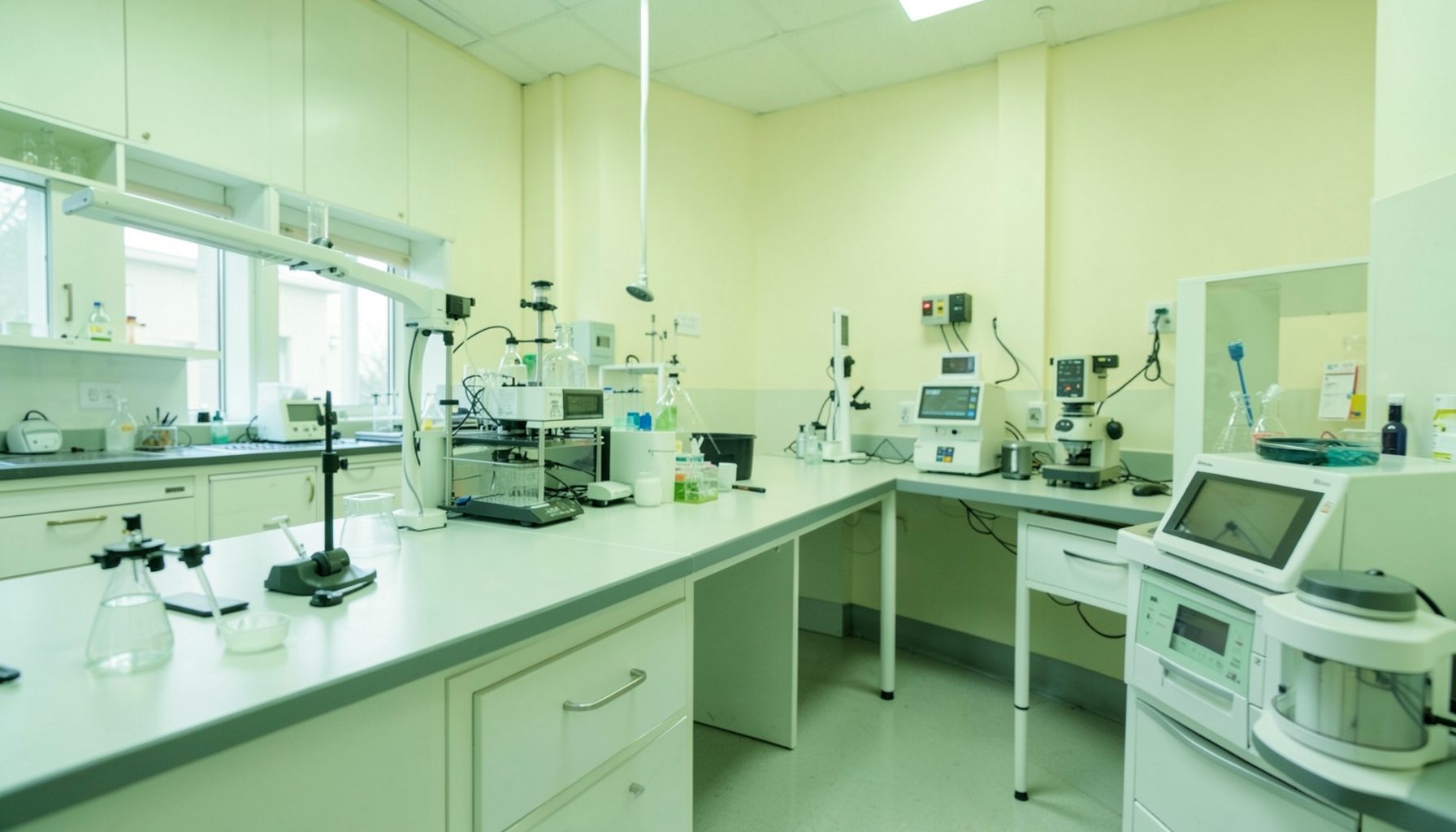
Preparing a TB Laboratory for a WHO SLMTA Assessment
A WHO SLMTA assessment examines whether a tuberculosis laboratory has a functioning quality management system, not merely a collection of written procedures. Assessors look for consistency between policies, bench practice, records, staff knowledge, and corrective actions. Preparation is therefore most effective when it improves routine work rather than creating temporary paperwork.
SLMTA, or Strengthening Laboratory Management Toward Accreditation, emphasizes practical management skills and measurable improvement. In many programs, the assessment process is linked with the SLIPTA checklist and the Quality Systems Essentials used in laboratory accreditation. A TB laboratory should confirm which national checklist, scoring method, and assessment schedule apply before beginning its final preparation.
The GLI Quality Tool can help organize this work. Its phased roadmap, checklists, and practical resources support laboratories at different stages of quality management development, including facilities working with limited staff, equipment, and funding. Use it as a working reference alongside national policies, WHO guidance, and the requirements of the assessment team.
Clarify the assessment scope and expectations
Start by identifying the exact assessment standard and the areas that will be reviewed. Confirm whether the visit covers the entire laboratory or selected TB services, such as sputum collection, smear microscopy, molecular testing, culture, drug susceptibility testing, specimen referral, and result reporting. Establish who will coordinate the visit and obtain the latest assessment checklist in advance.
Review each requirement with the laboratory team rather than assigning the checklist to one quality officer. A multidisciplinary review reveals gaps that may otherwise be missed. For example, a supervisor may know that a temperature log exists, while a technologist knows that readings are sometimes recorded late and a maintenance officer knows that the thermometer has not been verified.
Create a gap register with four fields: requirement, current evidence, missing action, and responsible person. Add a due date and a status column. Separate urgent risks, such as unsafe waste handling or unreliable result verification, from lower-risk document formatting issues. This allows limited time and resources to be directed toward patient safety and test accuracy.
Map the quality system to daily TB work
The twelve Quality Systems Essentials provide a useful structure for organizing preparation. Consider organization and leadership, personnel, equipment, purchasing and inventory, process management, information management, documents and records, customer focus, assessment, facilities and safety, and continual improvement. Map each essential to actual TB laboratory activities.
For process management, follow a specimen from reception through testing, validation, reporting, referral, and disposal. Check whether every handoff is defined and documented. For information management, verify that registers, worksheets, electronic systems, and released reports contain consistent patient and specimen identifiers. For customer focus, review how clinicians receive urgent results and how complaints or requests are recorded.
A quality manual should explain the system, but assessors will give greater weight to implementation. Make sure standard operating procedures are approved, dated, controlled, accessible at the workbench, and understood by staff. Remove obsolete copies from benches and shared folders. Records should be legible, attributable, protected from unauthorized changes, and retained for the period required by national policy.
Secure equipment, safety, and supplies
Equipment readiness is a common source of assessment findings. Prepare an inventory showing each instrument, asset number, location, responsible person, operating status, maintenance schedule, calibration or verification requirement, and service history. Ensure that equipment has user instructions, preventive maintenance records, breakdown reports, and documented acceptance checks after repair or relocation.
In rural or resource-constrained settings, a realistic maintenance system is more valuable than an ambitious schedule that cannot be followed. The guidance on a calibration schedule can help laboratories assign frequency, methods, responsibilities, and escalation steps for equipment such as balances, thermometers, pipettes, incubators, and biosafety-related devices.
Review safety from specimen collection to waste disposal. Check access controls, personal protective equipment, hand hygiene, spill response, fire safety, ventilation, biosafety cabinets, sharps management, and emergency contacts. Confirm that staff know what to do after exposure or equipment failure. Stock records should also demonstrate continuity of critical items, including cartridges, reagents, controls, transport materials, and disinfectants.
Turn routine records into assessment evidence
Assessors usually want to see evidence that procedures operate over time. Prepare a clearly labeled evidence file, whether electronic, paper-based, or both. Include approved procedures, training records, competency assessments, internal quality control results, external quality assessment reports, equipment logs, temperature charts, stock records, incident reports, internal audits, management review minutes, and corrective action follow-up.
Do not create backdated records to fill gaps. If a required activity was missed, document the gap honestly, assess the risk, and record the corrective action. A transparent improvement record is more credible than a perfect-looking file with inconsistent dates or identical handwriting across months.
| Assessment area | Useful evidence | What readiness looks like |
|---|---|---|
| Personnel | Job descriptions, orientation records, competency assessments, refresher training | Staff can explain their roles and demonstrate critical procedures |
| Equipment | Inventory, maintenance logs, calibration or verification records, repair reports | Instruments are identified, functional, monitored, and supported |
| Process management | SOPs, worksheets, quality control charts, rejected specimen records | Testing follows approved steps and exceptions are investigated |
| Information management | Registers, result review records, amended report logs, confidentiality controls | Results are traceable from specimen receipt to final report |
| Assessment and improvement | Internal audits, nonconformity reports, root-cause reviews, action tracking | Problems lead to documented actions and verified effectiveness |
| Safety and facilities | Risk assessments, incident logs, waste records, emergency drills | Hazards are controlled and staff know the response procedures |
Conduct a mock assessment using the same evidence standard expected during the visit. Ask one person to act as assessor and another to retrieve records. Time how long it takes to find evidence. If staff depend on one individual to locate every document, the system is vulnerable and should be reorganized.
Strengthen quality control and corrective action
Review internal quality control for every major TB testing process. Confirm that controls are appropriate, results are recorded, acceptance criteria are defined, and unacceptable runs trigger a documented response. Examine trends rather than isolated values. Repeated shifts, invalid tests, contamination, delayed reporting, or high specimen rejection rates may indicate a system problem even when individual runs appear acceptable.
Check external quality assessment participation and follow-up. When a proficiency testing result is unsatisfactory, record the investigation, immediate containment, root cause, corrective action, and effectiveness check. The same approach should apply to complaints, safety incidents, equipment failures, transcription errors, and false-positive or false-negative results.
A false-negative TB result requires particularly careful review because the causes may involve specimen quality, transport, reagent storage, instrument performance, staff technique, result interpretation, or reporting. Use this root-cause analysis guide to structure the investigation and distinguish a contributing factor from the underlying system failure.
Management review should turn these findings into decisions. Record which risks require resources, which indicators will be monitored, who owns each action, and when effectiveness will be checked. An action is not complete merely because a new SOP was issued; the laboratory must show that staff were trained and that the change improved performance.
Prepare staff and the assessment environment
Every staff member should know the laboratory’s quality objectives, key indicators, escalation routes, and responsibilities. Supervisors can conduct short, role-specific briefings on specimen rejection, internal quality control, equipment breakdown, critical result communication, biosafety incidents, and document control. Staff should answer honestly and explain what they actually do.
Avoid coaching people to memorize artificial responses. Assessors may ask staff to demonstrate a procedure, locate an SOP, interpret a control result, or explain what happens after an error. Practical competence is easier to demonstrate when daily work has been standardized and records are maintained at the point of use.
Prepare the physical environment without hiding problems. Label work areas, organize records, separate expired supplies, identify quarantine areas, and ensure that emergency equipment is accessible. Check that specimen flow reduces contamination and mix-ups. Arrange a quiet space for document review, provide a current organizational chart and contact list, and assign someone to guide assessors without interrupting technical work.
Before the visit, perform a final walk-through during a normal shift. Observe hand hygiene, PPE use, specimen identification, worksheet completion, result verification, waste segregation, and storage conditions. Compare what happens at the bench with what the SOP says. Any difference should be addressed through clarification, retraining, or a controlled procedure change.
Focus on the actions that matter most
A short, disciplined preparation cycle is more effective than a last-minute document collection exercise. Use the final weeks to close high-risk gaps, verify evidence, and test whether improvements are sustained. The following priorities can keep the team focused:
- Assign one assessment coordinator and a responsible owner for every checklist gap.
- Review critical TB workflows from specimen receipt through reporting and referral.
- Verify equipment status, calibration or performance checks, maintenance, and backup arrangements.
- Complete competency assessments and targeted refresher training for staff with identified gaps.
- Track corrective actions to verified effectiveness, with management review of overdue items.
The GLI Quality Tool offers a practical way to keep this work organized across the four quality improvement phases. Use its checklists to guide a gap review, adapt the downloadable materials to local procedures, and revisit the same areas after the assessment. The aim is a laboratory that can produce reliable TB results every day, not one that performs well only when assessors are present.
Begin with a baseline review, involve the whole team, and turn each finding into a measurable improvement action. A well-prepared laboratory enters the WHO SLMTA assessment with evidence, confidence, and a quality system that continues working after the assessment visit.