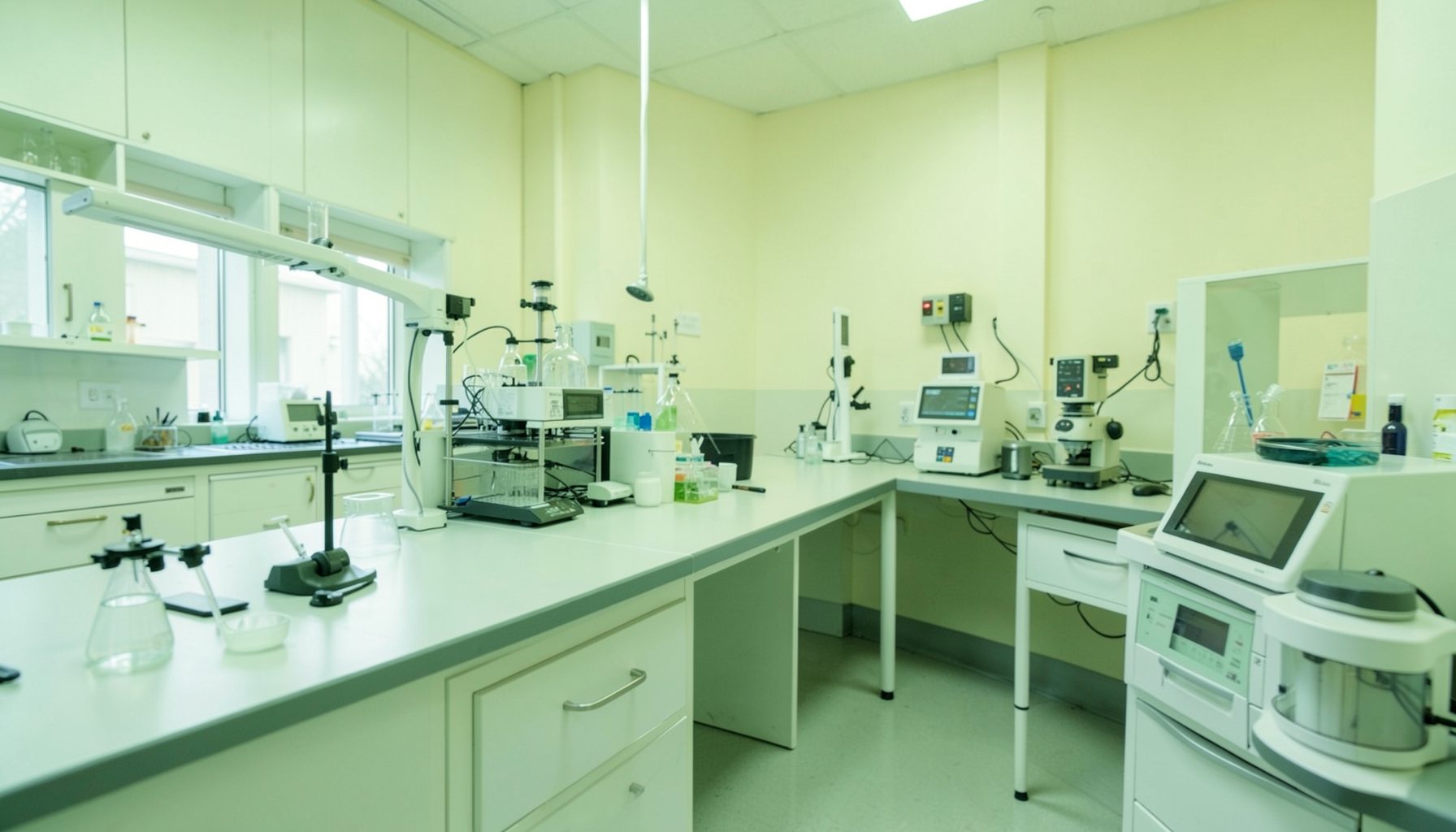
Building a TB Laboratory Safety Data Sheet Binder and Training Programme
A well-managed safety data sheet binder gives tuberculosis laboratories a reliable way to identify hazards, select controls and respond to incidents. It brings together the information staff need before handling stains, disinfectants, culture media, reagents, compressed gases, cryogenic materials and other laboratory substances.
For Australian laboratories, the binder should support work health and safety duties under the applicable state or territory legislation. The model Work Health and Safety framework is used widely, although Victoria operates under its own occupational health and safety legislation. A practical system therefore needs to reflect local requirements, site risks and the laboratory’s accreditation arrangements.
Hazard communication training turns documents into safe behaviour. Staff need to recognise pictograms, interpret signal words, understand exposure controls and know where to find emergency instructions. Training should cover scientists, technicians, cleaners, couriers, students, maintenance workers and managers who may enter a TB laboratory.
The GLI Quality Tool provides a useful quality management structure for this work. Its four-phase roadmap and twelve Quality Systems Essentials can help a laboratory connect safety documentation with personnel competence, equipment control, assessment, records and continual improvement.
Define The Scope And Ownership
Start by listing every substance and material used in the TB laboratory. This includes sputum processing chemicals, sodium hypochlorite, ethanol, acids, bases, stains, disinfectants, culture supplements, molecular assay reagents, fixatives, gases, oils and cleaning products. Include materials stored in refrigerators, freezers, preparation rooms, stores and mobile testing areas.
The inventory should identify the product name, supplier, catalogue number, location, quantity, responsible area and SDS status. Assign one person as the binder coordinator and nominate deputies for leave or roster changes. The laboratory manager remains accountable for the system, while section leaders should confirm that the list reflects daily practice.
Review the inventory whenever a new reagent is introduced, a supplier changes its formulation or a method is retired. This is particularly important when laboratories purchase through Australian distributors, global manufacturers or emergency supply arrangements. A substitute product can have a different concentration, classification or first-aid requirement even when it performs the same laboratory function.
Build A Reliable SDS Filing System
Use the current Australian SDS supplied by the manufacturer or importer, rather than relying on a generic internet copy. Australian SDS documents follow the Globally Harmonised System and contain sixteen standard sections, including identification, hazards, composition, first aid, firefighting, accidental release, handling, exposure controls, physical properties, stability, toxicology and disposal.
A paper binder can be divided by work area or hazard type, with an alphabetical index and a quick-reference emergency section at the front. A parallel electronic folder improves access when staff work across several rooms. Each file should show the date obtained, product identifier, supplier and review status. Keep superseded SDS documents in a controlled archive when required by the laboratory’s record retention policy.
Place the binder where staff can reach it without entering a restricted area, such as near the laboratory entrance, chemical store or preparation room. Provide access to the electronic copy during network outages through a local device or controlled offline folder. The GLI checklists can help teams check whether document control, records, safety and assessment activities are being completed consistently.
Connect SDS Information With Risk Assessment
An SDS is a source of hazard information, not a complete risk assessment. The laboratory must consider how a substance is actually used, including volume, concentration, temperature, equipment, frequency, ventilation and the possibility of infectious aerosols. TB procedures can combine chemical, biological, ergonomic and physical hazards in a single task.
For example, opening a specimen may involve exposure to Mycobacterium tuberculosis, while subsequent decontamination may involve corrosive or irritating chemicals. Centrifugation, vortexing, pipetting and waste treatment can create different routes of exposure. Record the controls for each activity, such as a biological safety cabinet, sealed centrifuge cups, respiratory protection, eye protection, spill kits and validated disinfection procedures.
Use the hierarchy of controls to reduce reliance on personal protective equipment. Select safer products where feasible, automate high-risk steps, enclose processes, maintain local exhaust ventilation and establish clear work practices. The SDS should be linked to the relevant standard operating procedure, risk assessment and emergency response instruction so staff do not have to interpret isolated information during an incident.
Establish A Practical Review Cycle
Set a monthly or quarterly check for missing SDS documents, damaged pages, changed products and expired review dates. Australian manufacturers and importers must review SDS information when significant new information becomes available and within the required review period. The laboratory should still monitor supplier portals and procurement notices rather than waiting for an incident.
Include SDS verification in method validation and purchasing. Before approving a new reagent or instrument consumable, confirm that the product has a suitable Australian SDS, appropriate labelling and manageable storage and disposal requirements. The vendor evaluation guide offers a useful way to include safety and quality criteria in supplier assessment.
Create a change record when a product is replaced. Note who approved the change, whether the risk assessment was updated, whether storage requirements changed and which staff require refresher training. This prevents a common failure in which the binder contains the new SDS but the bench instructions and staff knowledge still refer to the previous product.
Design Training Around Real Tasks
Hazard communication training should begin with a short explanation of the laboratory’s chemical and biological hazards. Show staff how to locate the binder, search the digital folder, read GHS pictograms and identify the signal words “Danger” and “Warning”. Explain the difference between a hazard, an exposure and a risk, using examples from specimen reception, culture work and molecular testing.
Demonstrate how to find immediate first-aid measures, spill response instructions, incompatible materials, storage conditions and disposal guidance. A practical exercise can give a staff member an SDS and ask them to identify the required gloves, ventilation, emergency contact, spill response and waste stream. Repeat the exercise with a disinfectant and a staining reagent so the process becomes familiar.
Training should include the laboratory’s incident and near-miss reporting pathway. Staff must know when to stop work, isolate an area, seek medical advice and notify a supervisor. Cover exposure to chemicals, broken containers, skin or eye contact, inhalation, sharps injuries and suspected infectious exposure. Keep attendance records, assessment results and competency observations with the quality records.
Adapt The System To Australian Workplaces
Australian laboratories may operate within different regulatory environments, so confirm requirements with the relevant state or territory regulator and the organisation’s safety team. A laboratory in Sydney, Brisbane or Perth may have different internal procedures from a regional service supporting remote communities. Travel, courier delays, power interruptions and limited after-hours staffing should be considered in emergency planning.
NATA-accredited laboratories should align the binder and training records with their quality management system, document control process and applicable accreditation requirements. In Melbourne, for example, a laboratory may need to coordinate its approach with Victorian occupational health and safety arrangements rather than assuming that every model WHS reference applies directly. Local emergency numbers, hospital pathways and poison information contacts should be verified and displayed.
Procurement practices also affect safety. Australian laboratories may source reagents through local agents, university contracts or international suppliers, and imported products can arrive with documentation that does not match local expectations. Require the procurement team to obtain an Australian-compliant SDS before the product is released for use, while retaining the manufacturer’s technical information where it supports method performance.
Test, Audit And Improve The Binder
Run a tabletop exercise at least annually. Give staff a realistic scenario, such as a disinfectant spill beside a specimen processing bench or a leaking reagent bottle in a refrigerator. Ask them to locate the SDS, select controls, communicate the hazard, manage the area and document the event. Record delays and confusion as improvement opportunities rather than treating the exercise as a pass-or-fail event.
Audit a sample of products against the inventory, physical labels, electronic records and work instructions. Check that the SDS is legible, current, accessible and associated with the correct catalogue number. Review whether staff can explain the relevant pictograms and whether emergency equipment is available, maintained and appropriate for the identified hazards.
Track measures such as training completion, overdue SDS reviews, missing documents, spill response times, near misses and corrective action closure. Present trends at quality meetings and assign owners with due dates. The GLI Quality Tool can help laboratories place these activities within a broader cycle of planning, implementation, assessment and continual improvement.
A binder is valuable only when it reflects the work being performed. Update it after incidents, audits, new methods, equipment changes and supplier changes. Keep the paper copy orderly, the digital version controlled and the training grounded in the tasks staff perform every day.
Begin with a complete inventory, appoint a responsible coordinator and collect the current SDS documents for every product in use. Then run a short practical training session, test the emergency pathway and record the actions needed to close gaps. With regular review and clear ownership, the binder becomes an active safety control for TB laboratory staff rather than a shelf of forgotten paperwork.