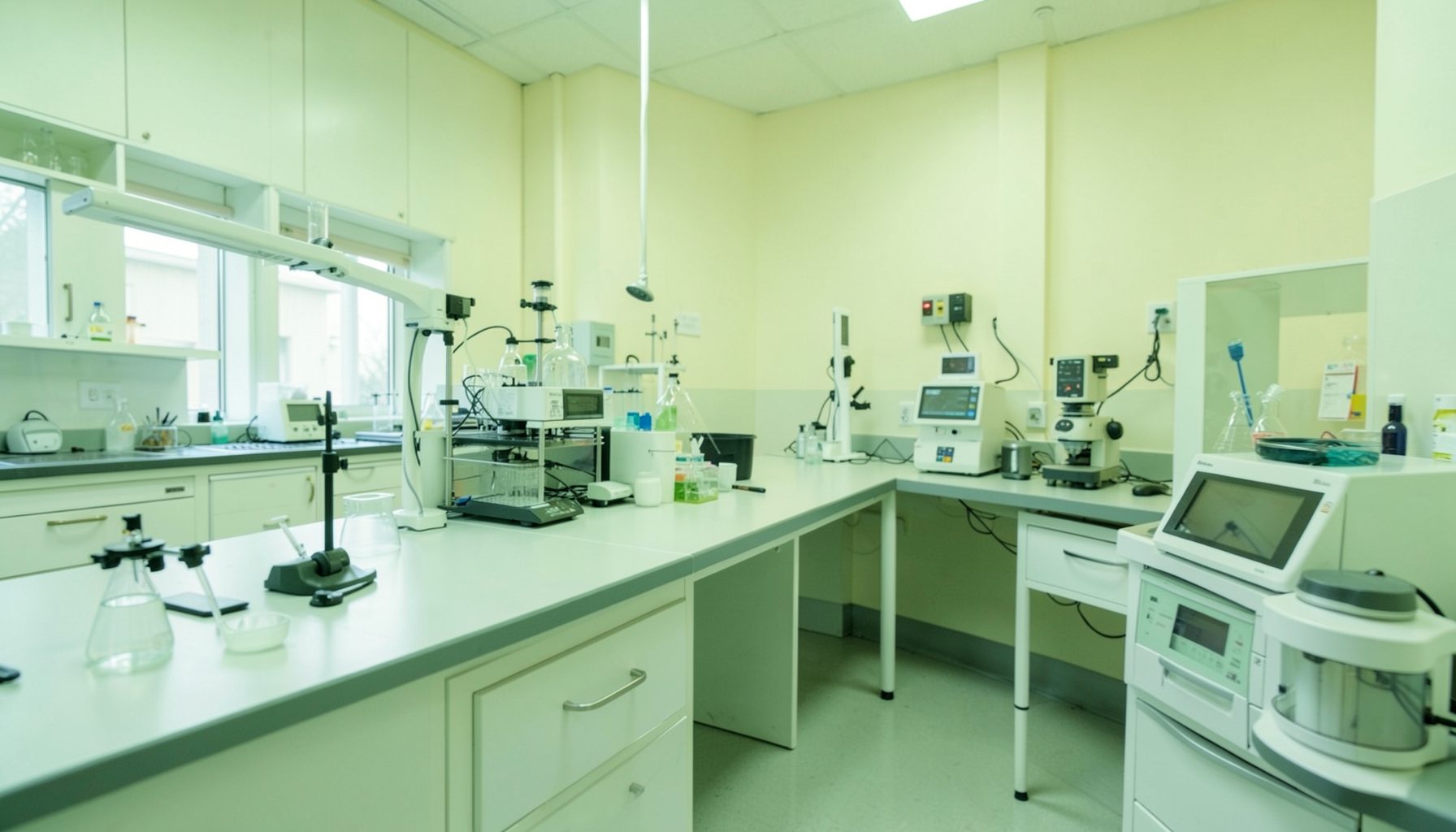
Building a TB laboratory mock inspection checklist for pre-audit readiness
Australia records around 1,400 tuberculosis notifications each year, a low incidence by global standards that masks stubborn inequities. First Nations Australians, people born overseas, and residents of remote communities face risks several times higher than the national average. Pathology services across Sydney, Melbourne, Brisbane, Perth, Adelaide, Hobart, Darwin and Canberra operate TB laboratories that must satisfy accreditation expectations set by the National Association of Testing Authorities and the Royal College of Pathologists of Australasia.
For laboratory leaders, the most reliable way to surface gaps before an external audit is a structured mock inspection that mirrors the rigour and questioning style of assessors. A well-designed mock inspection turns abstract quality requirements into concrete observations staff can act on, without diverting the laboratory from its diagnostic workload.
The GLI Quality Tool offers a four-phase roadmap aligned with twelve Quality Systems Essentials, providing a natural backbone for any pre-audit exercise. Phase-specific checklists translate this framework into observable practices that map onto the criteria used by NATA and by international initiatives such as the Stop TB Partnership. Together, the roadmap and the checklists help Australian laboratories convert global guidance into locally relevant evidence.
A mock inspection is a cycle rather than a single event. Planning, observation, debriefing, corrective action, and follow-up verification should each be scheduled, documented, and treated as training opportunities. When built deliberately, the checklist becomes a living instrument that supports continual improvement long after the real assessors have left the building.
Grounding the checklist in the Australian regulatory context
TB diagnostics in Australia sit at the intersection of several frameworks. The National Health Security Act 2007 sets the baseline for security-sensitive biological agents, while AS/NZS 1715 governs respiratory protective equipment. The Public Health Laboratory Network coordinates reference work between state laboratories, adding expectations around referral pathways for culture, drug susceptibility testing, and whole-genome sequencing performed at facilities such as the Victorian Infectious Diseases Reference Laboratory in Melbourne or PathWest Laboratory Medicine WA in Perth.
Geographic realities shape the checklist as much as regulations. For a regional laboratory in Cairns, Broome or Mt Isa, the mock inspection should examine chain-of-custody and shipping arrangements that keep specimens viable across long distances, often in tropical heat that challenges cold-chain logistics. Reviewing these referral links uncovers weaknesses that would otherwise surface only when a real audit questions a delayed or compromised result.
Indigenous-led primary health services in the Northern Territory and Western Australia increasingly perform point-of-care specimen collection for TB. The checklist should therefore include cultural safety training, patient consent procedures adapted to community settings, and documented coordination with Aboriginal Community Controlled Health Organisations. These elements rarely appear in generic audit templates but are closely scrutinised when a laboratory serves remote populations.
Translating quality systems essentials into observable items
Each of the twelve Quality Systems Essentials corresponds to a set of behaviours, documents, and physical arrangements that assessors can verify. A useful checklist converts each essential into observable items. "Equipment" becomes a check that biosafety cabinet certification stickers are current, that incubator temperature logs contain no unexplained gaps, and that GeneXpert modules are registered with the Therapeutic Goods Administration where required.
The facilities and biosafety essential should produce checks tailored to Australian conditions. A laboratory in tropical Darwin may need to demonstrate humidity-controlled reagent storage, while a laboratory in Hobart must show procedures for managing heating system failures that destabilise incubator performance. Documenting these context-specific items gives staff concrete evidence of compliance rather than relying on generic statements.
Personnel and training items benefit from local granularity. The checklist should confirm current IATA Dangerous Goods Regulations certificates, annual fit-testing of P2 and N95 respirators against AS/NZS 1715, and competency assessments that reflect the specific tests performed in the laboratory, including auramine-rhodamine staining, MGIT culture, and line-probe assays for drug resistance.
Designing the document review segment
A mock inspection opens, as a real one does, with a document review. The checklist should list every controlled document assessors typically request: the quality manual, standard operating procedures for each TB test, instrument qualification records, internal audit reports, management review minutes, and the previous year's corrective action log. Each item is flagged for currency, version control, authorised signatures, and traceability to the relevant clause of ISO 15189 as adopted by NATA.
Internal quality control and external quality assurance records deserve particular attention. The checklist should verify enrolment in the Royal College of Pathologists of Australasia Quality Assurance Programs, confirm that returned results have been reviewed and trended, and check that referral laboratory accreditations are on file and current.
Turnaround time is a focal point in any TB service review, and the checklist can draw on practical turnaround time monitoring guidance. Targets should reflect realistic Australian expectations: smear microscopy within 24 hours, Xpert MTB/RIF within 48 hours, and culture or phenotypic drug susceptibility testing within agreed referral timeframes that account for interstate transport.
Constructing the walk-through and observation protocol
The walk-through is where the checklist proves its value. Observers should follow the specimen pathway from reception to reporting, noting the receiving area, the integrity of primary containers, the availability of biological spill kits, and the visibility of the laboratory's quality policy on the wall. Each observation is recorded with date, time, and location so that corrective actions can be traced back to a specific moment and area.
Bench observations cover pre-analytical, analytical, and post-analytical phases. The observer notes whether sample handling matches the documented procedure, whether reagents are within expiry, whether waste is segregated and disposed of through a licensed contractor, and whether results are entered only by staff whose training records are current. Verifying the same training standard across public and private settings matters given the mobility of Australian laboratory staff.
The checklist should also prompt observation of the laboratory's interaction with its wider clinical environment. Are TB results communicated to treating clinicians within the documented timeframe? Is there evidence of multidisciplinary discussion with respiratory physicians and public health units, as encouraged under the National Strategic Plan for Tuberculosis? These softer items often distinguish a competent laboratory from a high-performing one.
Embedding staff interviews and competency demonstrations
Mock inspections relying solely on documents and observations miss the human dimension. The checklist should schedule short structured interviews with one representative from each role: specimen reception officer, microscopist, molecular scientist, senior scientist, quality manager, and laboratory director. Interview prompts should be open-ended, asking staff to describe their role in the quality system rather than recite clauses from a manual.
Competency demonstrations are equally revealing. A mock inspection might ask a junior scientist to perform a smear on a known positive sample, interpret a borderline GeneXpert result, or prepare a referral culture for interstate transport. The checklist records whether the demonstration met the procedure, whether deviations were explained, and whether the scientist was aware of the safety implications. These demonstrations double as refresher training and reduce audit-related anxiety.
A debrief held the same day converts observations into a learning opportunity. The checklist should include a short form capturing positive findings, areas of concern, and immediate corrective actions, then circulate it to all staff within 48 hours. Short, visible feedback loops significantly improve staff engagement with quality activities, particularly when the laboratory operates across multiple sites with rotating rosters.
Customising the checklist for laboratory size and case load
A high-volume reference laboratory in central Sydney has very different priorities from a small regional laboratory in the Kimberley. The checklist should be built in tiers: a core set of items applicable to every TB laboratory, supplemented by extended items tailored to case load, test menu, and patient population. This keeps the checklist useful without becoming impractical in a setting where TB is one of many diagnostic services.
Laboratories that perform only smear microscopy on-site and refer everything else should focus the checklist on specimen quality, packaging, referral documentation, and result acknowledgement. Laboratories that perform molecular testing should add instrument verification, cartridge storage, and contamination control. Phenotypic drug susceptibility testing introduces additional requirements around media preparation, critical concentrations, and biosafety level 3 containment that smaller sites may not have.
Customisation also extends to how the checklist is administered. Large laboratories may use a digital form on a tablet, allowing photographs to be attached to observations, while smaller laboratories may prefer a printed list. Either way, the items themselves should remain consistent so that findings from different sites can be compared and aggregated at the network level.
Running the mock, recording findings, and closing the loop
The mock inspection should be scheduled well in advance of the real audit, ideally three to four months ahead, to allow time for corrective actions to be implemented. A rehearsal of the opening meeting, document review, walk-through, and closing meeting, mirroring the format used by NATA assessors, helps managers identify logistical issues such as room availability for assessor interviews or the readiness of the laboratory information system to retrieve archived results.
Findings should be classified using the same severity framework as the eventual audit: critical nonconformity, major nonconformity, minor nonconformity, observation, or opportunity for improvement. The mock inspection report should follow the structure the real assessors will use. Templates and editable forms are available to download, and can be adapted to local formats and integrated into existing document control systems.
Follow-up verification closes the cycle. The checklist should be revisited during the next internal audit to confirm that corrective actions remain in place and that lessons have been embedded in routine practice. When this verification becomes a standing agenda item at quarterly management reviews, the mock inspection evolves into a continuous readiness mechanism, supporting the laboratory's role in Australia's broader effort to drive TB incidence towards elimination.
If your laboratory is preparing for an upcoming NATA assessment, the GLI Quality Tool checklists offer a ready-made starting point that can be tailored to your service context and the specific TB tests you perform. Begin with a short planning meeting, assign owners to each checklist item, and schedule the mock walk-through before a real audit date appears on the horizon.