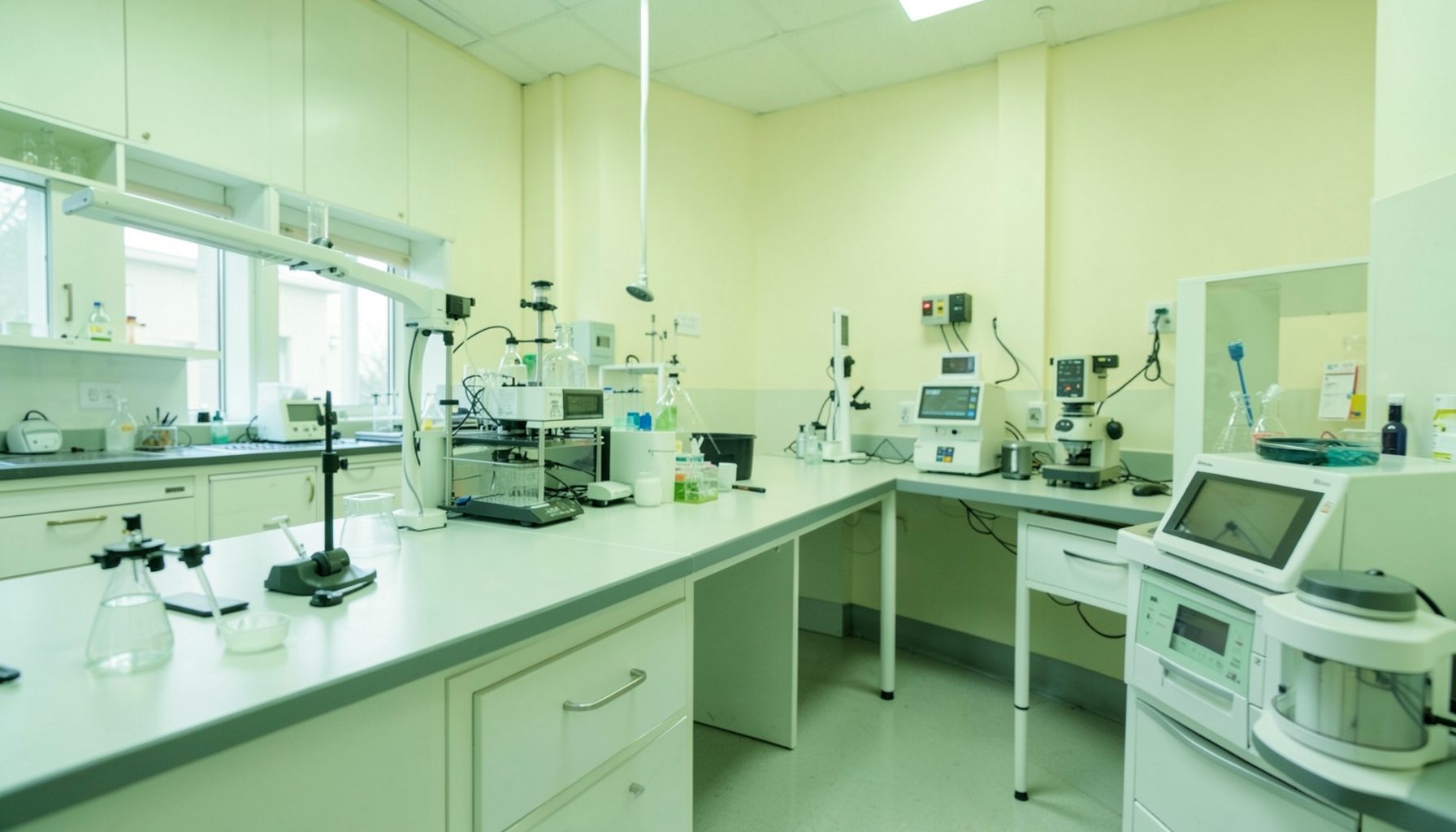
Building a Resilient Response Procedure for TB Laboratory Equipment Failures
A mycobacteriology laboratory depends on a tightly tuned chain of instruments to deliver reliable TB results, from fluorescent microscopes and MGIT systems to autoclaves and PCR platforms. When any link in that chain breaks, diagnostic decisions stall. Australian laboratories, whether situated in metropolitan Sydney or operating as far north as Cairns, recognise that downtime is rarely a question of if but when. Establishing a written equipment failure response procedure with tested backup plans converts an unpredictable event into a managed disruption.
Australia records one of the lowest TB incidence rates globally, yet the disease remains a public health priority in specific communities, including migrants from high-burden regions and Aboriginal and Torres Strait Islander populations. This profile shapes laboratory workloads in Melbourne and Perth, where reference centres process samples from catchment areas spanning thousands of kilometres. Replacement parts travel days by road or air, technician visits may require overnight stays, and biosafety cabinet certifications must align with National Association of Testing Authorities expectations. A response procedure fitted to these conditions is a frontline safeguard, not merely a regulatory formality.
The sections below walk through practical steps for developing such a procedure, from mapping failure points to embedding recovery routines inside the wider quality management framework. Each step reflects the day-to-day realities faced by Australian TB services while drawing on principles familiar to facilities working through the Quality Systems Essentials.
Understanding Equipment Failure Risks in TB Laboratories
Equipment risk in a TB laboratory clusters around instruments with no ready substitutes. A malfunctioning Class II biosafety cabinet compromises operator safety during smear preparation, while a failed MGIT reader brings culture-based detection to a halt. PCR platforms used for speciation or line-probe assays carry their own failure profiles, often through calibration drift, lamp aging, or firmware glitches. Refrigerators storing MGIT tubes and sputum specimens present a quieter but equally serious risk: temperature excursions compromise every sample inside.
Australian laboratories also contend with environmental stressors not always covered by imported guidance. Summer heatwaves pushing internal plant-room temperatures above 35 degrees Celsius stress compressor-driven refrigeration. Bushfire seasons in New South Wales and Victoria trigger widespread power outages that expose weaknesses in uninterruptible power supply provisioning. Salt-laden air in Fremantle or Geelong accelerates corrosion on connectors and probes. Naming these local triggers early turns abstract risk into something the team can plan against.
Mapping Critical Equipment and Failure Modes
An effective procedure begins with an inventory linking each instrument to its clinical role, the tests it supports, and the consequences of failure. Columns should capture model, serial number, manufacturer contact, last preventive maintenance date, and the maximum tolerable downtime before patient reporting is compromised. Risk-stratify entries by combining likelihood with clinical impact: a centrifuge used for decontamination carries less urgency than a thermocycler feeding a molecular algorithm.
For each high-risk item, document failure modes that maintenance records, manufacturer bulletins, or peer discussions have flagged. An MGIT 960 reader might lose barcode scanning, fault on a drawer motor, or report false-positive flags. A real-time PCR instrument may drift in melt-curve accuracy or stop temperature control. Workstations running laboratory information software can crash during peak reporting windows. Pattern-matching these scenarios against the inventory turns abstract risk into specific trigger conditions the team can recognise and respond to.
Drafting the Response Workflow
The response workflow describes what happens from the moment a technologist first suspects a fault. Step one is immediate documentation: time of detection, instrument state, last acceptable run, and the specific error observed. Step two routes the report to a designated responsible person who decides whether the fault is minor and contained, or serious enough to halt testing. Step three triggers an instrument downtime log and a clinical impact checklist so that results in progress can be verified before release.
Clear escalation criteria prevent both under-reporting and alarm fatigue. Minor faults include a single lamp warning or a transient communication error that resolves after a soft reboot. Major faults involve any failure producing unverifiable results, repeated out-of-range QC, or a safety breach. When EQA programmes flag discordant or out-of-control results, the response procedure must cross-reference the investigation pathway so that equipment-related causes are excluded before samples are referred elsewhere. The workflow belongs inside the broader quality manual.
Stocking the Backup Plan Arsenal
A backup plan is more than a wish list of replacements. Effective plans group their provisions into consumables, instruments, and service arrangements. Consumables include spare MGIT tubes, screw-cap vials, sterile pipettes, and backup reagents stored within validated temperature ranges. Instruments call for clear loaner agreements with peer laboratories, manufacturer loaner pools, or rental options that can be activated within hours. Service arrangements should name the engineering provider, expected response time, and any after-hours premium terms.
For Australian laboratories, geographic distance shapes which provisions are realistic. A Darwin laboratory cannot assume next-day delivery of a replacement rotor from Brisbane. Holding a buffer of long-life consumables, negotiating shared loaner pools with the state reference laboratory in Adelaide, and pre-arranging after-hours engineering callouts are practical adaptations. Redundant capacity also applies to data: instrument logs and validation reports should be stored independently of the workstation that produced them so a hardware failure does not erase the documentary trail.
Coordinating with External Service Networks
External coordination extends the laboratory beyond its walls. State public health reference laboratories provide surge capacity for smear microscopy, culture, or molecular confirmation when an instrument is offline for more than 48 hours. National reference networks offer escalation pathways for genotyping and drug susceptibility testing. Manufacturer service contracts should specify emergency callout windows, parts availability inside Australia, and credentials required for warranty repairs. Closer accreditation links help when extended outages threaten compliance, since NATA audits assess traceability and reward documented response.
Indicators that an external arrangement is mature include:
- A documented service-level agreement with named contacts at the manufacturer and at least one peer laboratory.
- Annual review of loaner equipment condition, with current calibration and cleaning records.
- Pre-cleared biosafety protocols allowing external engineers to enter restricted areas during emergencies.
- A communication tree reaching executive management, infection control, and clinical referrers within a single shift.
Training Staff and Running Simulated Failures
A procedure on paper has little value unless the team can execute it under pressure. Training starts with onboarding modules that walk new staff through each instrument's failure modes and the expected response. Scenario-based drills go further: run an unannounced "lost barcode reader" simulation during a routine morning batch, then debrief on detection, escalation, and clinical containment. Rotate scenarios so technologists become equally fluent in PCR plate-sealant failure, incubator temperature drift, and information system outages.
Engagement works best when simulations feel plausible. Reuse actual instrument error screenshots, anonymised root-cause analyses from peer facilities, and benchmarks drawn from frameworks like the GLI Quality Tool to keep the training aligned with international expectations. Participation across the laboratory, including specimen reception and reporting staff, reveals handoff gaps that desk reviews cannot. Record each drill's outcomes, attach them to the staff training file, and feed lessons back into the next revision of the procedure.
Core training elements to maintain in the laboratory training register include:
- Documented competency assessment for every analyst on critical instruments at least annually.
- Annual participation in at least one equipment failure simulation with defined pass criteria.
- Refresher sessions following any real incident, complete with root-cause analysis and corrective actions.
- Cross-training so at least two staff members can operate each critical instrument independently.
Embedding the Procedure in the Quality Cycle
Equipment failure procedures belong inside the laboratory's continual improvement cycle, alongside internal audits, management review, and EQA performance. After every event, schedule an after-action review within two weeks. Capture what was detected, escalation time, what backup plans activated, and where gaps emerged. Track indicators such as mean time to detection, mean time to recovery, and the proportion of events resolved using only internal resources.
Annual management review meetings should treat equipment performance as a standing agenda item, alongside non-conformities and EQA summaries. Where patterns emerge, escalate the procurement strategy rather than repeat the same workaround each quarter. Laboratories moving through GLI Quality Tool Phase 4 typically find that structured review shifts recovery from a reactive scramble to a measurable, improvable process. Drawing on the platform's phase-specific checklists and downloadable templates gives auditors familiar evidence while keeping the team focused on local risk.
Adopt the framework today, schedule the first simulation, and assign clear ownership for each backup plan. A response procedure built on inventory, escalation, backup, coordination, and review becomes less of a written obligation and more of a daily habit, one that keeps TB diagnostics moving regardless of the next unexpected fault.