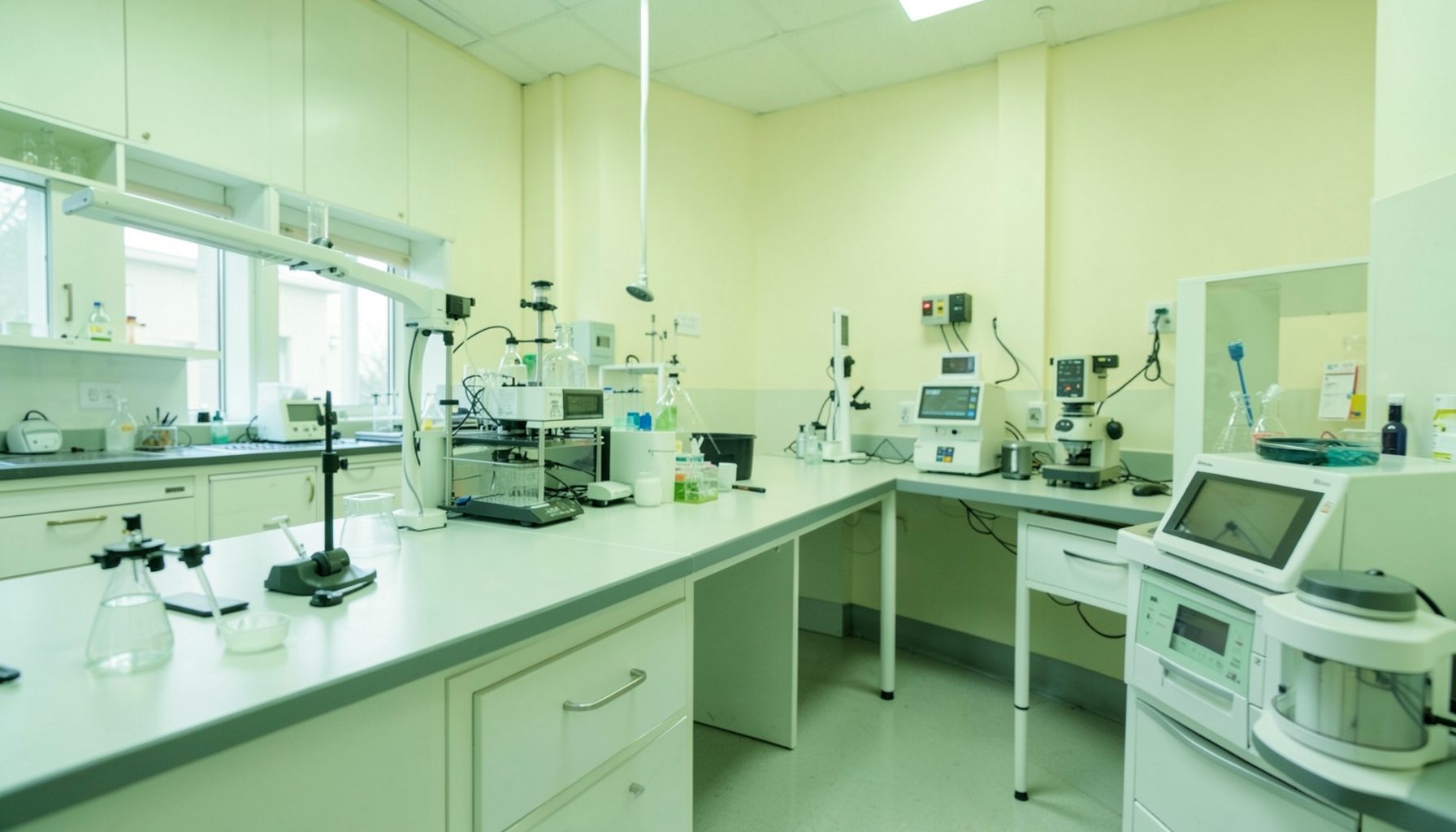
Establishing Reliable DNA Extraction Quality Assessment in TB Laboratories
A tuberculosis laboratory can produce technically correct PCR results only when DNA extraction is controlled as carefully as amplification and detection. Extraction errors may cause inhibition, contamination, low organism recovery, or false confidence in a negative result. A documented assessment procedure gives staff a consistent way to detect these problems before they affect patient care or surveillance data.
The procedure should suit the laboratory’s test platform, specimen types, staffing model, and transport conditions. In Australia, this may mean supporting a large public laboratory in Sydney or Melbourne, a regional service, or a facility receiving specimens from remote communities in the Northern Territory or Western Australia. The GLI Quality Tool offers a practical quality management framework for building this work into routine laboratory operations.
Define The Purpose And Scope
Begin by stating what the assessment is intended to verify. A DNA extraction quality assessment may examine specimen receipt, sample preparation, lysis, nucleic acid recovery, inhibitor removal, contamination prevention, and transfer of extracted material into a molecular assay. It should identify whether the entire extraction pathway consistently produces DNA suitable for TB detection and, where relevant, resistance testing.
Specify the specimen types and methods covered by the procedure. Sputum, concentrated respiratory deposits, tissue, cerebrospinal fluid, and extrapulmonary samples can have different cellular content, viscosity, inhibitor levels, and biosafety requirements. The procedure should state whether it applies to manual extraction, automated platforms, cartridge-based systems, or a combination of methods.
A clear scope also identifies who performs the assessment, who reviews results, and when it occurs. Include initial method verification, routine monitoring, staff competency checks, reagent or lot changes, instrument maintenance, and investigation after an unexpected run. This prevents quality assessment from becoming an occasional exercise performed only before accreditation visits.
Set Measurable Acceptance Criteria
Acceptance criteria should be based on the assay manufacturer’s instructions, method verification data, published evidence, and the laboratory’s own historical performance. Avoid relying on a single arbitrary DNA concentration threshold when the downstream TB assay is qualitative or highly platform-specific. A sample can have measurable DNA yet still contain inhibitors or insufficient target material for reliable detection.
Use several indicators together. These can include extraction control performance, internal amplification control results, invalid or inhibited test rates, contamination events, repeat extraction frequency, and agreement with known positive and negative materials. For quantitative methods, monitor cycle threshold or signal strength trends. Sudden shifts may indicate reagent deterioration, instrument problems, altered specimen composition, or a change in operator technique.
Set limits before routine data are reviewed. For example, the laboratory may define an acceptable range for negative extraction controls, a maximum invalid rate, and rules for immediate investigation after repeated control failure. Criteria should distinguish an isolated error from a developing trend, with escalation levels linked to specific actions.
Control The Workflow From Receipt To Elution
Quality assessment starts before extraction. Confirm specimen identification, collection time, transport condition, volume, leakage, and storage temperature. Record delays that could affect organism recovery. In remote Australian settings, specimens may travel long distances by road or air, so transport duration and temperature excursions deserve particular attention.
Separate activities according to contamination risk. Use designated areas or clearly controlled work zones for specimen opening, reagent preparation, extraction, and amplification setup. Establish unidirectional movement of staff and materials where practical. Use appropriate respiratory protection, biological safety cabinets, disinfectants, and waste procedures in line with local work health and safety requirements and the laboratory’s risk assessment.
Include controls in every extraction batch. A positive process control can demonstrate that lysis and recovery are functioning, while a negative extraction control can reveal contamination introduced during preparation. Internal controls help detect inhibition within individual specimens. Controls must pass before patient results are released, and failed controls should trigger a documented response rather than informal repetition.
Standardise Equipment, Reagents And Records
Create a controlled list of extraction instruments, centrifuges, pipettes, heating blocks, biosafety cabinets, and other relevant equipment. Each item needs an identification number, maintenance schedule, calibration or verification record, and defined action when it is out of service. Pipette performance is especially important because small volume errors can alter lysis, washing, and elution steps.
Record reagent manufacturer, catalogue number, lot, expiry date, opening date, and storage conditions. Australian laboratories may need to manage supply interruptions, substituted consumables, or different instrument configurations because the molecular diagnostics market is concentrated and procurement lead times can vary. Any change in extraction kit, buffer, tube type, or supplier should be assessed before routine use.
Use a worksheet or electronic form that captures specimen or batch identifiers, operator, date, method, control results, deviations, repeat work, and final disposition. If an information system is used, restrict result editing, preserve audit trails, and back up records. Privacy obligations under the Privacy Act 1988 and applicable state or territory requirements should be considered when worksheets contain patient-linked information.
Verify Personnel Competence
Training should cover the scientific purpose of each extraction step, practical technique, contamination prevention, biosafety, equipment use, and interpretation of controls. Staff need to understand why vigorous mixing, incomplete lysis, incorrect incubation, poor pipetting, or premature transfer can affect a TB result. Procedure reading alone is insufficient evidence of competence.
Assess each operator using direct observation, a practical demonstration, control performance, and review of completed records. Competence should be checked before independent work, after a prolonged absence, when a method changes, and at a defined recurring interval. Document retraining and reassessment where an operator has repeated deviations or unusual invalid rates.
Laboratories can use external review to strengthen the process. The GLI resource on assessment tool guidance provides useful principles for making assessments structured, observable, and linked to corrective action. Although the guide addresses TB microscopy networks, its approach can be adapted to molecular extraction workflows.
Investigate Variation And Correct Problems
When an assessment fails, quarantine affected results or batches according to the risk. Review controls, specimen characteristics, equipment logs, reagent history, environmental conditions, and operator records. Compare the event with previous runs to determine whether it is a single handling error or evidence of a wider process change.
A useful investigation identifies the root cause rather than simply repeating the extraction. Consider inadequate lysis, blocked filtration, incorrect centrifugation, degraded reagents, contamination between samples, transcription errors, or a software and instrument interface problem. Re-extraction may resolve an individual specimen, but it does not replace corrective action when several samples are affected.
Trend the data at regular quality meetings. Plot invalid rates, control failures, contamination events, repeat extractions, and cycle threshold distributions by operator, instrument, specimen type, and reagent lot where appropriate. Results should lead to actions such as refresher training, equipment service, revised storage controls, supplier notification, or temporary suspension of a method.
Recommended Procedure Controls
- Define extraction controls, acceptance limits, escalation rules, and result-release requirements.
- Record specimen condition, transport history, reagent lots, equipment identifiers, and operator details.
- Review trends at a planned interval rather than waiting for a serious failure.
- Link every nonconformity to an owner, due date, documented action, and effectiveness check.
- Keep the controlled procedure, forms, training records, and review evidence together.
Compare Manual And Automated Approaches
The assessment procedure should reflect the extraction technology in use. Manual methods may offer flexibility and lower capital costs, but they rely heavily on pipetting discipline, timing, and separation of work areas. Automated systems can improve consistency and traceability, although they introduce dependence on proprietary consumables, software, maintenance, and uninterrupted power.
A small regional laboratory may need a simpler paper-based batch log, while a high-throughput metropolitan service may integrate extraction records with a laboratory information system. The quality requirements remain the same: controls must be meaningful, deviations visible, and corrective actions documented. The form and frequency can vary without weakening the underlying control system.
| Assessment feature | Manual extraction | Automated extraction |
|---|---|---|
| Main risk | Pipetting, timing, and cross-contamination | Instrument error, software failure, and consumable dependency |
| Key records | Operator steps, batch worksheet, reagent lots | Run file, instrument log, kit lot, error codes |
| Essential controls | Positive process, negative extraction, internal control | Positive process, negative extraction, internal control and system checks |
| Competence evidence | Direct observation and practical assessment | Practical run, alarm response, maintenance awareness |
| Useful trend measures | Invalid rate, repeats, operator variation | Error codes, invalid rate, downtime, lot performance |
Integrate The Procedure Into Quality Management
DNA extraction assessment should sit within the laboratory’s wider quality system rather than operate as a separate molecular checklist. Map each activity to document control, personnel, equipment, purchasing, process management, assessment, occurrence management, and continual improvement. The four-phase structure of the GLI Quality Tool can help a laboratory move from identifying gaps to implementing, monitoring, and sustaining controls.
Schedule internal audits that examine both records and actual practice. An auditor should observe workflow, check whether staff follow the current version, trace a batch from specimen receipt to result release, and confirm that corrective actions were effective. External quality assessment or proficiency testing can add evidence about the complete molecular process, but it should complement, not replace, local extraction monitoring.
Review the procedure after a new platform is introduced, a significant contamination event occurs, an assay changes, or surveillance data show an unexpected shift. In Australia, alignment with NATA accreditation expectations and ISO 15189 principles can support consistency across public and private services. Clear version control and approval by the laboratory director or delegated quality manager ensure that old instructions are removed from use.
Start by writing the scope, mapping each extraction step, and selecting controls that reveal the errors most likely to occur in the local workflow. Then perform a baseline assessment across operators and specimen types, agree on acceptance limits, and record corrective actions in the laboratory quality system. Downloadable checklists and phase-specific materials from the GLI Quality Tool can support implementation, helping the procedure become a routine safeguard for accurate TB diagnosis rather than a document kept only for audit purposes.