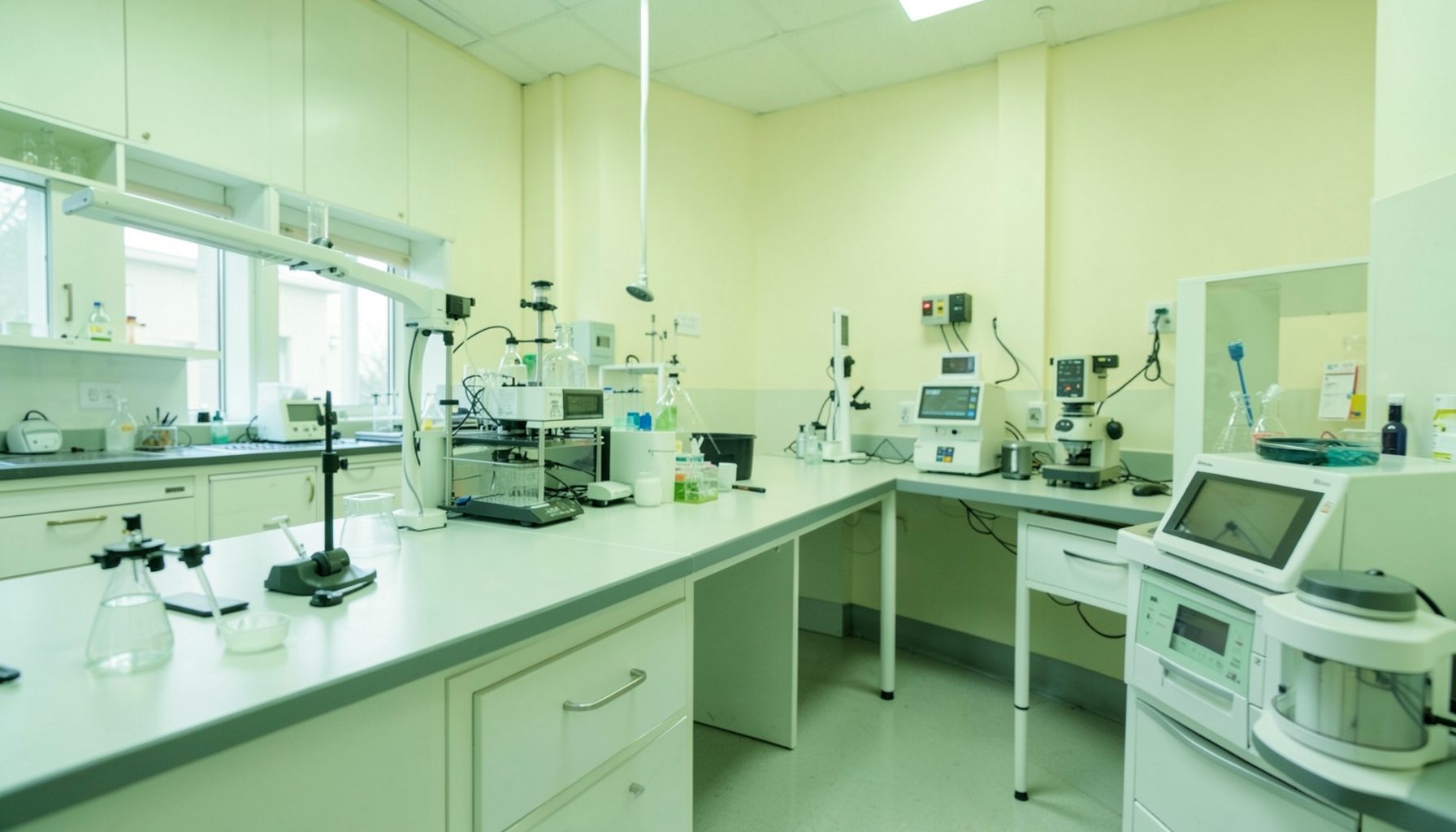
Building a contamination investigation protocol for TB laboratories with root cause analysis
Contamination events in tuberculosis laboratories rarely announce themselves with fanfare. A single positive culture that does not fit the clinical picture, a string of melted controls, or a smear that lights up where none should be — these are the quiet signals that a bench, a buffer, or a batch has gone astray. For laboratories operating across Australia, from busy tertiary centres in Sydney and Melbourne to remote services supporting communities in the Top End and Central Australia, the response to such signals needs to be calm, structured, and reproducible.
Root cause analysis offers that structure. Rather than patching the obvious symptom and moving on, the approach walks investigators back along the chain of events, asking what allowed the contamination to occur and why existing controls failed to catch it. When embedded into a written protocol, it transforms ad hoc panic into a quality system activity that feeds back into training, equipment maintenance, and procurement decisions.
A contamination investigation protocol also satisfies the expectations of accrediting bodies such as NATA and the Royal College of Pathologists of Australasia, both of which look for evidence of systematic response to nonconformities. Australian laboratories that align their protocols with the GLI Quality Tool twelve Quality Systems Essentials find the exercise fits naturally into existing quality management workflows.
The remainder of this piece walks through how to design, document, and operationalise such a protocol, drawing on practical guidance suited to laboratories working under varied resource and staffing conditions across the country.
Recognising contamination triggers in Australian TB settings
Before a protocol can be written, the laboratory team needs a shared vocabulary for what counts as a contamination event. Common triggers include unexpected growth on solid or liquid media, positive PCR signals in reagent-only wells, clustered positives in negative controls, and discrepant results between primary and reference testing at facilities such as the Queensland Mycobacterium Reference Laboratory or the Victorian Infectious Diseases Reference Laboratory.
Geographic and climatic realities shape the risk profile. Laboratories in tropical Queensland and the Northern Territory often deal with higher humidity, dust ingress, and longer supply chains for consumables, while southern states face colder transport conditions that can compromise specimen integrity. Acknowledging these local factors helps teams frame triggers in a way that reflects their actual working environment rather than an imported ideal.
Trigger thresholds also need to be defined. Some laboratories set a contamination rate target of between one and three percent for solid media, escalating to formal investigation when monthly rates breach an upper limit. Others trigger investigation after two or more linked events within a defined window. The choice matters less than the act of writing the threshold down and getting sign-off from senior scientists, safety officers, and the quality manager.
Writing the procedure and assigning responsibility
A robust protocol sits inside the laboratory's controlled document register and links to related procedures for media preparation, specimen handling, biosafety, and equipment qualification. Each step of the investigation should have a named owner, an expected timeframe, and a record location. In smaller regional laboratories, one scientist may wear several hats, but the responsibilities should still be documented separately.
The document should clearly state who declares an event, who collects evidence, who performs the analysis, and who signs off on the final report and corrective actions. Including a section on communication keeps everyone informed, particularly when results must be shared with clinical requesters, public health units, or the state tuberculosis program.
Reference to the Phase 4 continual improvement resources is useful here, as they help laboratories align investigation outcomes with broader quality objectives, management review inputs, and external audit readiness.
Applying a stepwise root cause analysis method
A practical approach borrowed from incident investigation in other high-risk industries translates well to TB laboratories. The five-why technique is a starting point, but for biological events it often needs to be paired with a timeline reconstruction and an Ishikawa, or fishbone, diagram covering environment, personnel, equipment, methods, materials, and measurement.
Start by securing the scene. Quarantine any remaining aliquots of implicated media, reagents, and specimens, and preserve equipment logs, batch records, and environmental monitoring data. Photograph the workspace where appropriate. The goal is to freeze the evidence before memory fades and consumables are discarded in routine cleaning.
Build the timeline next. Map each action from media preparation through inoculation, incubation, and reading, noting who did what, when, and with which consumable lot. A well-constructed timeline frequently reveals the weak point — a shared bottle opened across multiple benches, an incubator door left ajar during a busy arvo, or a maintenance visit that coincided with a sputum processing run.
The fishbone diagram then organises contributing factors into branches. Common findings in Australian laboratories include lapses in cleaning between batches, autoclave cycle deviations, expired or improperly stored supplements, and interrupted power supply affecting temperature-critical equipment. The analysis should distinguish immediate causes from systemic ones, since fixing only the immediate cause invites recurrence.
Responding with corrective and preventive actions
Once the root cause is identified, the protocol should guide the team through selecting corrective actions that address the underlying system failure. For a contamination traced to a leaking bottle of sterile water used across benches, the corrective action might involve replacing the bottle format with single-use ampoules and updating the media preparation procedure.
Preventive actions extend the response further. These include revising training records, scheduling an extra environmental swabbing round, raising a procurement request for improved consumables, and adding a checkpoint to the startup checklist. Each action needs an owner, a target date, and a method for verifying effectiveness.
Verification closes the loop. The laboratory should track contamination rates, equipment performance indicators, and audit findings over the following weeks and months to confirm the action worked. If rates do not return to baseline, the team returns to the analysis rather than layering more fixes onto an unresolved root cause.
Proficiency testing provides an external check on laboratory performance and supports the verification process, with structured guidance available on developing a method for TB lab proficiency testing participation and analysis useful for laboratories building or refreshing their external quality assessment approach.
Documenting, reporting, and feeding back into the quality system
Investigation reports should follow a consistent template that captures the trigger, evidence collected, timeline, contributing factors, root cause statement, actions taken, verification plan, and lessons learned. Standardisation makes reports searchable later, which is valuable when looking for patterns across quarters or sites.
Distribution matters as much as the content. Reports should reach the laboratory director, quality manager, biosafety officer, and relevant bench scientists. Where the contamination has potential patient impact, the clinical team and the jurisdictional tuberculosis program must be informed in line with state public health legislation and the National Notifiable Diseases Surveillance System requirements.
Lessons learned deserve a second life. Aggregated findings should feed into management review meetings, annual training plans, and procurement evaluations. A contamination that prompts a switch to a different pipette tip supplier may inform contract reviews across multiple laboratories in a network, particularly when state-wide pathology services standardise their consumable lists.
Sustaining the protocol through training and continual improvement
Even the best written protocol gathers dust without regular engagement. Annual competency assessments can include a tabletop exercise where staff walk through a hypothetical contamination event using the protocol, identifying gaps in their own knowledge and in the documented process.
Refresher training also offers a chance to update the team on changes to the procedure following recent investigations. When scientists see that their input shaped a revised step or a new control, they are more likely to engage with the next investigation wholeheartedly.
Comparison of common root cause analysis tools used in TB laboratories:
| Tool | Strengths | Limitations | Best fit |
|---|---|---|---|
| Five whys | Quick, low resource, easy to teach | Can oversimplify complex chains | Single-incident, clear single pathway |
| Ishikawa diagram | Visual, captures multiple contributing factors | Time intensive, requires facilitation | Multifactorial events, team review |
| Fault tree analysis | Quantitative, traces combinations of failures | Specialist knowledge needed | Recurring events, risk modelling |
| Bowtie analysis | Links causes to consequences clearly | Less detail on contributing factors | Communicating risk to management |
Key indicators that should trigger a formal investigation:
- Two or more linked contamination events within a defined period
- Positive signals in negative control media or reagent-only wells
- Sudden shift in monthly contamination rate above the agreed threshold
- Discrepant results between primary laboratory and reference centre
Documentation elements required for every investigation:
- Trigger description and detection method
- Timeline of events with timestamps and operator identifiers
- Evidence register including quarantined materials and photographs
- Root cause statement, corrective and preventive actions, and verification plan
A well-constructed contamination investigation protocol becomes more than a reaction tool. It anchors the laboratory's quality culture, gives staff confidence that problems will be handled fairly, and reassures patients and clinicians that results can be trusted. The next step is to download the relevant checklists from the GLI Quality Tool, convene the quality team, and start drafting a procedure tailored to your own laboratory's setting and risk profile.