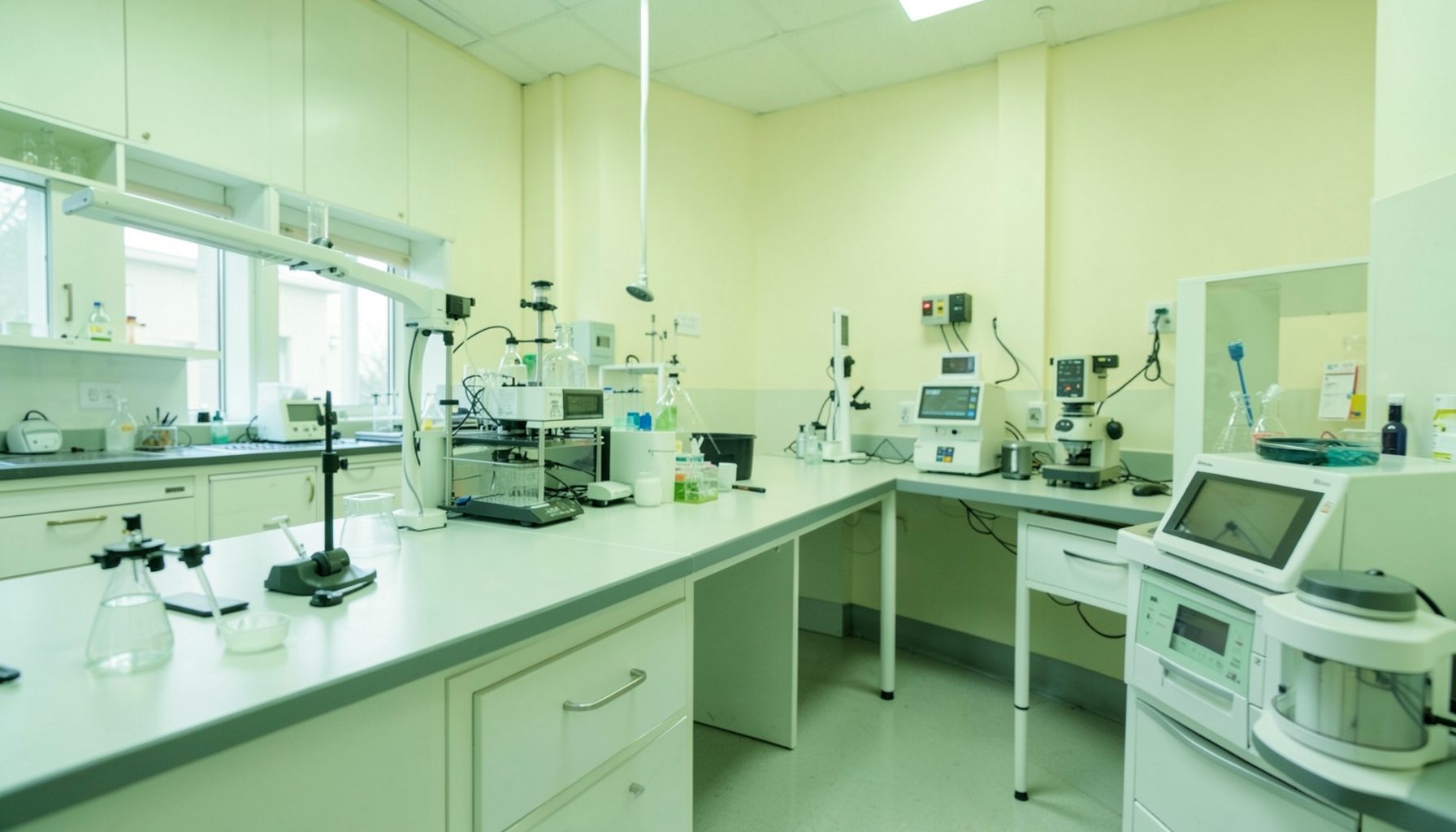
Building a TB lab preventive action plan for recurring equipment failures
TB laboratories run equipment that fails in costly and unpredictable ways. An incubator drifting above set point can ruin weeks of MGIT cultures. A biosafety cabinet whose airflow sensor loses calibration can shut a whole diagnostic service down. When the same autoclave, centrifuge or staining line breaks repeatedly, the cause is usually systemic rather than incidental.
The move from reactive firefighting to proactive prevention sits at the centre of any Quality Management System, especially in TB work where specimen integrity and staff safety are inseparable. Lab managers in Sydney and Brisbane tertiary centres, regional services in Townsville or Cairns, and remote-area point-of-care sites in the Northern Territory all wrestle with the same reality: ageing instruments, tight budgets and constant churn of consumables.
For Australian facilities looking for an externally validated starting point, the https://gliquality.org/ platform offers a structured framework that maps preventive action planning against the twelve Quality Systems Essentials. Its phase-by-phase roadmap fits neatly with laboratories preparing for, or maintaining, accreditation through the National Association of Testing Authorities (NATA) and the Royal College of Pathologists of Australasia (RCPA) quality frameworks, including those participating in the national reference laboratory network.
Within Australian public health laboratories, equipment reliability is both a technical and a regulatory concern. State legislation such as the NSW Work Health and Safety Act 2011 places explicit duties on persons conducting a business or undertaking to maintain plant and equipment. TB diagnostics carry added scrutiny, given the handling of M. tuberculosis under PC3 conditions and the audit expectations of NATA against ISO 15189.
Mapping equipment behaviour and current baselines
Every preventive plan begins with evidence rather than assumptions. The first task is to assemble twelve months of records: downtime logs, service reports, calibration certificates, complaint files and any near-miss reports filed after unusual alarms or temperature excursions. In a busy Australian reference lab servicing both metropolitan hospitals and outreach clinics, this paper trail often reveals patterns that no individual recall can capture.
Once the records are collated, plot failure frequency against equipment age, sample throughput and environmental conditions. In Darwin and far north Queensland, ambient humidity regularly exceeds eighty percent during the wet season, accelerating corrosion on condenser coils and sensor housings. Pairing climate context with breakdown data turns anecdotal impressions into actionable baselines.
Baselining also exposes the silent failures: pipettes that drift outside tolerance between scheduled calibrations, fridges that cycle harder in summer as their compressors age, UPS systems whose battery autonomy is quietly degrading between annual tests. Without a strong baseline, these issues only surface during a reactive crisis that compromises diagnostic turnaround.
Categorising failure modes and risk scoring
The GLI framework assigns each Quality System Essential a defined scope, and equipment sits squarely within the Equipment QSE alongside the Facilities, Safety and Supplier Management essentials. Mapping recurring failures against these stops each problem being treated as purely technical. A persistent autoclave gasket failure, for instance, may trace to a vendor on the Approved Supplier List whose replacement parts are inconsistently graded.
Categorisation should consider whether each issue is equipment-related (worn bearings, blown capacitors), process-related (incorrect loading, missed priming), user-related (control software unfamiliarity) or environmental (power fluctuations, building vibrations). Australian laboratories connected to older hospital infrastructure, including several regional centres undergoing capital redevelopments, regularly see process-related failures present as equipment problems.
Auditors reviewing under NATA ISO 15189 will look for evidence that the laboratory has adopted this layered view. Recording categorisation shortens the root-cause investigation cycle, because each recurring incident arrives at the register already classified and can be tracked for trend across reporting periods.
Risk scoring sharpens further what to act on first. Each instrument is rated on probability of failure, diagnostic impact, safety consequence and recovery time. An MGIT reader rates very high on diagnostic impact because a missed time-to-detection signal can release a contaminated culture as negative. A water bath used for slide drying, by contrast, scores low on most axes and should not absorb resources from critical kit. Ranked scores make budget conversations easier, particularly where TGA-cleared replacements need a defensible business case.
Building a preventive action register
The register is the operational heart of any preventive plan. Each entry records the equipment identifier, the failure mode, the categorisation against QSEs, the preventive action, the owner, the deadline and the verification method. A laboratory in Adelaide or Perth might bundle several recurring centrifuge rotor cracks into a single entry, since the preventive action is shared.
Preventive actions sit on a spectrum. At one end, scheduled tasks such as monthly condenser cleaning on a Class II biosafety cabinet slot neatly into existing maintenance plans. At the other, redesign actions including engineering controls, switching consumable brands or replacing a single instrument call for project-style oversight. Register entries should distinguish clearly between these so the workflow does not become muddled.
| Strategy | Reactive maintenance | Scheduled maintenance | True preventive maintenance |
|---|---|---|---|
| Trigger | Equipment breaks down | Time or cycle threshold reached | Condition monitoring, risk register entry |
| Staff impact | Sudden overtime, paused work | Planned interruption | Mostly transparent to workflow |
| Diagnostic risk | High, sample integrity threatened | Medium if schedule slips | Low when trending is reliable |
| Cost shape | Spike-driven, unpredictable | Predictable annual spend | Higher upfront, declining over time |
| Fit with QSEs | Weakly documented | Ties to Equipment QSE | Cross-links to Safety, Suppliers, Assessment |
The register also needs a feedback loop to suppliers. Where a specific pump model generates repeated service calls across multiple sites, the register should escalate to procurement for contract review rather than leave each site to negotiate alone. Under collective purchasing arrangements such as HealthShare NSW or Health Purchasing Victoria, this shared signal carries real leverage.
Embedding monitoring and trigger thresholds
Without trigger thresholds, prevention becomes aspiration rather than process. Each instrument needs at least one measurable indicator that warns of degrading performance: a refrigerator temperature mean over seven days, a centrifuge vibration reading logged weekly, or the number of times an incubator door opens per shift. The role of the trigger is to convert judgement into rule.
Australian laboratories increasingly draw these indicators from middleware or laboratory information systems, particularly in larger public laboratories across Melbourne and Sydney. Smaller sites often rely on laminated log sheets whose layout mirrors what is used elsewhere, which makes audit trails easier when staff cross-cover shifts. Consistency of format matters more than the technology on the bench.
Threshold breaches should feed directly into the corrective and preventive action system rather than sit idle in a logbook. A trigger that generates a CAPA each time it fires creates a steady low-level stream of learning and prevents small drifts from accumulating into major failures. This is the practical engine of continual improvement.
Integrating supplier reviews and calibration cycles
Preventive action plans reach their full value when supplier performance and calibration cycles are reviewed together. A laboratory may perfectly calibrate its thermometers every six months, only to find that the supply contract delivers replacements drifting within two. Joint review of supplier data with internal trend data exposes these gaps and supports evidence-based renegotiation.
Calibration cycles deserve their own review for fitness-for-purpose. Annual calibration may be sufficient for a general-purpose fridge but inadequate for a biological indicator incubator used in spore-based autoclave validation. Laboratories operating under NATA accreditation should keep a dedicated schedule that captures the rationale for each cycle, rather than inheriting default frequencies from the original commissioning plan.
For consumables that drive instrument performance, supplier qualification should run beyond the purchase order. Lot-specific certificates of analysis, performance against quality control strains such as H37Rv, and post-market feedback from peer laboratories are legitimate inputs. The framework encourages integration between the Suppliers and Equipment QSEs precisely because failure so often sits at the interface.
Training, competency and the review cycle
Preventive plans collapse quickly when staff turnover outpaces training. Recruiting scientists in regional Australia remains challenging, with frequent postings between metropolitan hubs and country placements. A written plan held by one individual evaporates the moment they take leave. Embedding training into the routine, with shadowing rotations and short competency refreshers, raises the floor across the team.
Reviewing the plan at least every six months keeps it honest. New instruments, new reagents and new staff all shift the baseline, and a register that is not refreshed drifts into ceremony. Many Australian laboratories draw on the downloadable materials for review templates that fit neatly into quarterly equipment committee meetings or joint sessions with infection control.
The review meeting is also where laboratories should challenge whether preventive measures are still proportionate. Some will prove unnecessary in the new operating environment and can be retired, freeing time for ones that genuinely matter. Adapting rather than accumulating is a hallmark of a mature QMS.
Practical steps for Australian TB laboratories
Once the framework is in place, the following actions help ground the preventive plan in everyday laboratory reality and align with the four phases set out by the resource.
- Anchor the preventive plan within the twelve QSEs rather than treat it as a stand-alone document.
- Establish a twelve-month baseline of equipment behaviour before redesigning any preventive task.
- Build the preventive action register alongside the risk register so prioritisation is transparent.
- Escalate supplier-reliability concerns through collective channels such as state procurement bodies.
- Set measurable trigger thresholds on every critical instrument and link breaches straight into the CAPA system.
- Schedule biannual reviews and document any retired preventive actions as deliberate decisions rather than gaps.
- Train new staff into the preventive plan during induction so institutional memory is not dependent on individuals.
Reliable equipment is the silent partner of every accurate TB diagnosis. Australian laboratories that move from reactive repair to structured prevention will find their diagnostic turnaround stabilising, their CAPA workload becoming lighter rather than heavier, and their accreditation evidence strengthening at every cycle. The next step is to align the local plan against the four phases of the resource, starting with whichever laboratory assessment phase reflects the current baseline, and iterating from there with quarterly oversight in place and a deliberate hand on both supplier performance and internal trend data.