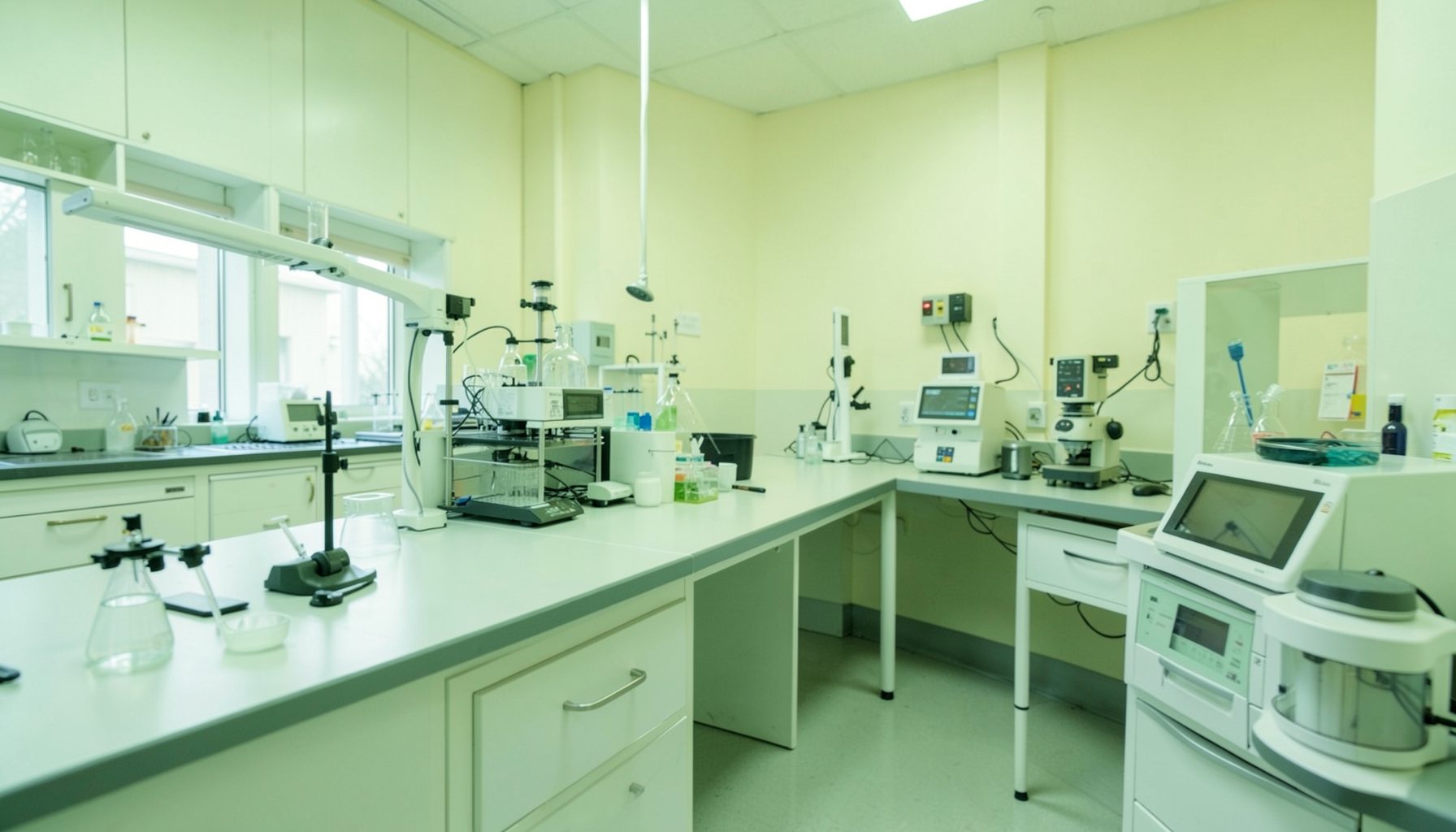
Water quality verification for TB culture media in Australia
Setting up a water quality verification procedure for tuberculosis culture media looks straightforward on paper but quickly becomes layered once laboratories begin writing the standard operating procedure. Reagent water touches every flask of Middlebrook 7H10, every Lowenstein-Jensen slope, and every MGIT tube a laboratory prepares, yet it is often the last variable a quality manager interrogates when contamination patterns emerge. Australian TB laboratories, from the high-throughput reference centres in Sydney and Melbourne to smaller services in Darwin and Hobart, rely on consistent water chemistry to keep diagnostic turnaround times predictable and to satisfy accrediting body expectations.
The GLI Quality Tool organises laboratory strengthening into four phases and twelve Quality Systems Essentials, and water quality verification crosses QSE 5 (Equipment) and QSE 10 (Supplier and Inventory Management). A well-constructed procedure documents acceptance limits, sampling frequency, testing responsibilities, and corrective actions in a way that fits the laboratory's current phase. The result is a system that satisfies NATA requirements, supports RCPA-quality expectations, and produces media that mycobacteria will actually grow in.
The critical role of water in TB culture media
Mycobacterial growth media are unforgiving matrices. Even small shifts in pH, residual chlorine, or trace metal content can suppress slow-growing species or encourage overgrowth by environmental organisms. Lowenstein-Jensen medium relies on coagulation of whole egg by a heated malachite green solution, and any water-borne contaminant can shift the colour, texture, or nutritional balance of the finished slope. Broth systems such as MGIT and Middlebrook 7H9 are even more exposed, because the entire growth substrate is dissolved or suspended in reagent water before supplementation with OADC or growth supplement.
Australian reference laboratories, including the Victorian Infectious Diseases Reference Laboratory in Melbourne and the Queensland Mycobacterial Reference Laboratory in Brisbane, prepare large batches of media each week and have built their quality programmes around verified reagent water systems. Laboratories operating under hotter or more humid conditions, like those in Cairns or Townsville, also see seasonal variations in feed-water microbiology, which means verification procedures must account for more than a single annual check. When water quality drifts, the first signal is rarely a failed growth control; it is a shift in colony morphology, slower time-to-positivity, or unexplained contamination in negative controls.
Defining acceptance limits through standards and accreditation
Acceptance criteria for reagent water in TB laboratories typically draw from ISO 3696 and the CLSI M22 documents, which describe three grades of purified water suitable for clinical microbiology work. Most mycobacterial culture work requires water at or above Grade 2, while susceptibility testing and PCR-grade work demand Grade 1 or better. NATA-accredited laboratories are expected to demonstrate that water used in media preparation meets defined specifications for conductivity, resistivity, total organic carbon, microbial bioburden, and endotoxin where relevant.
Mapping each parameter against the media it supports helps laboratories choose appropriate limits. Grade 2 water with conductivity below 1 µS/cm and resistivity above 1 MΩ·cm is generally suitable for LJ slopes and Middlebrook agar, while Grade 1 with endotoxin below 0.02 EU/mL is the safer choice for MGIT broth and susceptibility testing media. Defining limits in writing protects the laboratory when results drift, and gives auditors a clear line of sight from media performance back to the reagent water system. Many Australian laboratories also cross-reference AS 4276 for sampling handling, particularly when verifying water sourced from tropical or remote supply networks.
Designing a sampling and testing schedule
A verification procedure is only as strong as the sampling plan behind it. Most laboratories establish at least two sampling points: one at the point of feed-water entry, after any pre-treatment, and one at the point of use, after the final polishing step. Daily checks focus on conductivity or resistivity using inline or bench meters, while weekly or monthly tests cover total organic carbon, endotoxin, and microbial plate counts. Where laboratories operate reverse osmosis paired with a polishing still, the verification plan should reflect the lifespan of each consumable.
| Parameter | Frequency | Method | Acceptance limit |
|---|---|---|---|
| Conductivity / resistivity | Daily | Inline or bench meter | Per ISO 3696 Grade 2 |
| Total organic carbon | Weekly | Online or bench analyser | < 50 µg/L |
| Microbial bioburden | Weekly | Membrane filtration | < 100 CFU/mL |
| Endotoxin | Monthly | LAL assay | < 0.02 EU/mL |
| pH | Each batch | Bench meter | 5.5 – 7.0 |
Reagent selection is often underestimated. Endotoxin-free water for injection-grade applications, sterile deionised water for buffer preparation, and freshly drawn purified water for media preparation each carry different shelf lives and storage requirements. Documenting lot numbers of consumables such as cartridges and resins makes it possible to trace contamination events back to a specific change. Laboratories seeking a structured approach to cabinet testing will benefit from biosafety cabinet certification guidance, which follows a comparable logic of scheduled checks, documentation, and corrective action. Aligning both procedures under a single quality calendar helps small Australian laboratories avoid clashes.
Integrating verification with the GLI quality tool roadmap
The four phases of the GLI Quality Tool give laboratories a practical scaffold for introducing or strengthening a water verification procedure. Phase 1 laboratories usually begin with a gap analysis, mapping current water sources, treatment systems, and existing quality records against target specifications. By Phase 3, verification should be fully embedded into routine operations, with documented acceptance limits, scheduled sampling, trained personnel, and a functioning corrective action process.
Checklists for each phase are available through the GLI Quality Tool platform, and laboratories that have not yet downloaded the full set of phase-specific templates can access them through the download page. The checklists make it straightforward to align local SOPs with the Quality Systems Essentials, particularly QSE 5 (Equipment) and QSE 12 (Continual Improvement). Where existing documentation is incomplete, the platform provides templates for verification records, equipment logs, and non-conformance reports that laboratories can adapt to their own branding and NATA audit formats.
A useful practical step is to assign responsibility for each verification task to a named role, ideally with a deputy. Australian laboratories frequently rely on a single quality officer, and clear ownership prevents tasks from drifting when that officer is on leave. Recording deviations and corrective actions in a single register supports trend analysis later and demonstrates continual improvement to auditors.
Handling out-of-specification results and CAPA
When verification testing produces an out-of-specification result, the procedure must describe exactly what happens next. A typical response includes immediate repeat testing from the same sampling point, investigation of the treatment system, quarantine of any media prepared since the last compliant verification, and communication with the laboratory director. Root cause analysis commonly points to exhausted cartridges, biofilm accumulation in storage tanks, or seasonal shifts in feed-water quality, particularly for laboratories sourcing from surface water schemes such as those serving parts of Perth or regional Queensland.
Corrective and preventive actions flow from the root cause. Replacing a cartridge on schedule, installing a secondary UV treatment unit, or adjusting sampling frequency in high-humidity seasons are reasonable responses. Where a laboratory operates across multiple sites, sharing root cause findings prevents the same deviation occurring in a sister facility. SA Pathology, PathWest, and the NSW Mycobacterium Reference Laboratory network have built informal sharing channels through which non-conformances are discussed, and smaller laboratories benefit from joining these conversations through professional societies such as the Australian Society for Microbiology.
Documentation discipline is essential. Every out-of-specification event should produce a record that includes the date, the parameter, the result, the immediate containment action, the root cause, and the preventive action taken. These records support both NATA surveillance audits and the laboratory's own continual improvement programme under QSE 12.
Tailoring procedures to Australian operating realities
Australia's geographic spread shapes how water verification procedures are built and resourced. Reference laboratories in capital cities typically operate centralised ring-main systems with daily monitoring. Regional and remote laboratories, including those serving the Northern Territory's tropical north or Tasmania's island communities, often operate from single polishing units with fewer staff. Their procedures need to be robust but lean, with fewer sampling points, simpler documentation, and clear escalation paths to a reference centre.
Feed-water variability is a practical concern. Surface-water catchments in the wet tropics carry higher organic loads during the summer monsoon, which translates to higher bioburden on feed-water and shorter consumable life. Groundwater sources in the Murray-Darling system can carry elevated total dissolved solids. A well-written procedure describes how to respond to seasonal shifts, including when to change consumables and how to document the change.
Climate also affects storage and distribution. Laboratories in humid coastal cities such as Brisbane, Sydney, and Perth must control biofilm growth in storage tanks, often through scheduled chlorination or UV treatment. Laboratories in cooler southern capitals such as Melbourne, Adelaide, and Hobart face fewer microbial issues but must guard against stagnation in ring-main systems during low-demand periods such as weekends or holidays. Building these local realities into the verification SOP transforms a generic procedure into a practical, site-specific tool.
A disciplined water quality verification programme is one of the quieter reasons behind the consistent diagnostic performance Australian TB laboratories are known for. Putting the procedure on paper, training the team, and linking it to the GLI Quality Tool roadmap turns an often-overlooked reagent into a measurable, auditable part of the laboratory's quality system. Visit the GLI Quality Tool today to access the templates, checklists, and user instructions your laboratory needs to embed water verification into routine practice.