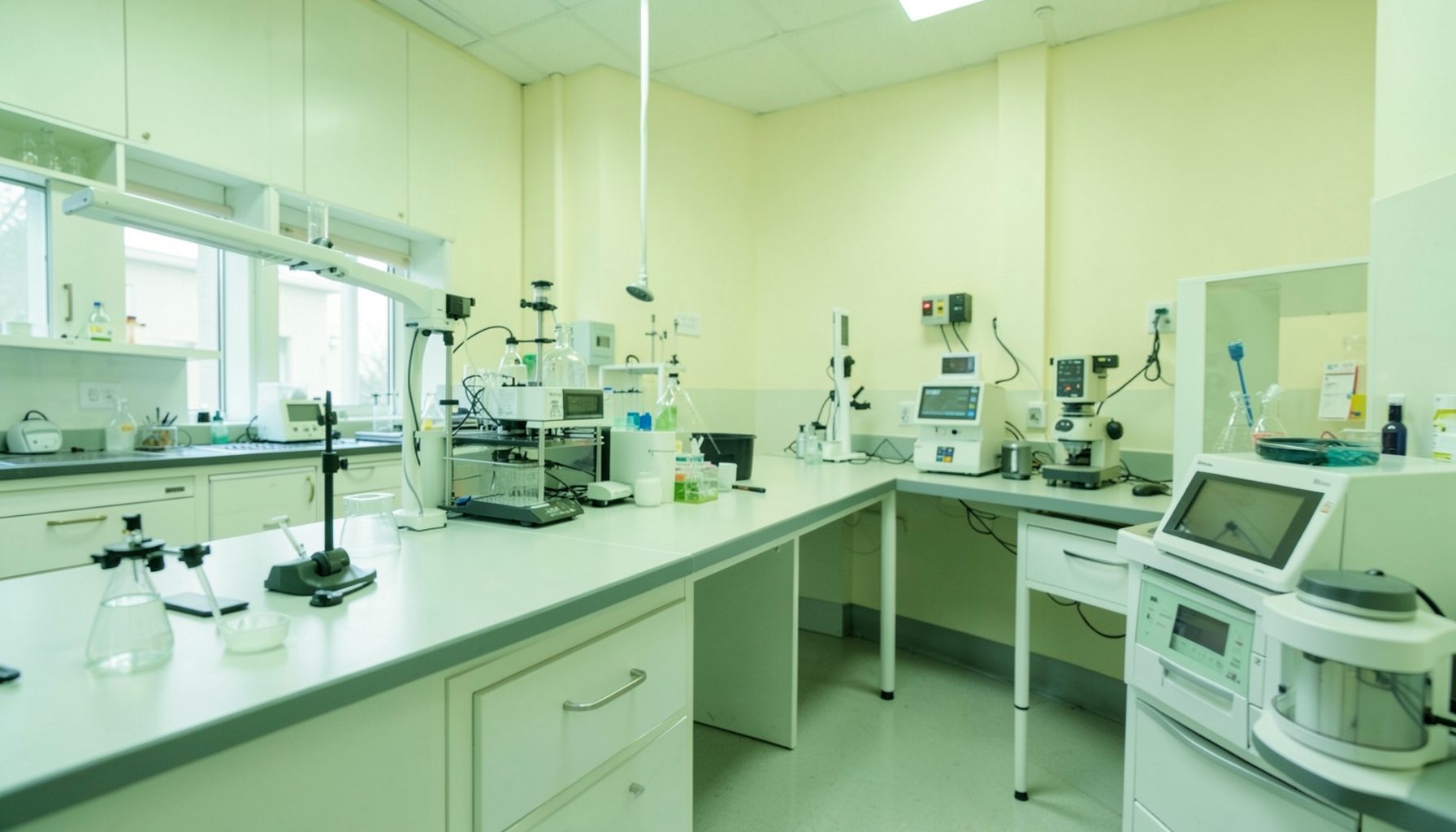
Building a TB Laboratory Checklist That Holds Up to External Assessment
Australia is officially classified as a low-incidence country for tuberculosis, yet the few hundred cases confirmed each year still place significant demands on the diagnostic network. From the high-throughput mycobacteriology laboratories attached to major metropolitan hospitals in Sydney, Melbourne and Brisbane to the smaller regional facilities servicing the Top End and remote Western Australia, every site preparing for an external assessment faces the same fundamental question: can we demonstrate, on the day, that quality is built into our routine work rather than improvised when assessors walk through the door? The four-phase roadmap promoted by the GLI Quality Tool recognises that inspections reward laboratories that treat the checklist as a working document, not a last-minute scramble.
A well-structured TB laboratory checklist for assessment preparation is therefore less about generating paperwork and more about creating a clear, traceable bridge between everyday practice and the requirements of accrediting bodies such as NATA and RCPA. The sections that follow walk through what that bridge looks like in Australian conditions, where staff rotations are common, where specimens can spend days in transit across the country, and where biosafety obligations carry the additional weight of state-level public health legislation.
Understanding the Australian TB Lab Assessment Environment
External assessments in Australia usually follow the ISO 15189 framework, with NATA delivering the technical assessors and RCPA providing the medical and scientific oversight. For TB laboratories, assessors will typically spend at least a full day on site, walking the laboratory, interviewing bench scientists, and pulling files at random to test whether documented procedures reflect what staff actually do. A useful comparison of what assessors verify against what is commonly found in Australian facilities is summarised below.
| Checklist Category | What Assessors Verify | Common Australian Lab Findings |
|---|---|---|
| Biosafety & Risk Control | Negative pressure verification, BSC certification, waste stream mapping | Older HEPA filters without recent recertification evidence |
| Document Control | Version-controlled SOPs, signed master copies, change logs | Outdated SOPs referencing superseded AS/NZS or WHO guidelines |
| Equipment Records | Calibration logs, maintenance schedules, IQ/OQ/PQ documentation | Temperature monitoring gaps during after-hours and weekends |
| Personnel Competency | Training records, competency assessments, signed-off task lists | Incomplete files for rotating staff, locums and new graduates |
| Internal QC & EQA | Levey-Jennings charts, corrective actions, EQA enrolment | Late enrolment in RCPA QAP or delayed root-cause analyses |
| Sample Chain of Custody | Reception logs, storage conditions, referral agreements | Extended transit times from regional NT and WA collection centres |
Because specimen referral pathways in Australia often involve long-haul road transport through climatic extremes, from the humid tropics around Darwin to the cooler conditions of Tasmania, assessors pay particular attention to the integrity of primary samples arriving at culture laboratories. Any checklist worth its salt will therefore include explicit checks on temperature monitoring during transport, on packaging compliance with the relevant IATA category B requirements, and on the documented agreements between referring hospitals and the receiving reference laboratory.
Anchoring Your Checklist in the Twelve Quality Systems Essentials
The twelve Quality Systems Essentials (QSEs) provide a useful skeleton for any TB lab checklist intended to support assessment readiness. In an Australian setting, where resource constraints can differ markedly between a major tertiary centre and a regional pathology service, the QSEs help laboratories prioritise without omitting whole domains. Essentials such as Facilities and Biosafety, Equipment, Documents and Records, and Assessment are obviously central to inspection preparation, but Personnel, Purchasing and Inventory, and Information Management also demand deliberate attention.
A practical approach is to draft a phase-specific checklist that mirrors the four-phase roadmap on the GLI Quality Tool platform, then test each item against a recent assessor finding or NATA non-conformance. Items that are easily demonstrated in conversation, such as the laboratory's policy on managing contaminated waste, can be ticked off quickly. Items requiring documentary evidence, such as the validation of a new liquid culture system or the changeover from manual to automated MGIT reading, should be flagged early so that evidence is collated weeks before the assessment visit rather than hours.
Documentation, Records and Evidence
Australian assessors place considerable weight on the version history of standard operating procedures, particularly for high-risk procedures such as decontamination of TB waste. A checklist item should therefore ask not only whether an SOP exists, but whether the current version is the one in use at the bench, whether superseded copies have been withdrawn, and whether staff have signed off that they have read and understood the latest revision. The detailed waste disposal protocol guidance provides a useful template for laboratories still formalising their approach to decontamination and disposal streams.
Records of internal audits are another critical area. Assessors expect to see an annual audit programme, audit reports with clear findings, and corrective action plans that have been followed through and closed out. Laboratories that cannot demonstrate closure of past findings signal to assessors that the quality system is aspirational rather than operational. A simple checklist tactic is to require each internal audit report to be cross-referenced to the relevant QSE, so that by the time of the external assessment the laboratory can hand the assessor a folder that traces each QSE to its audit, its findings and its verified corrective actions.
Biosafety, Equipment Calibration and Internal Quality Controls
The biosafety expectations for TB laboratories in Australia align with the WHO Tuberculosis Laboratory Biosafety Manual, although state jurisdictions may impose additional requirements through public health regulations. A pre-assessment checklist should therefore include engineering controls, including directional airflow verification, annual BSC certification, and autoclave performance qualification using biological indicators. Equipment records are equally scrutinised: pipettes used for culture inoculum preparation, centrifuges with aerosol-containment rotors, incubators monitored by continuous data loggers, and Class II biosafety cabinets all need up-to-date calibration and maintenance evidence.
Internal quality control for culture-based work also deserves a checklist section of its own. Quality control of solid media, including the routine use of reference strains such as M. tuberculosis H37Rv and M. bovis BCG, should be recorded in a way that allows the assessor to follow the trail from inoculation to interpretation. The resource on streak plate method quality controls walks through the specific checks that need to be documented for culture-based workflows. Many Australian laboratories find that EQA performance from RCPA's Quality Assurance Program and from the WHO Supranational Reference Laboratory Network provides complementary evidence, and that joining EQA early in the assessment cycle gives time for corrective actions to mature before the visit.
Personnel Competency and Training Evidence
Australia's pathology workforce includes a mix of permanent scientists, rotating registrars, locum medical microbiologists and, in some regional services, sole scientists covering multiple diagnostic areas. Competency records must therefore cover all categories of staff performing TB work, not just permanent employees. A useful checklist item is to require direct observation of each named competency at least annually, with the observer, the date and the outcome documented. Photographs, while not a substitute, can sometimes help evidence the act of observation for staff working across multiple sites.
Training records should also capture induction content, refresher training in biosafety, and attendance at relevant RCPA or Australian Society for Microbiology webinars. In laboratories that have recently onboarded scientists from overseas, assessors will look for evidence of bridging training, familiarisation with local SOPs, and supervised release for high-risk tasks. A checklist that explicitly tracks each of these elements removes much of the guesswork during the assessment and reassures the team that nothing critical has been overlooked.
Running a Mock Inspection Before the Real One
Once the checklist is drafted, it earns its value by being tested under realistic conditions. Schedule a mock inspection that mirrors the format of the actual NATA assessment, ideally with an external scientist or a colleague from another pathology service acting as the assessor. The mock assessor should be encouraged to behave like the real thing: ask questions of bench staff without prompting, request files at random, and probe areas where the laboratory is known to be weaker. After the mock inspection, the checklist itself should be revised based on the findings, with new items added and items that proved redundant removed.
The final step is to embed the checklist into routine monthly review meetings, so that the document lives with the team rather than gathering dust in a quality manager's drawer. When the next external assessment is announced, the laboratory will already have a recent internal audit trail, closed corrective actions, current SOPs and confident staff.
Take the next step today and pull together your assessment-ready checklist while there is still time to close out gaps. The TB laboratories that handle inspections with the least stress are the ones that treat the checklist as a living tool, used by scientists every arvo of the working week, not just the week before NATA walks in. Your team, your patients and your next external assessor will all benefit from the investment you make in preparation now.