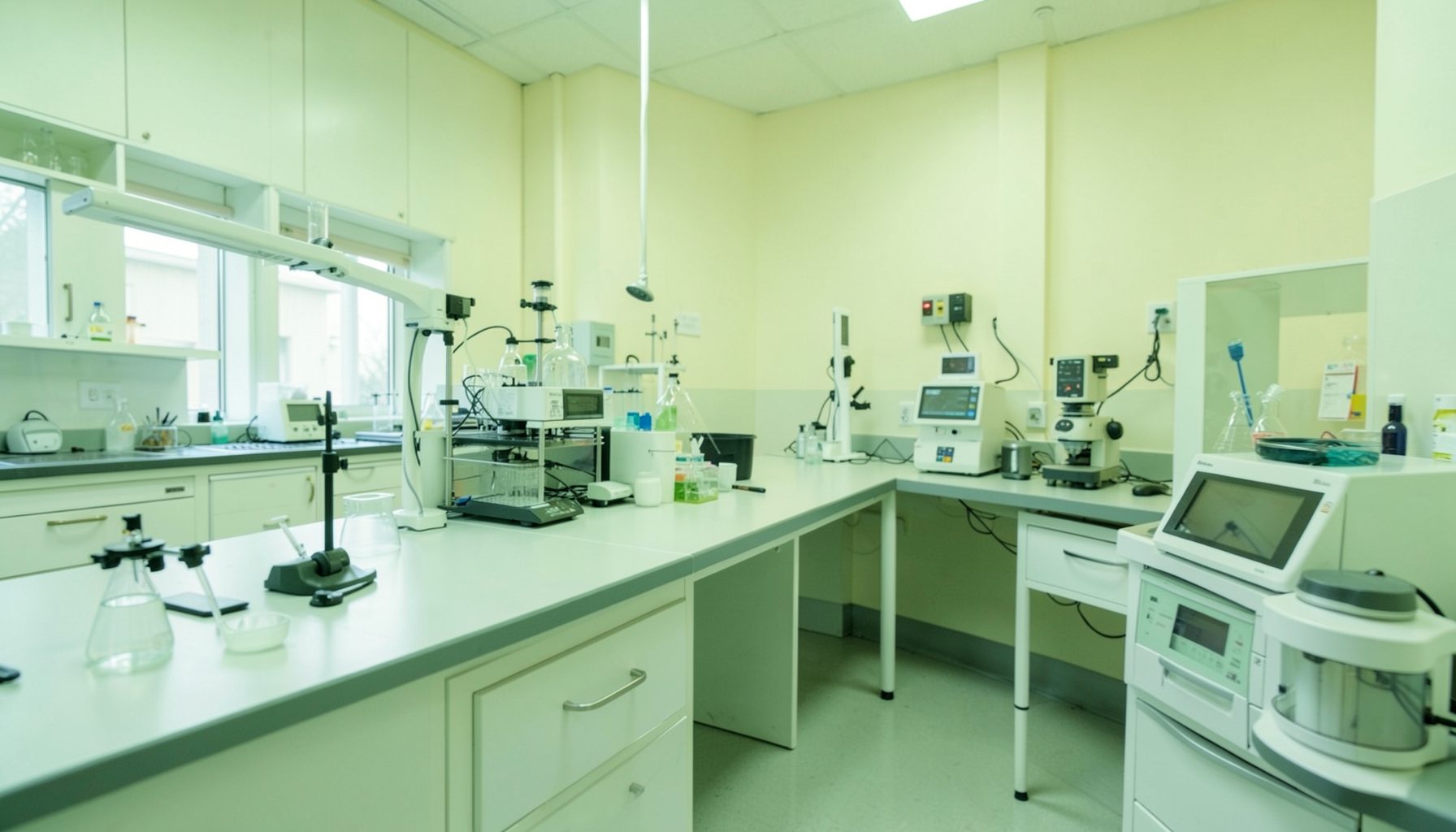
Prioritizing TB Laboratory Equipment Replacement by Risk
Reliable tuberculosis testing depends on equipment that produces accurate results, protects staff, and supports uninterrupted service. When budgets are limited, replacing every aging instrument at once is rarely possible. Laboratories need a defensible way to decide which centrifuge, biosafety cabinet, incubator, microscope, autoclave, refrigerator, or molecular platform requires attention first.
A risk-based approach connects replacement decisions to patient safety, test validity, worker protection, continuity of operations, and regulatory obligations. It shifts the discussion from equipment age alone to the consequences of failure and the controls available to reduce those consequences.
The GLI Quality Tool provides a practical framework for this work. Its four-phase roadmap and twelve Quality Systems Essentials help laboratories organize evidence, assign responsibilities, document decisions, and make equipment planning part of a broader quality management system. Laboratories can use the GLI Quality Tool to connect asset management with safety, personnel, documents, assessment, and continual improvement.
Begin with an accurate equipment inventory
A replacement strategy is only as reliable as the information behind it. Create or update an equipment register that includes the asset identification number, manufacturer, model, location, function, date acquired, purchase value, warranty status, service history, calibration requirements, and current condition. Record associated accessories, software, power protection, and consumables when their availability affects operation.
The inventory should also describe how each item is used. A microscope supporting a low-volume confirmatory service has a different operational profile from a biosafety cabinet used throughout every shift. Capture test volumes, hours of use, dependence on a single instrument, availability of a backup, and the time required to obtain repairs or replacement parts.
Ask staff to verify the register rather than relying on procurement records alone. Technologists often know about intermittent faults, improvised repairs, unstable temperatures, unavailable spare parts, or instruments that are technically functional but unsuitable for current methods. This ground-level information can reveal hidden risks before they appear in a formal breakdown report.
Define failure consequences before scoring assets
Equipment risk is determined by what happens when an item fails. A defective centrifuge may delay specimen processing, while a malfunctioning biosafety cabinet could expose staff and contaminate the work area. A refrigerator with unstable temperature may damage reagents and specimens, and an unreliable molecular testing platform may create a significant backlog of results.
For each asset, assess several dimensions: impact on result accuracy, biosafety implications, effect on turnaround time, number of patients or specimens affected, availability of alternative testing, frequency of failure, and likelihood that the problem can be detected before harm occurs. Include infrastructure dependencies such as electricity, water, ventilation, temperature control, and network access.
A simple scoring model can make judgments transparent. For example, rate impact and likelihood from one to five, then add a detectability or resilience factor. The exact formula matters less than consistent use and clear definitions. A high-risk asset may be relatively new if its failure would stop all testing and no alternative exists. An old instrument may rank lower if it has dependable service support and a validated backup.
Turn evidence into replacement priorities
Risk scoring should combine technical evidence with service realities. Review maintenance logs, calibration failures, quality control trends, downtime, corrective action records, user complaints, safety incidents, and rejected results. Repeated minor faults can signal a deteriorating asset even when no single event appears serious.
Replacement decisions should also consider the total cost of ownership. Purchase price is only one part of the calculation. Include preventive maintenance, calibration, service contracts, spare parts, shipping, installation, validation, staff training, software licensing, power conditioning, and disposal. An inexpensive instrument with scarce parts or poor local support may create higher long-term risk than a more expensive, serviceable alternative.
The following framework can help a laboratory compare assets consistently:
| Risk factor | Questions to document | Evidence to review | Possible response |
|---|---|---|---|
| Patient and diagnostic impact | Would failure delay or compromise TB results? | Rejected runs, turnaround data, test volumes | Prioritize replacement or validated backup |
| Biosafety impact | Could failure expose personnel or release infectious material? | Incident reports, certification records, inspection findings | Repair urgently, restrict use, or replace |
| Reliability | How often does the equipment fail or drift out of specification? | Work orders, downtime, calibration results | Increase maintenance or replace |
| Serviceability | Are parts, engineers, and technical support available? | Supplier records, repair times, contract terms | Select a supported alternative |
| Operational resilience | Is there another validated instrument or referral option? | Contingency plans, referral capacity | Establish backup before replacement |
| Financial sustainability | Can the laboratory maintain the asset over its useful life? | Total-cost estimates, funding commitments | Reconsider specifications or phase procurement |
Use the scores to create categories such as immediate replacement, planned replacement, monitor and maintain, or retain with controls. Avoid treating the ranking as permanent. A new test method, increased workload, loss of a referral laboratory, or repeated power interruptions can change an asset’s risk profile.
Connect replacement planning to quality management
Equipment replacement should be managed through the laboratory’s quality system rather than as an isolated purchasing exercise. The responsible team should define specifications, approve the procurement decision, verify supplier competence, receive the equipment, install it correctly, and document acceptance. Before routine use, perform calibration or verification, method validation or verification, safety checks, and staff authorization.
Document control is especially important when a replacement changes workflows. Update standard operating procedures, maintenance schedules, forms, inventory records, training materials, and emergency procedures. Retain evidence that the new instrument produces acceptable results under actual operating conditions. The old asset should be decommissioned in a controlled manner, with attention to data security, hazardous materials, and environmental requirements.
When equipment problems cause nonconformities, manage them through a structured CAPA system. The analysis should distinguish between a one-time repair and a systemic need for replacement. A recurring failure may require changes to procurement specifications, supplier evaluation, preventive maintenance, staff training, or facility infrastructure.
Build controls while funding is pending
A high-risk ranking does not always produce immediate funding. Laboratories need interim controls for assets that cannot yet be replaced. These may include increased preventive maintenance, shorter calibration intervals, daily functional checks, temperature alarms, backup power, restricted use, additional quality control, and agreements with a nearby laboratory for referral testing.
The control must be specific and assigned to a person or role. “Monitor the instrument” is too vague. A stronger control states who checks the biosafety cabinet alarm, how often the check occurs, what result is acceptable, where the record is stored, and what action follows a failure. Clear escalation thresholds prevent staff from normalizing repeated faults.
Create a contingency plan for each critical asset. It should identify alternative equipment, referral laboratories, transport arrangements, contacts, specimen storage limits, communication responsibilities, and the conditions for returning to routine service. Test the plan through a short exercise. A contingency document that has never been used may contain unrealistic assumptions about transport time, reagent compatibility, or referral capacity.
Make decisions with staff and leadership
Risk prioritization works best when it includes laboratory users, quality officers, biosafety personnel, biomedical engineers, procurement staff, finance leaders, and program managers. Each group sees a different part of the problem. Technologists understand usability and failure patterns, engineers assess repairability, and managers understand funding cycles and service commitments.
Record the reasoning behind each priority, including dissenting views and assumptions. A transparent record makes it easier to defend a request to donors or health authorities and reduces the chance that a persuasive supplier or an attractive new feature will override operational need. Specifications should describe the required performance, safety, compatibility, service support, and lifecycle costs rather than favoring a particular brand without justification.
Recommended actions for a practical replacement program
- Maintain a verified equipment register and review it at least annually or after major service changes.
- Score assets using impact, likelihood, detectability, resilience, and total cost of ownership.
- Set interim controls and named escalation triggers for equipment awaiting replacement.
- Link every replacement to verification, training, document updates, and decommissioning records.
- Reassess priorities after incidents, repeated failures, workload changes, or new testing methods.
Turn priorities into funded action
Convert the ranked list into a replacement roadmap with immediate, near-term, and longer-term actions. Each entry should state the risk, proposed control, estimated cost, funding source, responsible owner, target date, and evidence required before commissioning. This format allows leadership to approve partial funding while preserving the logic of the overall plan.
Review the roadmap during management meetings and quality improvement reviews. Track whether interim controls were completed, whether downtime declined, whether corrective actions closed on time, and whether replacement projects delivered the expected improvement. These measures turn equipment planning into a cycle of learning rather than an occasional emergency purchase.
Start with the assets that threaten safe, accurate, and continuous TB testing most seriously. Build the evidence, document the risk, apply controls immediately, and use the quality management system to move each priority from identification to funded replacement and verified operation.