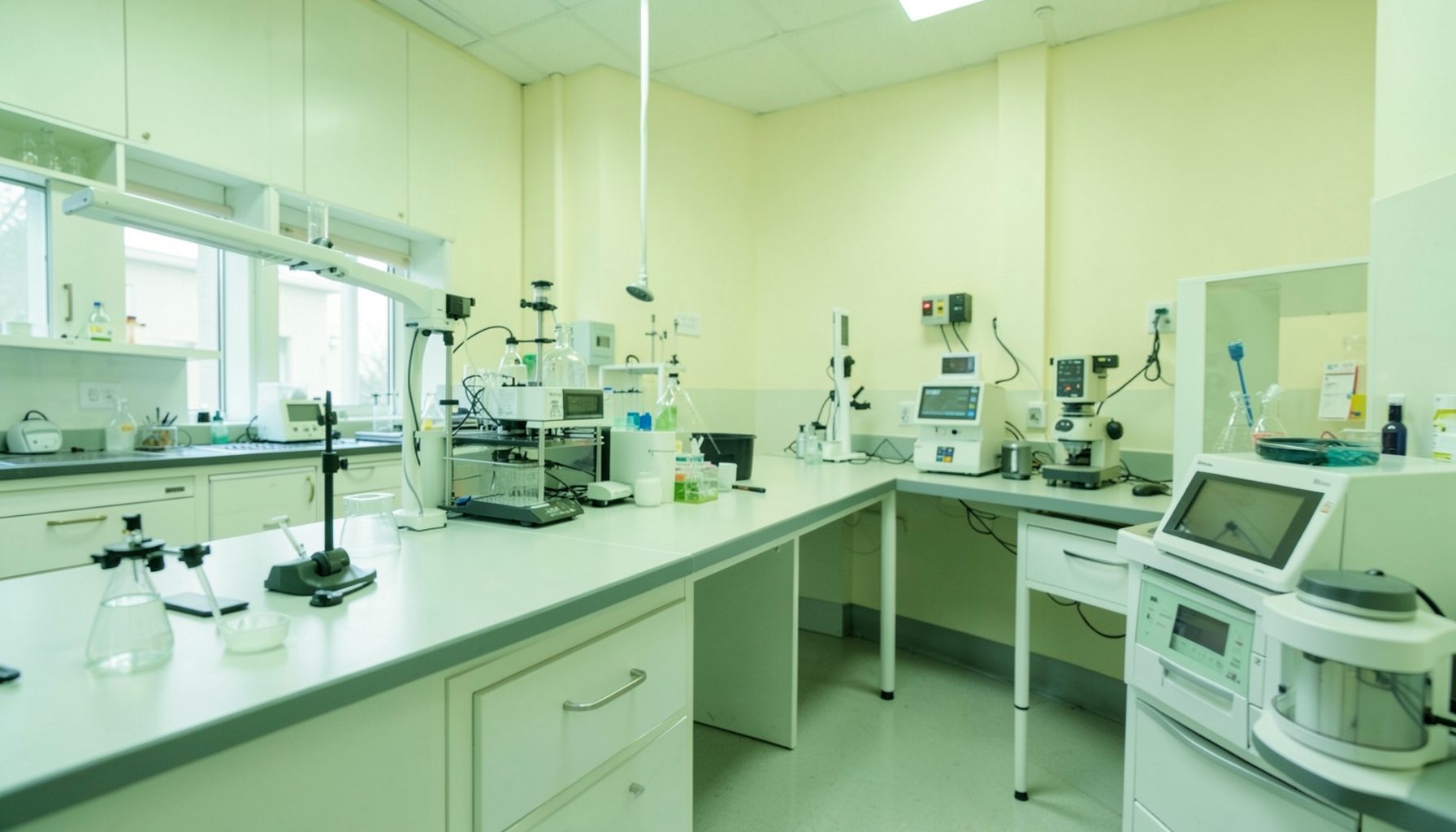
A practical guide to monthly safety inspections for TB laboratory staff
Monthly safety inspections are a cornerstone of reliable tuberculosis laboratory work, particularly in a country like Australia where geographic isolation, varied climate zones, and a mix of high-throughput metropolitan and remote reference facilities create unique operational pressures. A structured walk-through keeps biological risks contained, supports accreditation expectations, and protects the staff who handle specimens that may carry Mycobacterium tuberculosis every working day. For Australian laboratories participating in national quality programs, the rhythm of monthly checks aligns with NATA's surveillance cadence and the expectations of state-based reference centres in Sydney, Melbourne, Brisbane, Perth, Adelaide, and Hobart.
The GLI Quality Tool offers a four-phase roadmap built around twelve Quality Systems Essentials, and safety inspection sits squarely within the assessment and continual improvement essentials. A monthly guide tailored to local context helps supervisors move from ad-hoc checks toward a documented, repeatable process that ties into broader personnel and records management workflows. This article outlines what such a guide should contain, how to structure the inspection team, where to focus attention in the laboratory, and how findings translate into corrective action.
Readers should treat the recommendations as a practical scaffold that fits over existing standard operating procedures rather than a replacement for them. National guidance such as AS/NZS 2243.3 for microbiological safety cabinets and the Australian and New Zealand Tuberculosis Statements continue to set the technical floor, and monthly inspections serve as the operational mechanism that keeps day-to-day practice aligned with those documents.
Establishing the foundations of a monthly inspection program
A monthly inspection program works only when its purpose is clearly written down and understood by everyone on the team. Begin with a one-page statement that defines the scope: biosafety cabinets, chemical storage, waste streams, fire safety, electrical integrity, eyewash and shower stations, signage, and access control. In an Australian laboratory this statement should also reference the requirements of the host institution's ethics and safety committees, and any state-level tuberculosis notifications that apply to your jurisdiction. The Torres Strait zone has specific cross-border tuberculosis screening arrangements with Papua New Guinea, and laboratories in far north Queensland that handle specimens from that corridor must reflect those regional obligations in their monthly scope.
Roles and responsibilities should be assigned before the first inspection takes place. A typical structure pairs an experienced laboratory scientist as lead inspector with a rotating safety officer or a quality manager, while a senior microbiologist reviews the findings within a week of completion. Reference laboratories such as the Institute of Clinical Pathology and Medical Research at Westmead in Sydney or the Victorian Infectious Diseases Reference Laboratory in Melbourne often embed a biosafety champion in each section to provide continuity across rotations. Smaller facilities in Hobart or Darwin may consolidate the role into a single point of contact, but the principle of named accountability remains the same.
The cadence matters. Monthly is the baseline, but laboratories experiencing seasonal surges, equipment commissioning, or building works should adjust frequency rather than wait for the calendar date. Document any deviation in the inspection record so that accreditation auditors can trace the reasoning behind the change.
Preparing the team and tools before each walk-through
Preparation is where most inspection programs succeed or stumble. Walk-throughs that begin without a checklist and without calibrated tools tend to drift into general impressions rather than measurable findings. A printed or tablet-based checklist, generated from the laboratory's own risk register, anchors the inspection against documented expectations and removes the temptation to repeat last month's observations by memory.
Equipment for the inspection itself should be kept in a dedicated kit. Typical contents include a calibrated thermometer, anemometer, and pressure gauge for biological safety cabinet verification, a smoke pencil or similar airflow indicator, chemical test strips for oxidiser residues, a torch for dark corners behind autoclaves, a measuring tape for clearance distances, a notebook, and a camera or tablet for evidence capture. The kit should be checked quarterly and restocked after each use, with any damaged items removed from service. Many Australian laboratories store the kit adjacent to the autoclave room because that is also where most compliance paperwork is archived.
Brief the inspection team at least one day before the walk-through. Cover the scope, any open findings from the previous month, recent incidents, planned maintenance, and any contractor activity inside the containment area. The user instructions accompanying the GLI Quality Tool provide a useful template for such briefings and can be adapted to local formats. Remind inspectors that they are verifying systems rather than auditing their colleagues, so observations must remain factual, specific, and free of personal commentary.
Walking the laboratory: zones and focus areas
The walk itself follows a defined path. Most Australian facilities divide the laboratory into six zones for inspection purposes: the reception and pre-analytical area, the processing laboratory, the biosafety cabinet suite, the autoclave and waste treatment room, the chemical and reagent store, and the support areas such as corridors, change rooms, and record-keeping offices. Each zone carries its own hazard profile and its own checklist items.
In the biosafety cabinet suite, inspectors verify certification stickers, confirm that the cabinet was last certified within the twelve-month window required by AS/NZS 2243.3, observe whether the front grill is clear, and check that the airflow reading on the cabinet gauge matches the expected value. They also look for clutter on the work surface and confirm that the cabinet is not used when the laboratory door is open, since pressure differentials break down quickly in facilities with shared supply air. In the autoclave room, the focus shifts to biological indicator frequency, logbook completeness, condensate management, and the integrity of seals on the door.
The chemical and reagent store is a frequent source of findings. Inspectors confirm segregation of acids from bases, oxidisers from flammables, and check that containers are labelled in accordance with the Globally Harmonized System as adopted in Australian workplaces. They also confirm that the store's ventilation is operational and that the bunding can hold at least 110 percent of the largest container's volume, an expectation reinforced by several state environment authorities. Reception areas warrant attention to packaging integrity, leak containment materials, and the chain of custody forms that link each specimen to the request form.
Recording findings, trends, and escalation pathways
Inspection findings lose their value when they sit in a drawer. A strong recording system captures the date, zone, finding description, evidence reference, risk rating, and proposed corrective action for each observation. Photographs attached to the inspection record speed up review and provide a baseline against which re-inspections can be compared. Australian laboratories should align their risk matrix with the categories used by their institution's work health and safety committee, typically very high, high, medium, and low, so that escalation thresholds are consistent with broader enterprise risk frameworks.
Trend analysis over a rolling twelve-month window surfaces patterns that single inspections miss. If the same cabinet repeatedly records airflow deviations, or if a particular waste stream generates the same labelling finding month after month, the underlying system is the problem, not the individual. A clear linkage from recurring findings back to the corresponding Quality Systems Essential, whether that is equipment, documentation, or continual improvement, is what gives the inspection programme strategic weight within the wider quality framework.
Escalation pathways should be published and visible. Very high and high findings are communicated to the laboratory director and the institution's safety committee within twenty-four hours. Medium and low findings flow into the next monthly meeting agenda. Each finding is assigned a target closure date, an owner, and a verification step that confirms the corrective action has been completed before the item is closed.
Closing the loop: corrective action, training, and review
Corrective action is where monthly inspections earn their keep. A finding that is recorded but never addressed erodes trust in the inspection process and can expose the laboratory to non-conformities during NATA or other accreditation visits. After each inspection, the quality manager and the laboratory director review the findings list, agree on priorities, and allocate resources. Findings related to equipment usually involve the engineering or facilities team, while findings related to personnel behaviour or training route back to the education coordinator.
Training reinforces the corrective actions taken. A recurring finding about spills in the processing laboratory, for example, becomes the basis of a short toolbox session during the next team meeting. Documented training records then become part of the same personnel records system used to manage competency assessments. This connection between inspection findings and personnel documentation turns a monthly walk-through into an instrument of continual improvement rather than a compliance ritual.
A quarterly review of the inspection programme itself keeps the guide current. Ask whether the checklist still reflects the laboratory's risk profile, whether inspectors have the right tools, whether findings are closing on time, and whether the meeting agenda gives the right level of attention to safety. Adjust the guide accordingly and communicate the changes through the next team briefing.
Zones and their inspection priorities
| Zone | Primary hazards | Key inspection focus | Typical frequency |
|---|---|---|---|
| Reception and pre-analytical | Leaking containers, mislabelled specimens | Packaging integrity, chain-of-custody forms, spill kit availability | Monthly |
| Processing laboratory | Aerosols, sharps, surface contamination | Bench cleanliness, sharps disposal, signage, PPE compliance | Monthly |
| Biosafety cabinet suite | Aerosols, equipment failure | Cabinet certification, airflow readings, clutter, sash position | Monthly and after each service |
| Autoclave and waste treatment | Steam, sharps, biological waste | Biological indicator logs, condensate management, door seal integrity | Monthly |
| Chemical and reagent store | Spills, incompatibles, vapours | Segregation, labelling, ventilation, bunding | Monthly |
| Support areas | Slips, trips, egress, fire | Clear egress, eyewash and shower checks, extinguisher dates | Monthly |
Common findings observed in Australian TB laboratories
- Biological safety cabinet certification overdue by more than two months, often paired with front grill obstruction by absorbent pads.
- Chemical containers labelled with the manufacturer's original label only, missing the workplace-specific GHS elements required by Australian WHS regulations.
- Autoclave biological indicator logs missing one or more weekly entries, usually during staff leave periods.
- Eyewash stations not flushed weekly, with sediment visible in the bowl or tepid water temperature outside the 16 to 38 degree range.
Build the guide into a living document. Set a reminder each quarter to revisit the checklist, refresh the inspection kit, and discuss any near misses that have occurred across the wider laboratory network. Bring the team together for a short debrief after each monthly inspection and capture lessons learned. Over a year, the monthly walk-through becomes one of the strongest signals that the laboratory values safety, and the documented record becomes the evidence that the institution's tuberculosis work is performed to the standards expected of an Australian reference facility.
Start the next monthly cycle by downloading the relevant checklist from the GLI Quality Tool, briefing your inspection pair, and stepping into the laboratory with a clear agenda and an open mind.