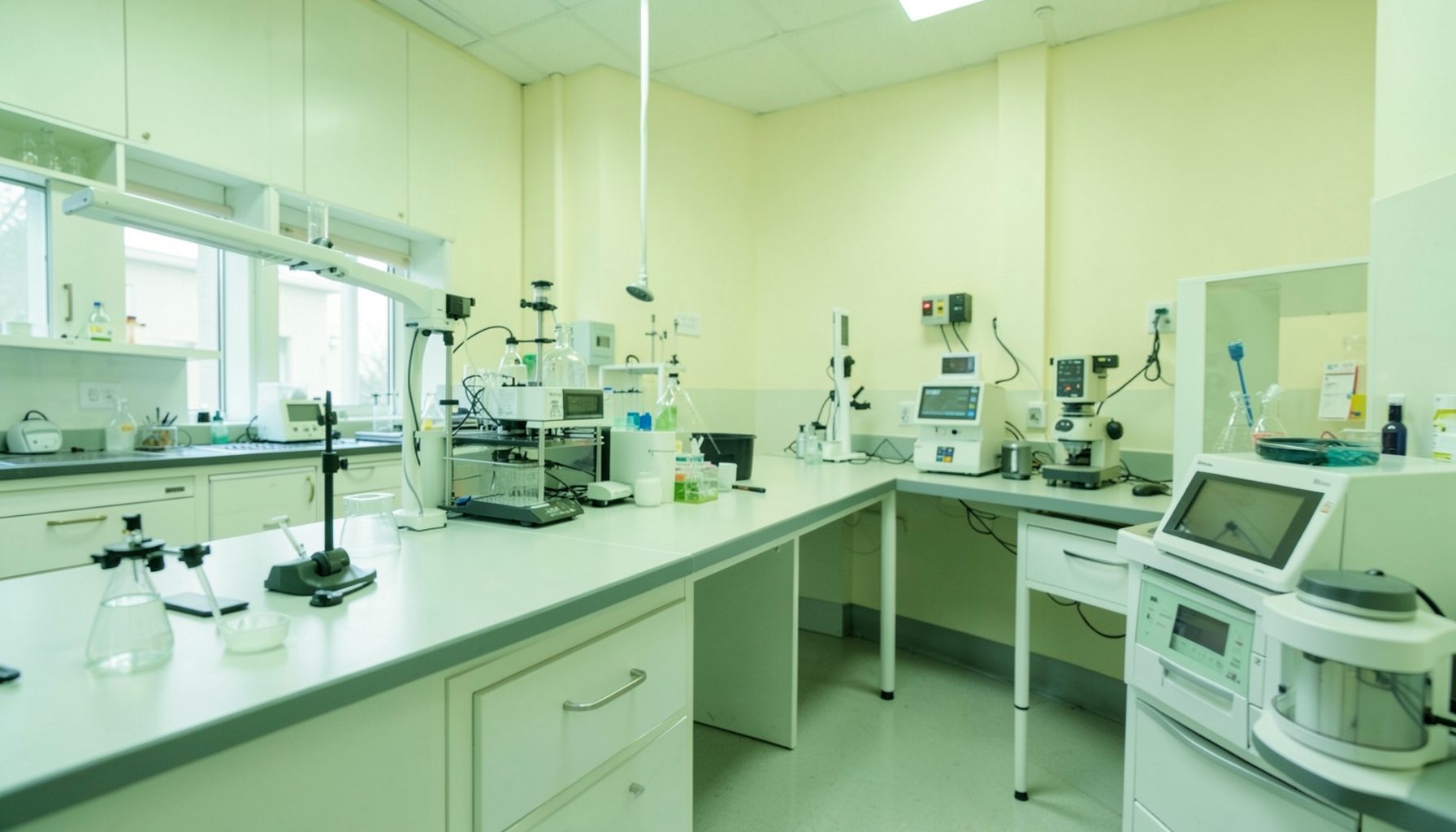
Biosafety cabinet training for new staff in tuberculosis laboratories
TB laboratories in Australia operate under a layered regulatory environment, with standards such as AS/NZS 2243.3 governing biological safety cabinet performance, while the National Association of Testing Authorities expects demonstrable operator competency during accreditation audits. The cohort of new laboratory technicians and scientists entering the workforce each year often arrives with strong academic knowledge of mycobacteriology but limited hands-on experience with the engineering controls that keep them safe when handling specimens capable of transmitting Mycobacterium tuberculosis. Building a structured induction program for cabinet use is therefore not simply a compliance exercise; it is the foundation of laboratory safety, sample integrity, and patient safety in every jurisdiction from the busy reference centre at Westmead to the regional microbiology service in Townsville.
The challenge for laboratory managers is converting the broad expectations found in the WHO Global Laboratory Initiative roadmap into something that fits a single bench, a single trainee, and a single shift. A well-designed induction package draws on phase-specific checklists, recorded competency assessments, and practical observation, then wraps them into a documented cycle of training, evaluation, and refinement. The publicly available GLI Quality Tool offers a useful scaffold for this work, mapping training needs against the twelve Quality Systems Essentials and allowing individual laboratories to tailor the content to their own diagnostic case mix.
| Cabinet class | Airflow pattern | When it suits TB work | Key operator behaviour to drill |
|---|---|---|---|
| Class I | Inward, HEPA-filtered exhaust, no product protection | Smear preparation outside culture steps | Verify face velocity at the sash opening; never block the grille |
| Class II Type A2 | 70% recirculated through HEPA, 30% exhausted | Routine MGIT liquid culture and DST inoculations | Keep work six inches inside the sash; minimise arm movement across the grille |
| Class II Type B2 | 100% exhausted, no recirculation | Work with volatile chemicals alongside TB | Confirm hard-ducted exhaust before each session; respect negative-pressure rooms |
| Class III | Fully enclosed, gas-tight glove ports | Suspected multidrug-resistant cultures and high-titre isolates | Practise glove-port dexterity; never break the cabinet barrier |
Aligning training with the Quality Systems Essentials
A new-staff program for cabinet use is most effective when it is not treated as a stand-alone induction module but is mapped explicitly against the Quality Systems Essentials. The Essential covering Personnel requires job descriptions, training records, and competency verification for every staff member working at the cabinet, which in practice means building a portfolio of signed assessments, observation notes, and revalidation dates. The Essential for Equipment dictates that operators understand the certification cycle of the cabinet itself, including annual KI-Discus testing, HEPA filter integrity checks, the standard operating procedures that govern start-up and shut-down, and the airflow certification required by AS/NZS 2243.3.
The Essential for Safety is where most of the day-to-day training content lives, and it is where laboratories in New South Wales and Queensland often anchor their practical exercises to the National Tuberculosis Advisory Committee position statements. Covering topics such as risk grouping, aerosol-generating procedures, and spill management, the safety curriculum should run in parallel with cabinet drills rather than as a separate classroom session. The remaining Essentials — documentation, assessment, process control, continual improvement, and so on — provide the administrative scaffolding that allows the training to be repeated, audited, and improved over time.
Mapping Australian standards to cabinet use
AS/NZS 2243.3 is the practical backbone of any Australian training program, setting out performance and verification requirements for microbiological safety cabinets. New staff should know the clause requiring three minutes of operation before work begins, and why a B2 cabinet must never connect to a recirculating blower. A useful exercise is to walk the trainee through the certification sticker, then to the engineer's service log, so they learn to read compliance history rather than assume it.
State-based expectations add another layer. NATA accreditation assessors in Melbourne and Adelaide routinely ask to see evidence that operators have been signed off on the specific cabinet model they will use, which means a generic slide deck is rarely enough. The training checklists offered alongside the GLI Quality Tool are particularly useful here because they can be printed, completed during supervised practice, and filed in the trainee's personnel record without modification. Linking the checklist to the standard it references makes the next internal audit a far calmer experience for the trainee and the quality manager.
Practical bench-side coaching and demonstration
Theory sessions should never exceed half a day before the trainee is at the cabinet itself, ideally for short, repeated blocks rather than a single marathon. The first observation focuses on hand placement, posture, and the rhythm of slow deliberate movements; a trainer standing behind the trainee can gently correct the common habit of sweeping arms across the work zone or resting elbows on the front grille. The second block introduces the tools of the trade: Bunsen burners or disposable loops, sterile pipettes, and the orderly arrangement of discard containers so that contaminated material travels the shortest possible distance inside the cabinet. Personal protective equipment is donned before the session begins, with the respirator fit-checked at the cabinet doorway and gloves changed at the defined frequency rather than between every movement.
By the third or fourth session, the trainee is performing a full workflow — perhaps a routine MGIT inoculation set or a smear preparation from a flagged-positive sample under trainer supervision. This is where local context matters: a laboratory serving a remote population in the Torres Strait and Papua New Guinea border region may handle a higher proportion of pan-susceptible Mycobacterium tuberculosis but still requires the same cabinet discipline as a tertiary referral laboratory in Perth. Each practical session should end with a short reflective conversation, a note in the training log, and a clear goal for the next block.
Documenting competency and building a trainee portfolio
Competency is not a moment in time; it is a paper trail that follows the operator through their career in the laboratory. The portfolio typically contains a completed induction checklist, two or three observation records signed by a senior scientist, the results of any written or verbal assessment, and the date of first independent sign-off. Many Australian laboratories are now adopting a digital template that captures photographs of the cabinet during the assessment, which is especially useful when the assessor is off-site or working across multiple sites in Brisbane and the surrounding catchment.
A well-kept portfolio also serves the trainee during their own career development, providing a record of skills they can take to other laboratories, including those in research settings at the Doherty Institute or the Victorian Infectious Diseases Reference Laboratory. The portfolio becomes a living document: it grows with each new technique the operator masters, such as handling drug-susceptibility testing panels, and is reviewed formally at the annual performance conversation. If a near-miss or spill occurs, the portfolio also shows that the operator had been trained and assessed on the relevant procedure, which is an essential part of any incident review and feeds back into the next revision of the standard operating procedure.
Recertification, drills, and continuous improvement
The final stage of a mature training program is the cycle of recertification, deliberate drills, and programme review. Annual recertification of cabinet competence is widely accepted as a minimum, although many high-throughput Australian laboratories now run six-monthly practical assessments because the consequences of complacency with a class II cabinet are severe. Drills — such as a simulated spill inside the cabinet, a power failure, or a torn glove — are scheduled, announced, and debriefed so that muscle memory takes over when a real event occurs.
Continuous improvement closes the loop. Feedback from trainees, observations from senior staff, and incident reports are collated at the quarterly quality meeting and used to refine the next intake's induction. The same approach lets the laboratory adapt when new equipment arrives, when the diagnostic algorithm changes, or when the public health environment shifts — for instance, if a higher-than-expected number of MDR-TB cases are identified in a particular region. A living program will continue to protect staff, protect samples, and satisfy the requirements of NATA, the Department of Health, and the WHO Global Laboratory Initiative for years to come.
Daily habits to rehearse during supervised practice
- Position the front grille clear of loose paperwork, pipette tip boxes, and the trainee's elbows.
- Wait for the cabinet's three-minute purge after closing the sash before introducing specimens.
- Move items in a straight line from clean to contaminated zones, never the reverse.
- Decontaminate the work surface with the correct contact time before and after every session.
Questions to include in the sign-off assessment
- Describe the airflow pattern of the cabinet you most often use and what would happen if the HEPA filter failed.
- Explain the difference between Type A2 and Type B2 cabinets in terms of exhaust and chemical handling.
- Outline the immediate steps you would take following a spill of a liquid culture inside the cabinet.
- Identify the certification sticker and the date of the most recent airflow test.
The GLI Quality Tool gives laboratory leaders a ready-made structure for designing and documenting the training pathway described here. Visit the site, download the phase-specific materials, and adapt them to your local context so that every new member of the tuberculosis laboratory team begins their work at the cabinet with confidence, competence, and a clear record of their training.