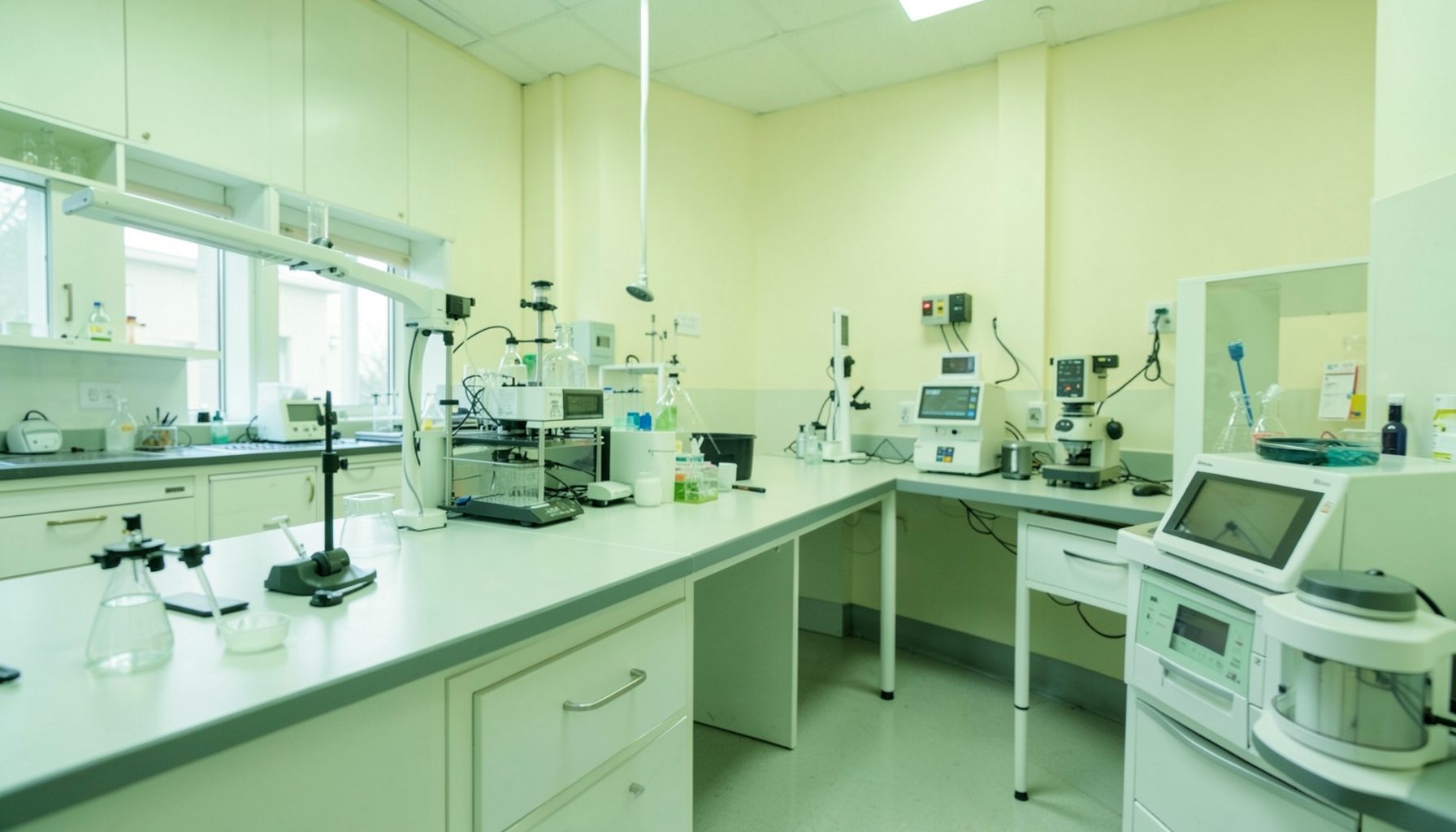
A preventive maintenance schedule for TB centrifuges and incubators
TB culture and molecular workflows depend on equipment that performs the same way at 9am on a Monday as it does at 4pm on a Friday. Centrifuges concentrate bacilli from sputum pellets, while incubators nurture slow-growing Mycobacterium tuberculosis on solid media such as Lowenstein-Jensen or maintain liquid cultures in MGIT tubes. When either instrument drifts outside specification, the downstream effect can be a missed positive, a contaminated culture, or an invalid drug susceptibility result that delays treatment for a patient.
A documented preventive maintenance schedule protects patient outcomes, satisfies accreditation requirements, and reduces the cost of emergency repairs. For laboratories following the GLI Quality Tool roadmap, equipment care sits within Quality System Essential 4 and feeds directly into the continual improvement loop. The principles below apply whether the laboratory sits inside a busy metropolitan public health network in Sydney or operates as a regional reference centre in Townsville.
Understanding the maintenance framework
A preventive maintenance schedule is more than a calendar of service dates. It combines routine operator-performed checks (daily, weekly, monthly) with periodic tasks carried out by trained staff or service providers (quarterly, semi-annually, annually). Each task should specify the instrument, the action, the frequency, the person responsible, the acceptance criteria, and what to do when criteria are not met.
Within the twelve Quality Systems Essentials covered by the GLI roadmap, equipment management overlaps with documentation, supplier qualification, internal audit, and continual improvement. A laboratory that treats maintenance as an isolated chore often finds gaps appearing in adjacent essentials; for instance, expired consumables discovered during a centrifuge inspection may point to weaknesses in reagent stockout guidance. Linking maintenance records to supply chain controls builds a stronger quality system overall.
The table below contrasts the typical care needs of centrifuges and incubators, helping supervisors design a balanced schedule rather than over-servicing one instrument type while neglecting another.
| Aspect | Centrifuge | Incubator |
|---|---|---|
| Daily checks | Visual inspection, brush wear, balance verification, listen for unusual noise | Temperature display, CO2 level where applicable, door seal integrity, water pan level |
| Weekly tasks | Rotor cleaning, chamber decontamination, logbook review | Interior wipe-down, humidity check, fan operation |
| Monthly tasks | Speed and timer verification with tachometer, brush replacement on brush-driven motors | Temperature mapping with calibrated probe, alarm function test |
| Quarterly tasks | Calibration verification, bearing inspection, gasket check | Decontamination cycle, CO2 sensor calibration, HEPA filter inspection if present |
| Annual tasks | Rotor replacement or recertification by manufacturer, full electrical safety test | Full qualification including uniformity survey, thermostat replacement if drift exceeds tolerance |
| Common failure modes | Rotor fatigue, brush wear, imbalance, lid latch failure | Temperature drift, CO2 sensor failure, fan motor wear, contamination |
| Records retained | Service log, calibration certificate, rotor history | Temperature chart, alarm test record, gas supply log |
Centrifuge care from the operator's bench
A benchtop or floor-model centrifuge used for TB work may run dozens of cycles per day concentrating decontaminated specimens. Daily tasks should be performed by the technologist who uses the instrument and recorded in a hard-copy or electronic logbook kept next to the machine. Before each run, the operator should verify that tubes are balanced to within 0.1 g of each other, that the rotor is the correct type for the speed required, and that the lid is securely closed.
Brushless motors have reduced the need for routine brush replacement but still require bearing inspection and rotor recertification at the intervals set by the manufacturer. For older brush-driven units common in laboratories that have inherited equipment from previous programmes, monthly brush inspection can prevent sudden failure during a critical run. Refrigerated centrifuges used for molecular work add a temperature verification step; the chamber should reach the set temperature before samples are loaded.
Annual rotor recertification protects against the catastrophic failure that can occur when metal fatigue goes unnoticed. This is also a good moment to review whether the centrifuge is still appropriate for current workloads. Several Australian laboratories have replaced ageing benchtop models with purpose-built biocontainment centrifuges after audits identified aerosol risk during bucket opening.
Incubator care for culture-based TB diagnosis
Solid and liquid culture systems remain the reference standard for TB diagnosis and drug susceptibility testing in many laboratories. Incubators must hold temperature within ±1 °C across the entire usable chamber volume, which typically ranges from 35–37 °C for M. tuberculosis growth. A single point-of-measurement chart recorder is rarely enough; annual temperature mapping with multiple probes identifies cold or hot spots caused by fan failure, blocked airflow, or door seal degradation.
CO2 incubators used for liquid culture or for laboratories running both TB and non-TB mycobacterial work need the gas supply, sensor, and humidity pan checked daily. Where supply is from a bank of cylinders common in remote sites, a chain of cylinders with automatic changeover should be paired with low-pressure alarms and a written procedure for cylinder replacement. Cross-references to biosafety documentation strengthen the system, and a well-prepared SOP for waste sorting ensures that contaminated plates and MGIT tubes leaving the incubator are handled to a defined standard.
Contamination is the silent threat in any mycobacterial incubator. Monthly decontamination with an appropriate disinfectant, quarterly HEPA filter checks where present, and immediate removal of any culture showing evidence of fungal or bacterial overgrowth all limit cross-contamination events that can ruin weeks of work.
Designing the schedule that fits your laboratory
Start by listing the equipment register: every centrifuge and incubator, its model, serial number, location, date placed in service, and the responsible technologist. From this register, the schedule can be built by mapping manufacturer recommendations onto laboratory working hours, sample volume, and available technical support. For Australian laboratories in regional and remote locations where service engineer visits may be quarterly rather than monthly, scheduling biannual preventive maintenance visits that bundle multiple instruments into a single trip is both efficient and economical.
Each scheduled task should record the date, the person performing it, the result, and any corrective action taken. Templates and checklists for each phase of the GLI roadmap are available from the downloadable phase checklists and templates page, which provides editable formats that laboratories can adapt without starting from scratch.
Responsibility matrices work best when they are simple. Daily and weekly tasks belong with the bench technologist; monthly verification belongs with a designated equipment officer or senior scientist; annual recertification belongs with the laboratory manager and the contracted service provider. Names should be written in, not left blank for whoever is on shift that week.
Adapting the schedule to Australian conditions
Australia's geography spans tropical, temperate, and arid climate zones, and TB laboratories operate in each. A laboratory in Darwin or Cairns may see ambient temperatures above 35 °C for several months of the year, placing additional load on incubator refrigeration circuits and on centrifuge cooling systems. Conditioning the room housing the equipment to a stable 18–25 °C protects both instruments and the cultures they hold. Where air conditioning is intermittent, a small uninterruptible power supply can keep incubators running through short outages and prevent loss of cultures.
Australian laboratories seeking or maintaining accreditation under the National Association of Testing Authorities framework, or working towards ISO 15189, will find that preventive maintenance records form part of the audit evidence. Many laboratories align their GLI-based quality system with these national requirements, and maintenance documentation is one area where the overlap is most visible. Where contracted service engineers are based in capital cities, regional laboratories can build relationships with local biomedical engineering departments in hospitals or universities to reduce travel costs and response times.
Supply chains also have a local flavour. Reagent and consumable deliveries to Perth or Hobart may take longer than to eastern state capitals, so spare rotors, brushes, and incubator probes should be held on site. Procurement planning ties back to supplier qualification, and the same principles that prevent expired buffers also keep the consumables needed for preventive tasks in date.
Common pitfalls and how to avoid them
A preventive maintenance schedule works only when it is used. One common pitfall is the calendar-driven schedule that lists tasks no one actually performs because no one is named against them. Another is the reverse problem: tasks that are completed but not recorded, which leaves the laboratory unable to demonstrate compliance during an internal audit. Both pitfalls trace back to the same root cause, which is a schedule that exists on paper but has not been integrated into daily workflow.
Review the completed logs at the monthly quality meeting, look for trends such as a centrifuge that needs bearing attention every quarter, and adjust the schedule accordingly. Internal audits should sample at least one centrifuge and one incubator each cycle and trace the record back to the schedule to confirm that tasks were performed on time. Where the audit finds gaps, corrective actions feed into the next revision of the schedule and the broader continual improvement plan that underpins the laboratory's quality management system.
The GLI Quality Tool supports each of the steps above through phase-specific checklists, user instructions, and downloadable templates. Visit the resource library today, download the materials that match your laboratory's current phase, and start tailoring a preventive maintenance schedule that keeps your centrifuges spinning and your incubators warm through every shift.