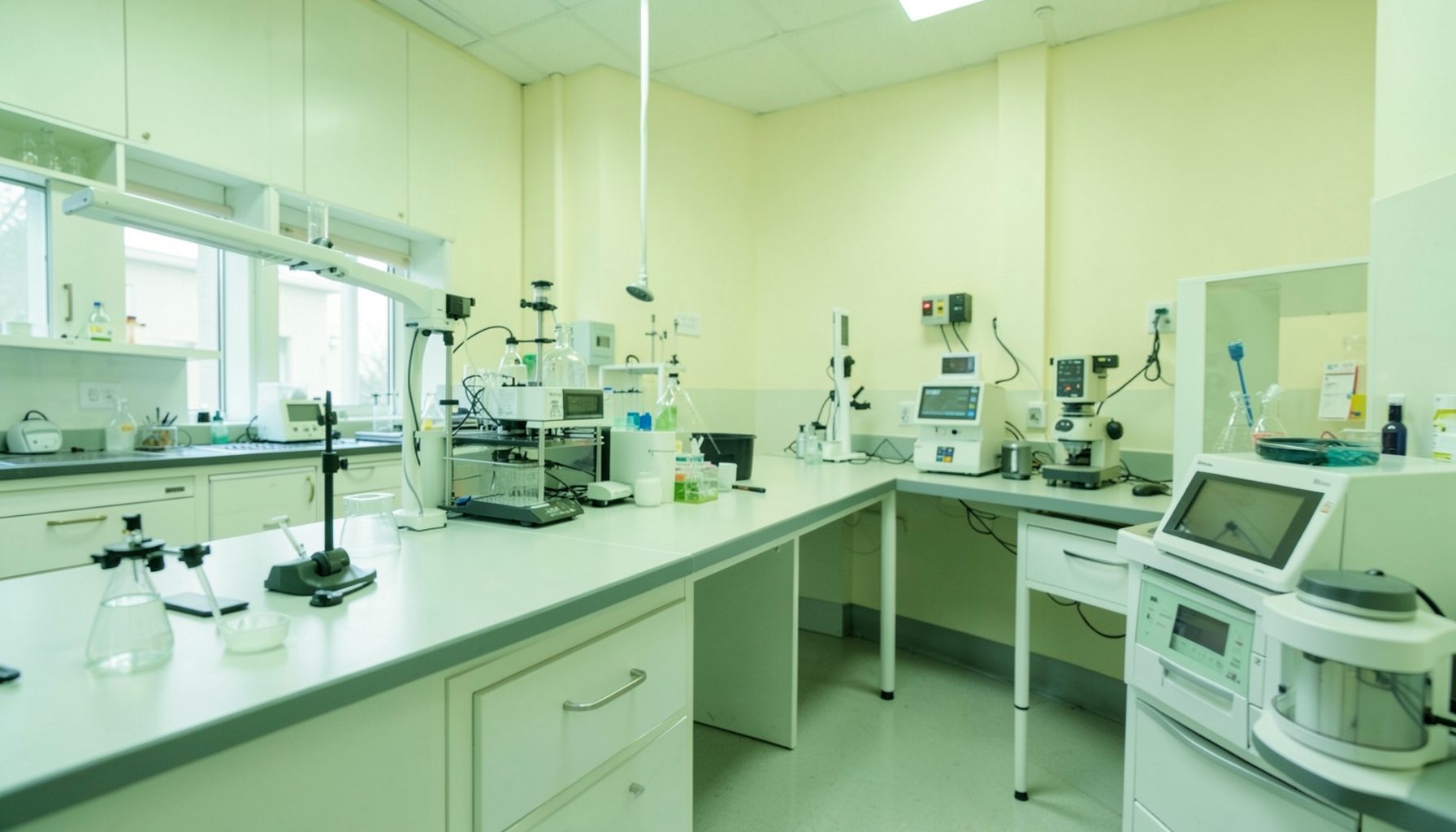
Creating a Waste Management Plan for TB Laboratory Biohazards
A tuberculosis laboratory handles materials that may contain Mycobacterium tuberculosis, including sputum, other clinical specimens, culture media, contaminated disposables, and equipment used during testing. A waste management plan turns these hazards into controlled, documented workflows that protect staff, patients, contractors, visitors, and the surrounding community.
The plan should fit the laboratory’s actual services, infrastructure, staffing, and regulatory environment. A facility performing smear microscopy may produce a different waste stream from one conducting culture, drug susceptibility testing, or molecular testing. Effective planning therefore begins with a realistic description of activities rather than a generic list of precautions.
Waste control also belongs within the laboratory quality management system. It connects laboratory safety, facilities and safety, equipment, purchasing and inventory, documents and records, assessment, and continual improvement. Clear procedures make safe work easier to supervise and provide evidence that controls are being followed.
Define The Scope And Hazards
Start by listing every activity that can generate infectious or hazardous waste. Include specimen reception, accessioning, processing, staining, nucleic acid extraction, culture work, decontamination, equipment maintenance, cleaning, and spill response. Consider waste produced during routine testing, quality control, proficiency testing, training, and emergency situations.
Classify waste by hazard and handling requirement. Infectious solid waste may include used swabs, tubes, pipette tips, gloves, absorbent materials, and culture plates. Sharps require puncture-resistant containers. Liquid waste may contain specimens, cultures, or disinfectants. Chemical waste from stains, solvents, and disinfectants may require a separate route from biological waste.
The plan should state which materials are excluded from ordinary waste and who makes that decision. When the hazard is uncertain, staff need a clear escalation pathway to the laboratory manager, biosafety officer, infection prevention team, or relevant public health authority. Local laws and national guidance should determine storage periods, treatment methods, transport requirements, and final disposal.
Map Waste From Generation To Disposal
Create a process map that follows each waste stream from the point of generation to its final treatment or disposal. For every step, identify the responsible person, required container, maximum holding time, movement route, and documentation. Mapping can reveal unsafe practices such as carrying open bags through public areas or storing waste beside clean supplies.
Segregation should occur where waste is generated. Use containers that are clearly labeled, compatible with the material, and available before work begins. Labels should identify the contents, hazard, date, responsible unit, and any special treatment requirement. Color coding can support recognition, but written labels and local policy must remain the primary controls.
Storage areas should be secure, ventilated where appropriate, protected from pests, and inaccessible to unauthorized people. They should be easy to clean and located away from specimen reception, staff food areas, public corridors, and clean equipment. Define a routine inspection schedule for container integrity, leaks, odors, accumulation, and access control.
A written quality manual guidance resource can help place waste procedures within the broader laboratory quality manual. The manual should point to detailed standard operating procedures without duplicating every operational instruction.
Choose Treatment And Containment Controls
Treatment methods depend on the waste type, available equipment, and validated local procedures. Autoclaving can be appropriate for certain infectious solid wastes when the cycle is suitable for the load and performance is monitored. Chemical disinfection may be used for selected liquid waste or surfaces, but disinfectant concentration, contact time, organic load, and compatibility must be addressed.
Do not assume that an autoclave cycle is effective simply because the display shows a completed run. The laboratory should define loading patterns, cycle parameters, routine monitoring, preventive maintenance, and response to failed indicators. Records should link the treatment cycle to the waste load whenever practical. Untreated waste must remain clearly identified and secured until a decision is made.
Sharps require special attention because they can transmit infection through injury. Needles should not be recapped unless a validated procedure specifically requires it. Sharps containers should be rigid, leak-resistant, closable, positioned close to the work area, and replaced before overfilling. Staff must know how to respond to a damaged container or sharps injury.
Spill kits should match the laboratory’s hazards and include absorbent materials, suitable disinfectant, forceps or tongs, waste bags, gloves, eye protection, and instructions. A spill response procedure should distinguish between a spill inside a biological safety cabinet, a spill on an open bench, and a spill during transport. Incident reporting must trigger medical evaluation and risk assessment where exposure may have occurred.
| Waste stream | Typical examples | Primary container | Treatment or control | Required record |
|---|---|---|---|---|
| Infectious solids | Tips, swabs, tubes, contaminated PPE | Leak-resistant biohazard bag or rigid bin | Validated autoclave, approved alternative, or authorized disposal | Treatment or collection log |
| Sharps | Needles, lancets, broken contaminated glass | Puncture-resistant sharps container | Secure closure and approved treatment or disposal | Container issue and removal record |
| Infectious liquids | Residual specimens, culture liquids, wash fluids | Leak-proof, labeled container with secondary containment | Validated chemical or thermal treatment | Disinfection or treatment record |
| Chemical waste | Stains, solvents, concentrated disinfectants | Compatible chemical container | Separate chemical waste route under local rules | Chemical waste inventory |
| Nonhazardous waste | Clean packaging and uncontaminated paper | General waste container | Routine municipal or facility disposal | Collection record when required |
Assign Responsibilities And Train Personnel
A waste plan works only when responsibilities are explicit. The laboratory director or manager should approve the policy and provide resources. A biosafety or safety lead can coordinate risk assessment and incident review. Section supervisors should ensure that containers, labels, spill materials, and PPE are available at the point of use.
Waste handlers, cleaners, maintenance workers, and external contractors need information about the hazards they may encounter. Their training should cover segregation, labeling, transport routes, storage, spill response, sharps injuries, PPE use, hand hygiene, and reporting. Training should be adapted to literacy, language, job duties, and the equipment actually used.
Use demonstrations and direct observation rather than relying only on signed attendance sheets. Competency assessment can include correct selection of containers, preparation of a waste load, response to a simulated spill, and completion of records. The personnel training guide provides a practical framework for linking training to laboratory quality requirements.
Refresher training is needed after a procedure changes, an incident occurs, new equipment is introduced, or monitoring shows repeated errors. Keep training records with the employee’s role, date, topics, trainer, assessment method, and any follow-up action. Contractors should receive documented orientation before entering waste storage or collection areas.
Control Documents, Transport, And Records
The plan should include or reference procedures for segregation, container management, internal transport, temporary storage, treatment, final disposal, spill response, exposure management, and incident reporting. Each procedure needs an owner, approval date, version number, review date, and defined distribution. Obsolete copies must be removed from work areas.
Internal transport should use closed, leak-resistant secondary containers or carts that can be decontaminated. Establish designated routes and times that limit contact with patients, visitors, and clean materials. Staff should avoid holding waste against the body or moving bags by hand when a suitable cart is available.
External transport requires attention to packaging, labeling, handover, manifests, and contractor authorization. Confirm that the receiving facility can perform the promised treatment or disposal. A signed handover record can establish continuity of responsibility from the laboratory to the final disposal point.
Records may include waste quantities, collection dates, autoclave cycles, chemical treatment, equipment maintenance, contractor manifests, spill reports, training, and inspections. Data should be practical to collect and useful for decisions. If staff cannot complete a lengthy form during busy periods, redesign it around the few fields needed to demonstrate control.
Monitor Performance And Improve
Monitoring should combine routine checks with periodic review. Supervisors can inspect segregation, container placement, labels, storage conditions, PPE availability, and transport routes. Internal audits can examine whether the written process matches actual practice and whether corrective actions remain effective.
Useful indicators include overfilled sharps containers, incorrectly segregated materials, unprocessed waste held beyond the approved period, treatment failures, spills, staff injuries, missing records, and contractor collection delays. Trends are more informative than isolated events. A rise in contaminated general waste may indicate poor access to containers, unclear labels, insufficient training, or workflow pressure.
When a problem occurs, investigate the underlying cause rather than assigning blame. Corrective action might involve changing container locations, revising a label, repairing an autoclave, modifying a transport route, or providing focused retraining. Verify completion and check whether the change reduced the risk.
Quality review should occur at planned intervals and after major incidents or service changes. Resources from the Phase 4 resources can support continual improvement, corrective action, and management review. The waste plan should evolve as testing methods, staffing, regulations, and facility capacity change.
Practical Priorities For Implementation
- Appoint a responsible coordinator and document accountability for every waste stream.
- Perform a walk-through from waste generation points to final disposal, recording hazards and weak controls.
- Provide labeled containers, sharps bins, spill kits, PPE, and secondary containment before launching the procedure.
- Validate treatment methods and maintain records for cycles, chemical preparation, equipment checks, and failed runs.
- Train all laboratory and support personnel, then verify competence through observation and corrective follow-up.
A manageable plan is safer than an ambitious document that staff cannot use. Begin with the highest-risk activities, test the workflow in one laboratory section, collect feedback, and expand after problems have been corrected. Make the approved procedures visible at points of work and review them whenever monitoring, incidents, or operational changes show that controls need adjustment.
Use the GLI Quality Tool to connect waste management with the laboratory’s wider quality system, assign measurable actions, and track progress through review. A documented, practiced, and regularly assessed plan can reduce exposure risks while giving TB laboratories a dependable foundation for safe and consistent diagnostic services.