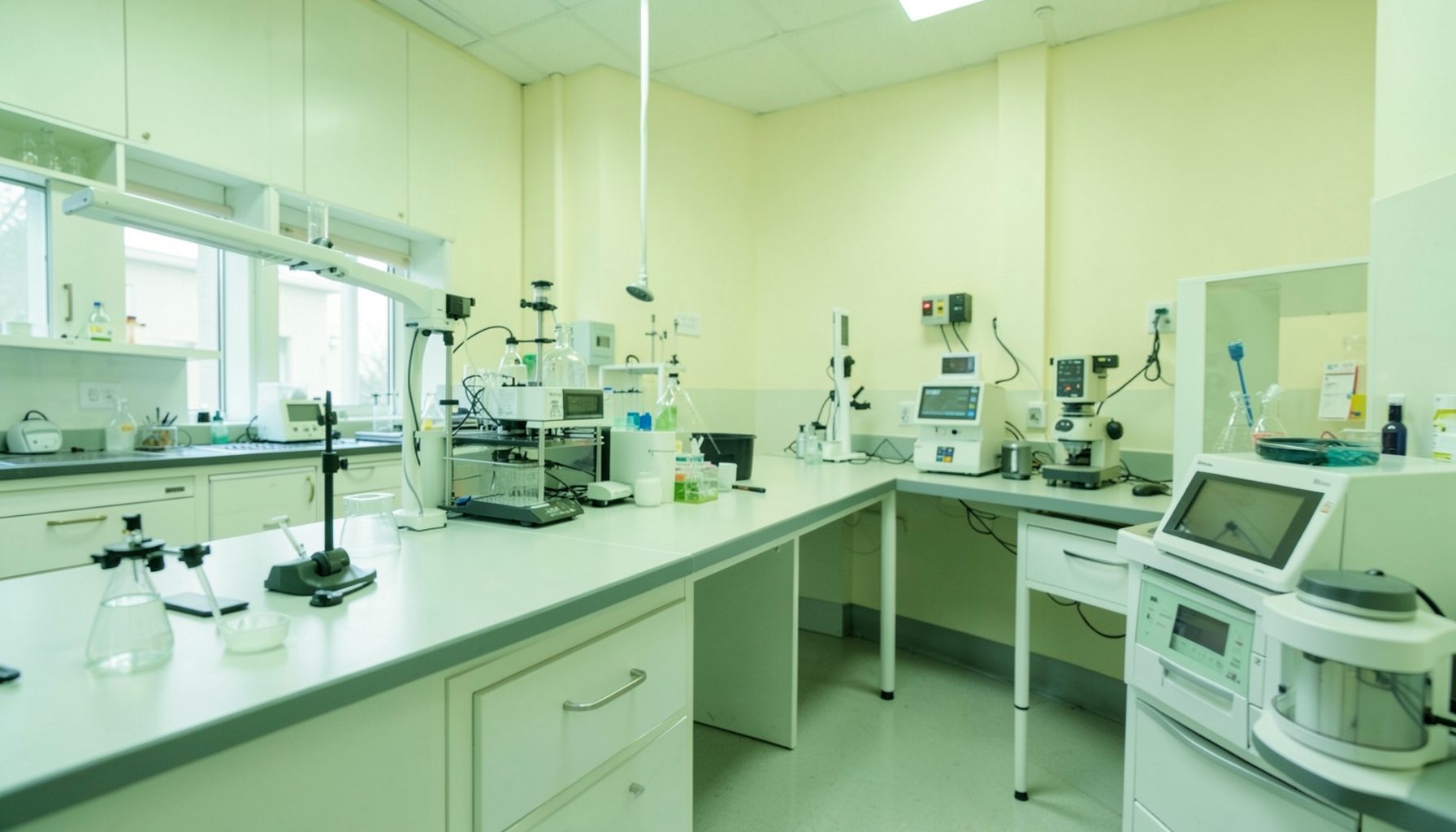
Conducting a gap analysis for TB laboratory quality improvement
A gap analysis helps a tuberculosis laboratory compare its current practices with the requirements of a reliable quality management system. It reveals where procedures are incomplete, inconsistently applied, poorly documented, or unsupported by adequate resources. The result is a practical picture of quality risks rather than a general impression of laboratory performance.
For TB services, this process is especially important because testing influences treatment decisions, surveillance data, infection prevention, and public health action. A weakness in specimen handling, equipment maintenance, biosafety, reporting, or staff competency can affect several stages of the diagnostic pathway.
A useful assessment should be structured, evidence-based, and realistic for the laboratory’s setting. The GLI Quality Tool provides a four-phase improvement roadmap organized around twelve Quality Systems Essentials, allowing laboratories to move from basic organization toward sustained quality and accreditation readiness.
Why a gap analysis matters
Laboratory teams often recognize problems through repeated errors, delayed results, audit findings, stock-outs, or equipment downtime. However, responding to each issue separately can hide common causes. A gap analysis connects these observations to broader systems such as purchasing, training, document control, or management responsibility.
The exercise also creates a shared understanding among laboratory staff, supervisors, quality officers, biosafety personnel, and program managers. Instead of describing a process as “weak,” the team can identify a specific gap: for example, temperature records are incomplete because monitoring responsibilities are unclear and there is no documented response to excursions.
The purpose is improvement, not fault-finding. Staff should be able to describe what happens in daily work without fear that honest answers will lead to blame. A constructive review produces more accurate findings and encourages employees to participate in corrective action.
Define the scope and prepare the review
Start by deciding what the assessment will cover. A laboratory may examine the entire TB testing pathway, from specimen collection and transport through testing, result authorization, reporting, referral, and waste management. A smaller review may focus on a new molecular platform, smear microscopy, culture, drug susceptibility testing, or biosafety controls.
Set the assessment period, team roles, and evidence sources before visiting work areas. Include people who understand routine operations as well as those responsible for quality oversight. If the laboratory belongs to a network, consider inviting a representative from a higher-level facility or the national TB program to support consistency.
Gather relevant documents in advance, including the quality manual, standard operating procedures, equipment records, training files, internal audit reports, incident logs, management review minutes, and external quality assessment results. The twelve essentials guide can help the team understand how individual activities fit within a complete quality system.
Assess the twelve essentials with evidence
The twelve Quality Systems Essentials provide a logical framework for reviewing laboratory operations. They cover organization and leadership, personnel, equipment, purchasing and inventory, process management, information management, documents and records, customer service, assessment, facilities and safety, and continual improvement. The exact emphasis may vary by phase and testing service.
For each requirement, record what is expected, what is currently happening, and what evidence supports the finding. Evidence may include direct observation, interviews, completed forms, instrument logs, quality control charts, maintenance certificates, proficiency testing reports, or randomly selected patient records. A policy on paper should not be rated as fully implemented unless staff use it consistently and records demonstrate that practice.
Use a simple rating scale that everyone understands. For example, “met” means the requirement is implemented and supported by evidence; “partly met” means implementation is incomplete or inconsistent; “not met” means the process is absent or ineffective; and “not applicable” requires a documented justification. Avoid awarding high ratings solely because a document exists.
| Review area | Questions to examine | Evidence examples | Typical gap |
|---|---|---|---|
| Personnel | Are staff trained, authorized, and assessed for each task? | Competency records, training plans, job descriptions | Staff perform tests without current competency assessment |
| Equipment | Is equipment selected, maintained, calibrated, and monitored? | Service logs, calibration certificates, downtime records | Preventive maintenance is overdue |
| Process management | Are testing steps controlled from specimen receipt to reporting? | SOPs, QC records, rejection logs, worksheets | Specimen rejection criteria are applied inconsistently |
| Documents and records | Are current procedures available and obsolete versions removed? | Master lists, controlled copies, revision history | Staff use outdated SOPs |
| Assessment | Does the laboratory identify and investigate problems? | Internal audits, EQA reports, corrective action records | Findings are recorded without documented follow-up |
| Safety and facilities | Are hazards controlled and incidents managed? | Risk assessments, PPE checks, incident reports | Biosafety procedures are not regularly reviewed |
| Continual improvement | Are trends analyzed and used for decisions? | Quality indicators, meeting minutes, improvement plans | Data are collected but not reviewed |
Gather reliable findings in the laboratory
Document observations precisely. “Poor documentation” is too broad to guide action. A stronger finding might state that three of ten reviewed equipment maintenance records lacked the required service date, or that staff could not locate the current spill response procedure in the work area. Specific findings make progress measurable during follow-up.
Interviews should be short, respectful, and linked to actual tasks. Ask staff to explain how they receive specimens, verify controls, report an instrument problem, handle a rejected sample, or correct a transcription error. Then compare their answers with procedures and records. Differences may indicate a training need, an unrealistic SOP, weak supervision, or a process that has evolved without document revision.
Use sampling rather than relying on a single example. Review records from different shifts, staff members, instruments, and dates. Observe high-risk activities such as specimen opening, decontamination, result verification, waste disposal, and movement through controlled areas. This helps distinguish an isolated lapse from a recurring system problem.
The downloadable materials available through the resource can support consistent reviews, especially when teams need checklists or phase-specific tools. Adapt the forms to local terminology and workflow, but retain enough structure to compare results over time.
Prioritize risks and root causes
A long list of findings can overwhelm a laboratory and delay action. Prioritization should consider the potential effect on patient results, staff safety, service continuity, regulatory compliance, and public health reporting. A missing signature may be important, but an uncontrolled critical result, failed biosafety barrier, or repeated quality control failure usually demands faster intervention.
Classify each gap by risk and urgency. High-priority issues may require immediate containment, such as suspending a test run, quarantining affected results, repairing an unsafe facility feature, or notifying a supervisor. Medium-priority findings may be addressed through a scheduled improvement project, while low-priority issues can be included in routine document or housekeeping work.
Investigate root causes before choosing solutions. Repeated transcription errors may reflect a poorly designed worksheet rather than careless staff. Expired reagents may result from weak stock rotation, inaccurate consumption estimates, or delayed procurement. A “retrain staff” response is appropriate only when lack of knowledge is the actual cause.
Useful root-cause methods include the five whys, process mapping, cause-and-effect diagrams, and review of trends. Involve the people who perform the work because they can often identify practical barriers that are invisible in management reports.
Convert findings into an improvement plan
Each priority finding should lead to a clearly defined action, an accountable owner, a due date, required resources, and a verification method. “Improve equipment management” is too vague. “Create a preventive maintenance schedule for all molecular testing instruments, assign responsibility to the equipment officer, and review completion monthly” is specific enough to monitor.
Include immediate containment and longer-term correction where needed. If a temperature excursion affects reagent validity, the laboratory may first isolate materials and assess test impact. A later corrective action may involve installing a backup power source, revising monitoring responsibilities, and introducing a documented escalation process.
Choose indicators that show whether the change worked. Examples include the percentage of equipment serviced on schedule, the proportion of staff with current competency records, specimen rejection rates, corrective action closure time, or the number of quality control failures per testing run. Indicators should be simple enough to collect consistently and useful enough to support decisions.
Review the plan during regular quality meetings. Record completed actions, overdue tasks, barriers, and evidence of effectiveness. If an action has been completed but the gap continues, revise the solution rather than closing the finding prematurely.
Build a sustainable review cycle
A gap analysis should become part of continual improvement rather than a one-time exercise before an inspection. Repeat the assessment after major changes, such as introducing a new test, relocating the laboratory, changing suppliers, adding staff, or responding to a significant incident. Periodic focused reviews can maintain momentum between full assessments.
Leadership support is essential. Managers should protect time for quality activities, authorize necessary purchases, recognize staff contributions, and use findings when setting operational priorities. Quality personnel can coordinate the process, but responsibility for improvement belongs to the whole laboratory.
Use the GLI Quality Tool to align self-assessment with the laboratory’s current phase and development goals. Its practical guidance is designed for varied resource settings, so teams can identify achievable next steps while preserving a clear path toward stronger quality management and accreditation preparedness.
Practical habits for effective gap analysis
A disciplined approach makes the review more useful and less disruptive to routine TB testing. Apply these habits throughout the process:
- Base every finding on observable evidence, records, or a consistent staff account.
- Separate immediate patient and biosafety risks from longer-term system improvements.
- Discuss root causes with the staff who perform the affected process.
- Assign one accountable owner and a realistic completion date to every priority action.
- Reassess completed actions to confirm that the change is effective and sustained.
When these practices are repeated, the laboratory develops a clearer view of its performance and a stronger ability to prevent recurrence. The gap analysis becomes a management tool that links daily work with quality objectives, resource decisions, and patient safety.
Begin with one defined testing pathway or one Quality Systems Essential, document the current state honestly, and agree on a small number of high-impact actions. Then use the evidence from that first cycle to expand the review, track measurable progress, and establish a dependable culture of quality improvement across the TB laboratory.